Japan food tax cut debate hits retailers and restaurants

Japan’s debate over cutting the consumption tax on food is running into a bigger problem: many companies do not believe it would meaningfully revive the economy, and that skepticism is feeding a mixed outlook for the food retailers and restaurant chains that would be closest to any policy shift.
That matters because the issue goes beyond a simple tax break. If businesses think a food-tax cut would mostly be swallowed by weak wage growth, cautious households and higher operating costs, then the policy may offer only a short-lived bump in traffic instead of the broad consumer revival policymakers want. For investors, that means the winners and losers could be very different depending on whether shoppers simply trade down, eat out more often or save the extra cash.
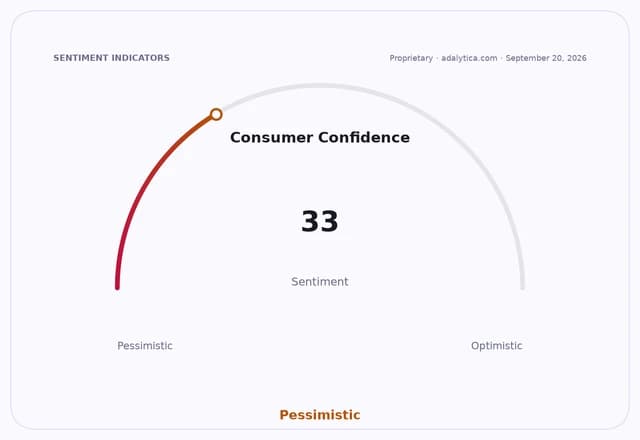
The concern shows up in a consumer environment that is still uneven. Adalytica’s Consumer Spending Sentiment sits in “Greed” territory at 81, suggesting households are willing to spend, but its consumer confidence recession gauge is only neutral at 33, with fear still elevated. In other words, people may be buying, but they are not exactly confident enough to support a powerful, sustained jump in discretionary demand.
That is a tricky setup for Japan’s food retailers and restaurant operators. Supermarkets, convenience stores and discount grocers could see modest relief if lower food taxes make staple purchases feel cheaper. Restaurants, meanwhile, face a more complicated picture: a tax cut on groceries does not automatically translate into more dining-out demand, and it could even reinforce at-home spending if consumers decide to pocket the savings.
The market backdrop also argues for caution rather than enthusiasm. McDonald’s Japan parent McDonald’s has been under pressure, with the stock recently trading around $248, well below its 200-day moving average near $290. Starbucks has also weakened sharply to about $95.83, with its 50-day moving average near $104.16 and RSI readings deep in oversold territory. Kroger, by contrast, has held up better around $60, still above its recent lows, reflecting the relative resilience of grocery demand versus restaurants.
For long-term investors, the real question is not whether a food tax cut would help consumers at the margin. It is whether it changes the earnings power of the companies that matter. If Japan’s households remain cautious, the policy may improve sentiment more than sales. If wage growth and confidence improve alongside it, supermarkets and value-focused food chains could benefit first, while restaurants may need stronger foot traffic, menu pricing power and cost control to turn relief into profit.
That is why the story is worth watching, not chasing. A lower food tax could be supportive, but the bigger driver for investors will still be whether Japan’s consumers feel secure enough to keep spending for years, not just months.
| Entity | Gains | Losses |
|---|---|---|
| Food retailers | ▲Slight traffic lift | ▼Margin pressure if price cuts stick |
| Restaurants | ▲Possible sentiment boost | ▼Demand may not shift enough |
| Consumers | ▲Lower grocery bills | ▼Savings may be too small to matter |
| Tax-cut advocates | ▲Policy momentum | ▼Revitalization case looks weak |