Japan Sanctions Stance Keeps Geopolitical Risk in Focus
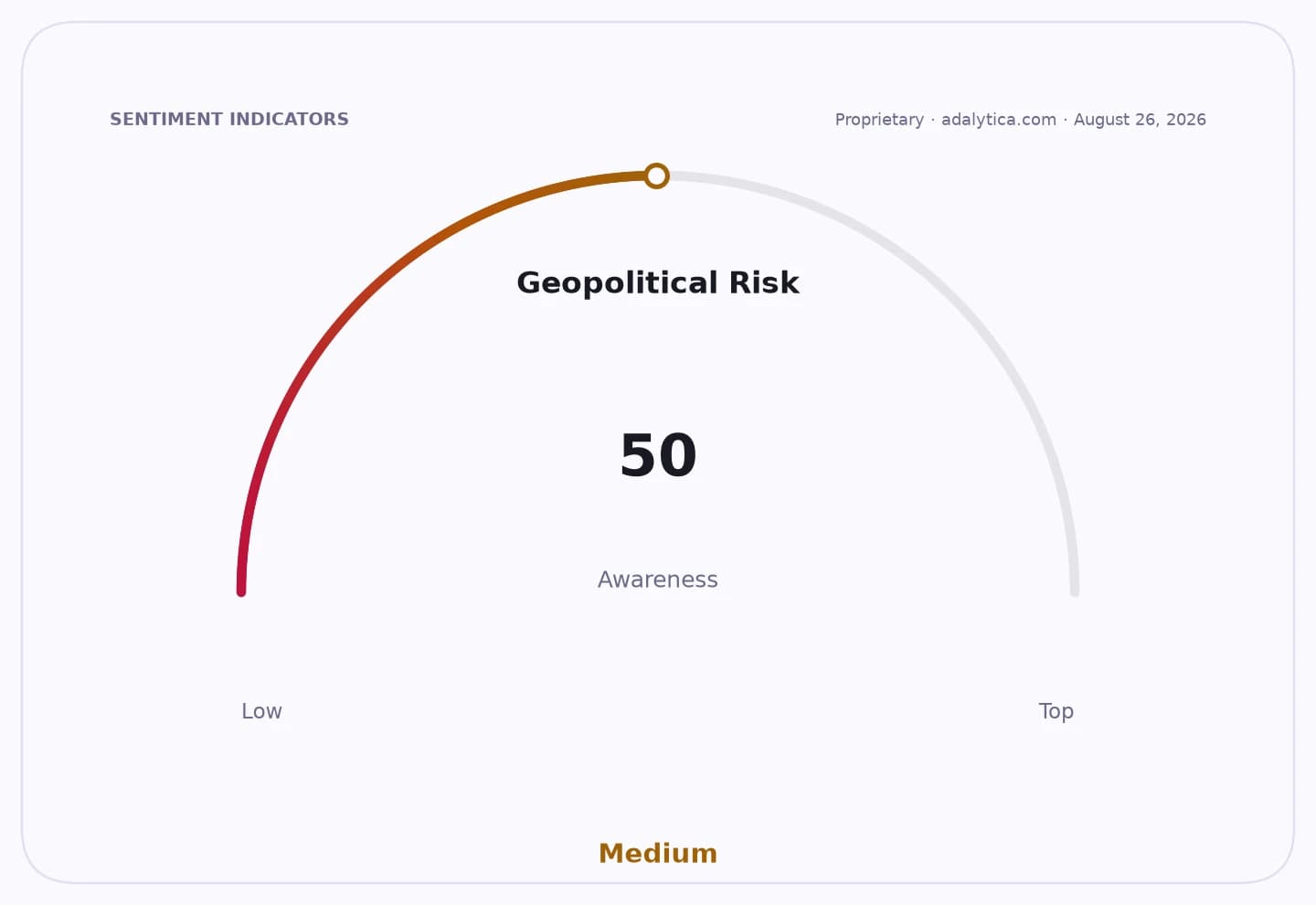
Japan’s refusal to ease sanctions on Russia is becoming more than a foreign-policy posture; it is a test of how far Prime Minister Sanae Takaichi will go in hardening Japan’s security stance without unsettling markets, trade ties and investors watching the yen.
That matters because Japan sits at the crossroads of the broader geopolitical reset now gripping Asia. Tokyo’s continued backing of Ukraine and sanctions on Moscow keeps Japan aligned with the U.S. and other Group of Seven partners, but it also invites sharper pushback from Russia and adds friction with China at a time when the region is already on edge over missiles, minerals and nuclear rhetoric.
The warning sign for investors is that geopolitics is no longer a distant overlay on Japanese assets. The iShares MSCI Japan ETF, EWJ, has climbed to 95.63, above its 50-day moving average of 93.91 and far above its 200-day moving average of 87.72, showing that global capital still sees opportunity in Japan. But the trade is no longer cheap or sleepy: the fund’s relative strength index sits at 52.1, while the U.S. dollar-yen pair, JPY=X, is around 158.91, leaving Japanese exporters, importers and policymakers highly sensitive to every shift in risk sentiment.
That is where the story gets interesting for long-term investors. Japan is trying to do several hard things at once: maintain sanctions discipline, deepen defense capabilities, secure critical minerals and preserve the credibility of its alliance with Washington. Those goals can support parts of the Japanese market over time, especially defense, energy security, industrials and resource-linked companies. But they also raise the odds of periodic volatility in the yen and in sectors exposed to China, Russia and imported commodities.
Adalytica’s Global Stability Sentiment gauge sits at 82, in “Greed” territory, suggesting markets are not currently pricing a major breakdown. Yet the recent jump in awareness of geopolitical risk shows how quickly that can change if Tokyo’s stance triggers fresh retaliation or if regional tensions escalate further. For the long-term investor, the takeaway is simple: Japan remains a structurally interesting market, but the geopolitical premium is back, and it is likely to shape returns as much as earnings do.
If you own Japan exposure, this is not a reason to panic. It is a reason to stay diversified, think in years rather than weeks, and watch how Takaichi balances security commitments with market stability. For patient investors, Japan still looks worth holding — but not ignoring.
| Entity | Gains | Losses |
|---|---|---|
| Japan defense and industrial firms | ▲Higher procurement demand | ▼Policy uncertainty |
| Japanese exporters | ▲Weaker yen tailwind | ▼Import-cost pressure |
| Global investors in EWJ | ▲Long-term re-rating potential | ▼Geopolitical volatility |
| Russia and China | ▲None | ▼Diplomatic pressure, tighter Japan stance |