Job openings fall as staffing firms benefit from selective hiring
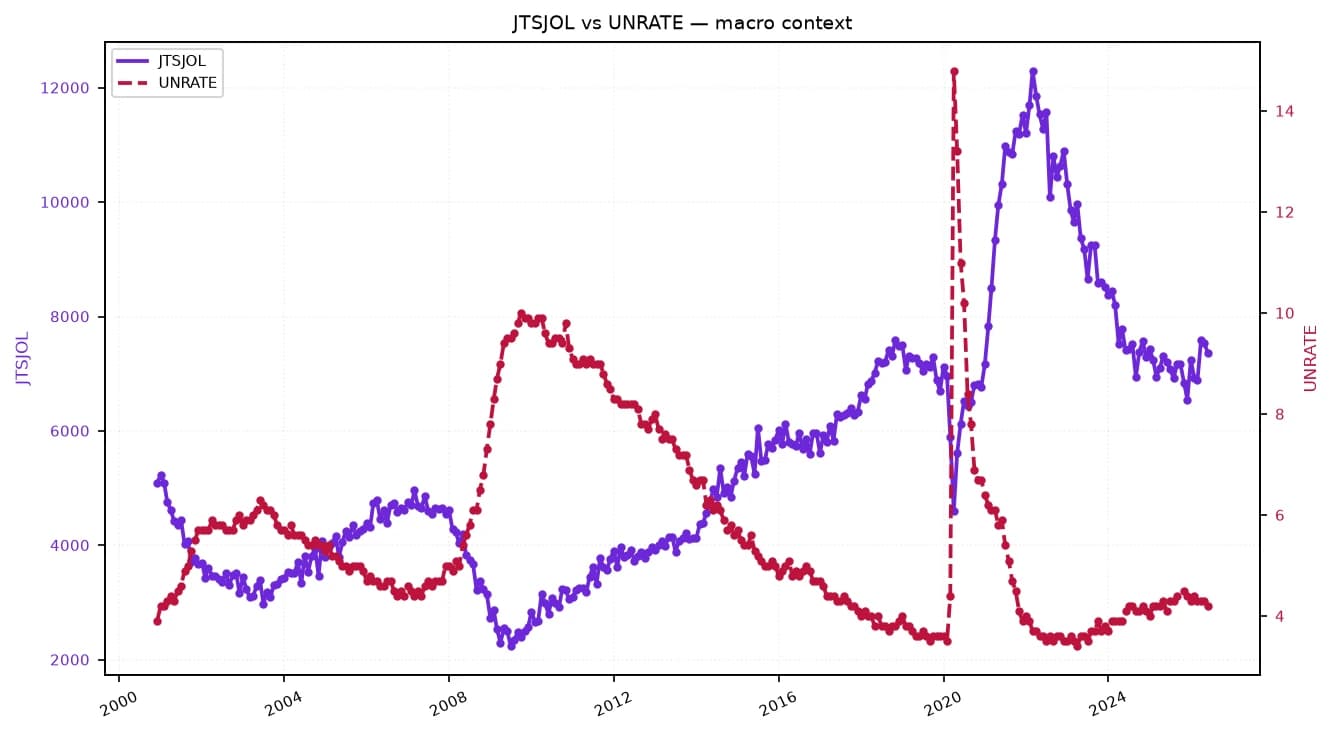
Applying everywhere may feel productive when the labor market turns uncertain, but the latest signs from staffing firms and job-market data suggest it is becoming counterproductive. The hiring game is shifting away from sheer volume and toward fit, and that is bad news for exhausted applicants who think more applications automatically mean better odds.
The most important development is not that job seekers are still worried. It is that fear is now distorting the market itself. U.S. job openings fell to 7.359 million in June from 7.537 million in May, extending a broad cooling trend from the 2021-2022 surge. At the same time, unemployment held at 4.1% in July and payrolls were essentially flat at 158.858 million, pointing to a labor market that is no longer red-hot but not collapsing either. In that kind of environment, blanket applications are often self-defeating: employers can sort through more candidates, while applicants face longer searches, more screening, and more burnout.
That dynamic matters economically because labor market efficiency has become the real story. When job seekers flood the market with low-intent applications, recruitment costs rise, placement takes longer, and employers lean more heavily on screening tools and specialist recruiters. Robert Half’s 10-Q explicitly said the rapid adoption of generative AI by job seekers has increased application volumes and made candidate evaluation more complex. ZipRecruiter’s filing said segments of the job-ad market are subject to volatile hiring needs and service preferences, which is another way of saying the easy days of mass hiring are gone.
For investors, that is the key takeaway: this is not just a social-media trend about “doomjobbing,” it is a business model test for the labor market ecosystem. Staffing firms that can match candidates faster and more accurately should benefit over time, while generic job boards face pressure if they become dumping grounds for desperate applicants. Robert Half has responded by emphasizing its proprietary candidate insights and recruiting expertise. ManpowerGroup has also noted that employers remain measured in their workforce plans, which suggests demand is still there, but it is selective.
The long-term investing lesson is that labor markets, like stock markets, reward discipline over frenzy. If you are job hunting, the better strategy is not maximum volume but targeted effort, role fit and persistence. If you are investing, the better approach is to watch which companies help employers and candidates navigate a more selective hiring cycle. That makes staffing specialists and workflow platforms worth watching, especially if the labor market stays stable rather than surging.
The risk, of course, is that a deeper slowdown would hit hiring across the board. But as things stand, the labor market looks more like a sorting machine than a panic market. In that world, doomjobbing is not a winning edge — and the companies that reduce friction in hiring may prove to be the real beneficiaries.
| Entity | Gains | Losses |
|---|---|---|
| Staffing firms | ▲Better matching demand | ▼Slower placement cycles |
| Employers | ▲More selective hiring | ▼Higher screening burden |
| Job seekers | ▲Better-targeted applications | ▼Burnout from mass applying |
| Job boards | ▲Higher traffic | ▼Lower-quality applicant flow |