Job scams boost demand for hiring verification
Fake recruitment schemes are becoming a bigger economic drain just as the labor market shows signs of cooling, and that makes the threat more than a consumer-protection story. When thousands of job seekers are lured by counterfeit offer letters, fake exams and forged government documents, the result is not only direct financial loss but also a deeper erosion of trust in hiring at a time when workers are already chasing scarce opportunities.
The warning matters because it hits the most vulnerable corner of the labor market: applicants looking for stable public-sector or rail jobs, often in regions where government employment is seen as a path to middle-class security. Authorities say the scams have spread widely enough to prompt a nationwide cleanup of nearly 8,000 bogus vacancy ads, while reports from Uttar Pradesh alone point to more than 4,000 victims. That scale suggests this is not a handful of isolated frauds but a recurring shadow market built on desperation, misinformation and weak verification.
For investors, the story matters in two directions. First, it reinforces the case for companies that help authenticate identity, hiring and background checks, from HR software vendors to cybersecurity firms and digital verification platforms. Second, it is a reminder that labor-market weakness can be exploited when job creation is not broad enough to absorb demand. U.S. payrolls remain positive and unemployment is still near 4.1%, but the combination of slower hiring, heavy demand for jobs and elevated anxiety creates fertile ground for fraud.
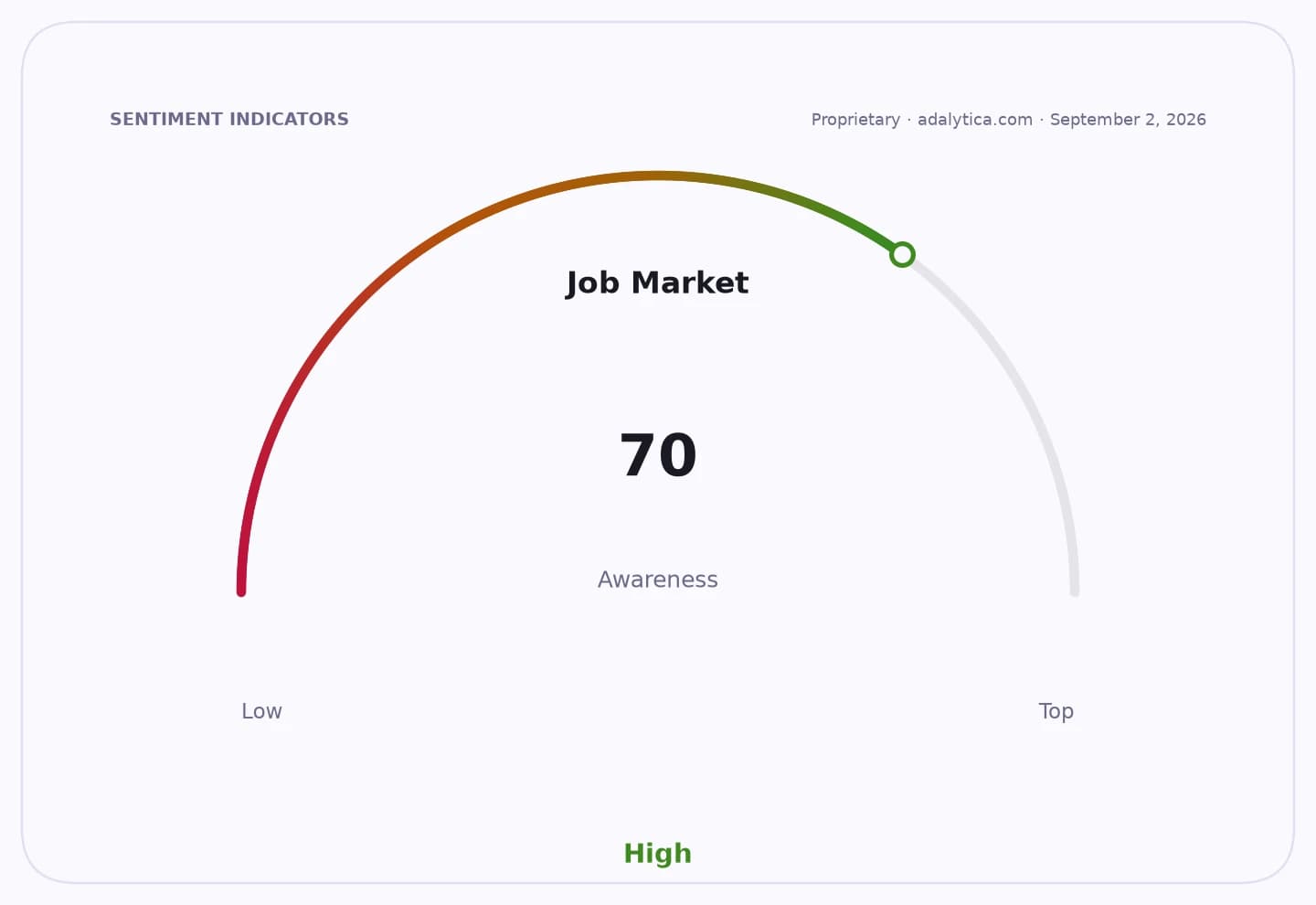
The contrast between official labor data and market sentiment is also telling. Nonfarm payroll sentiment in Adalytica’s snapshot sits at 97, or extreme greed, while awareness is only 7, indicating how quickly headlines can swing perceptions around hiring. Job-market sentiment is neutral, but the broader consumer-confidence recession gauge is in fear territory. That mismatch underscores an environment where workers are looking hard for opportunity even as employers remain selective, leaving plenty of room for bad actors to impersonate legitimate recruiters.
The investable takeaway is straightforward: the next leg of value creation in hiring may come from trust infrastructure, not just job boards. I believe the market underestimates how much fraud, verification and compliance will matter as recruitment moves deeper online and AI makes fake applicants, fake documents and fake postings cheaper to produce. The winners will be platforms that can prove a real employer, a real offer and a real worker. The losers are the scammers, the unprepared job seeker and any recruiter that fails to build trust into the hiring funnel.
| Entity | Gains | Losses |
|---|---|---|
| HR verification and cybersecurity firms | ▲Higher demand for authentication tools | ▼Lower trust in weak systems |
| Legitimate employers | ▲Better screening and reputation protection | ▼More scrutiny and friction |
| Job seekers | ▲Safer hiring channels | ▼Scam losses and wasted time |
| Fake recruiters and fraud rings | ▲— | ▼Crackdowns and exposure |