Korea Housing Policy Faces Rate Pressure

President Lee’s move to force through housing policy changes is drawing fire from the opposition, which says he is trying to sell apartments “expediently” while leaving households stuck with what it mocked as a “Deobuleogeun Mortgage.” The political fight matters because it lands on top of already fragile housing affordability, elevated borrowing costs and a property market still highly sensitive to policy signals.
South Korea’s benchmark 10-year yield is hovering around 3.5%, while the 2-year sits near 3.8%, keeping mortgage pricing elevated for borrowers and limiting room for relief even if inflation cools. The won is also under pressure around 1,475 per dollar, underscoring the broader financial constraints facing policy makers and households alike.
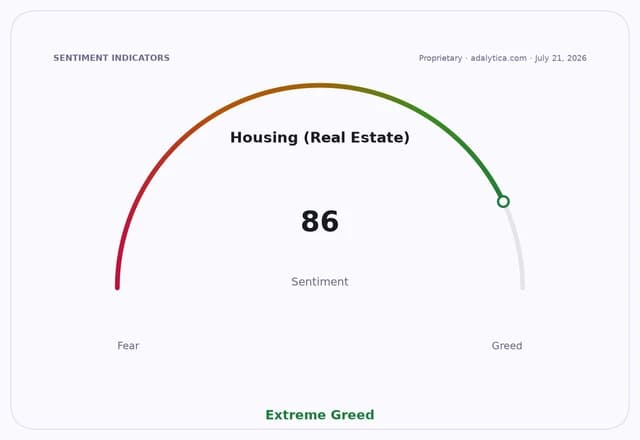
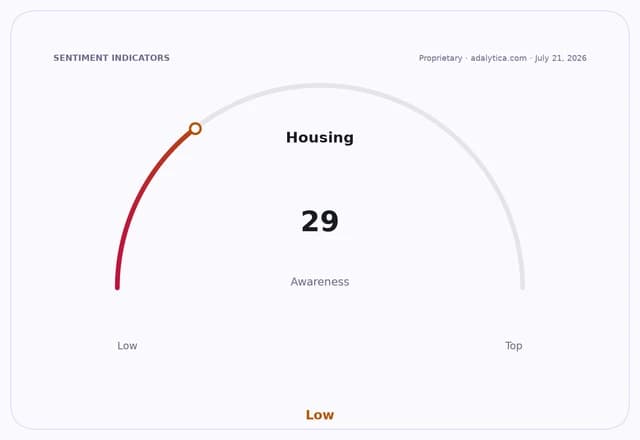
That backdrop is crucial for investors because housing has become one of the most rate-sensitive parts of the Korean economy. The Adalytica Housing Fear & Greed Index for XHB is at 86, or “Extreme Greed,” while awareness remains in “Fear” territory, suggesting a market that is still rallying on policy hopes even as underlying caution persists.
Korean equities tied to domestic growth and consumer confidence have been volatile. The iShares MSCI South Korea ETF, EWY, recently closed at $162.86 after trading as high as $211.45 in mid-June, but technical indicators now point to weakening momentum, with the fund below its 50-day moving average and its RSI near 30, a level traders often read as oversold. China exposure is also mixed, with FXI rebounding to $35.04 but still below its 200-day average even after sharp swings in July.
For the housing trade, the message is that policy alone may not be enough to offset financing pressure. Developers, mortgage lenders and homebuilders benefit most if Seoul delivers easier credit or tax relief, while buyers and leveraged homeowners lose if rates stay high and political rhetoric fails to translate into lower monthly payments.
The next catalyst is whether Lee’s government follows the rhetoric with concrete mortgage or supply measures. Until then, the market is likely to treat the housing debate less as a political skirmish than as a test of how much strain Korea’s property cycle can absorb from high rates and a weak won.
| Entity | Gains | Losses |
|---|---|---|
| Homebuyers | ▲Policy relief hopes | ▼Higher mortgage costs |
| Developers | ▲Easier demand if credit loosens | ▼Slower sales if rates stay high |
| Lee government | ▲Reform narrative | ▼Credibility if measures disappoint |
| Households with mortgages | ▲Lower payments if policy eases | ▼Payment stress under tight financing |