Korea Tightens Housing Rules as Market Cools
South Korea has moved to tighten property-market measures again, underscoring how determined policymakers are to stop housing from feeding broader financial imbalances even as affordability tensions stay high.
The latest steps matter because housing is not just a social issue in Korea; it is a macroeconomic one. When home prices and mortgage demand accelerate too quickly, they can squeeze household leverage, distort credit allocation and eventually force the Bank of Korea and regulators to choose between growth support and stability. A firmer policy line can temper speculative demand, but it also raises the risk of slower transaction volumes, weaker construction activity and a sharper hit to sentiment in one of Asia’s most interest-rate-sensitive property markets.
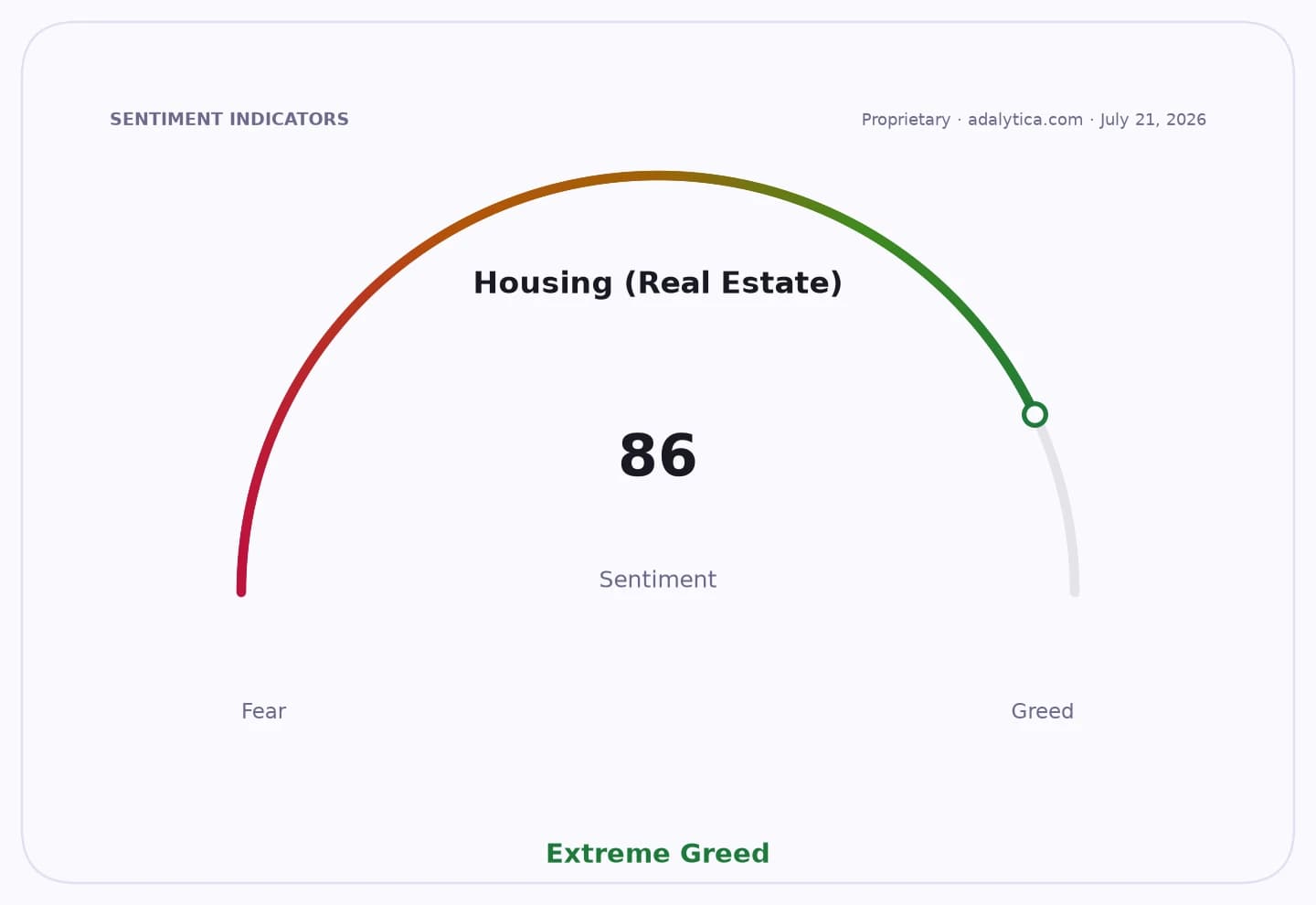
The market backdrop suggests policymakers are not acting in a vacuum. Adalytica’s Housing Fear & Greed Index shows extreme greed at 86, while awareness remains in fear territory, a combination that implies enthusiasm has outrun caution. That is the kind of backdrop where authorities typically intervene: prices can keep rising on momentum alone until credit conditions, transaction costs or tighter lending rules start to bite. Housing and rent inflation sentiment has also stayed elevated, pointing to persistent pressure in the real economy rather than a purely financial-market phenomenon.
The housing signal is feeding through to Korean-linked assets, though the message from investors is mixed. The iShares MSCI South Korea ETF, EWY, has fallen sharply from its June peak and was last around 162.86 after reaching 211.45 in mid-June, showing how quickly risk appetite can reverse when growth and policy concerns collide. Technical indicators reinforce that caution: the fund is trading well below its 50-day moving average and its RSI is near 30, levels that suggest the selloff has been severe even if a short-term rebound is possible.
KB Financial, one of Korea’s biggest bank groups, has also weakened after an earlier run-up, despite the sector typically benefiting from higher rates and stronger credit demand. That tension is important for investors: tighter housing rules can reduce mortgage growth and dampen fee income, but they may also lower medium-term credit risk by discouraging leverage in the most sensitive part of household balance sheets. In other words, the near-term tradeoff is lower loan growth versus better system stability later on.
For equity investors, the key issue is whether this is the start of a sustained cooling cycle or just another round of targeted intervention. Bulls would argue stricter measures reduce the chance of a destabilizing housing bubble and support the banking system by curbing future delinquencies. Bears would counter that repeated clampdowns can chill transactions, weigh on builders and keep homebuyers sidelined, while failing to solve Korea’s underlying supply and affordability constraints.
The next catalyst is whether policy makers pair restraint with supply-side measures or additional credit guidance. If Korea can slow speculative demand without triggering a broader construction or banking slowdown, the market may view the tightening as a stabilizing step. If not, the measures could deepen the drag on domestic demand and keep pressure on property-linked equities and lenders.
| Entity | Gains | Losses |
|---|---|---|
| Regulators | ▲Financial stability | ▼Short-term market warmth |
| Banks | ▲Lower future credit risk | ▼Mortgage growth |
| Homebuyers | ▲Less bubble risk | ▼Easier financing |
| Builders/Property stocks | ▲Policy clarity | ▼Transaction demand |