Dillons has cleared key approvals to build a new grocery store in Lee’s Summit, Missouri, while parent Kroger is also floating a 1% tax proposal that would effectively shift part of the cost of food retail expansion onto shoppers and policymakers.
Kroger Expansion Faces Margin Pressure
The project matters because grocery chains are still spending heavily to defend market share even as inflation keeps household budgets tight. A new store can lock in a trade area for years, but it also adds pressure on margins in an industry where scale, labor and real estate costs remain stubbornly high.
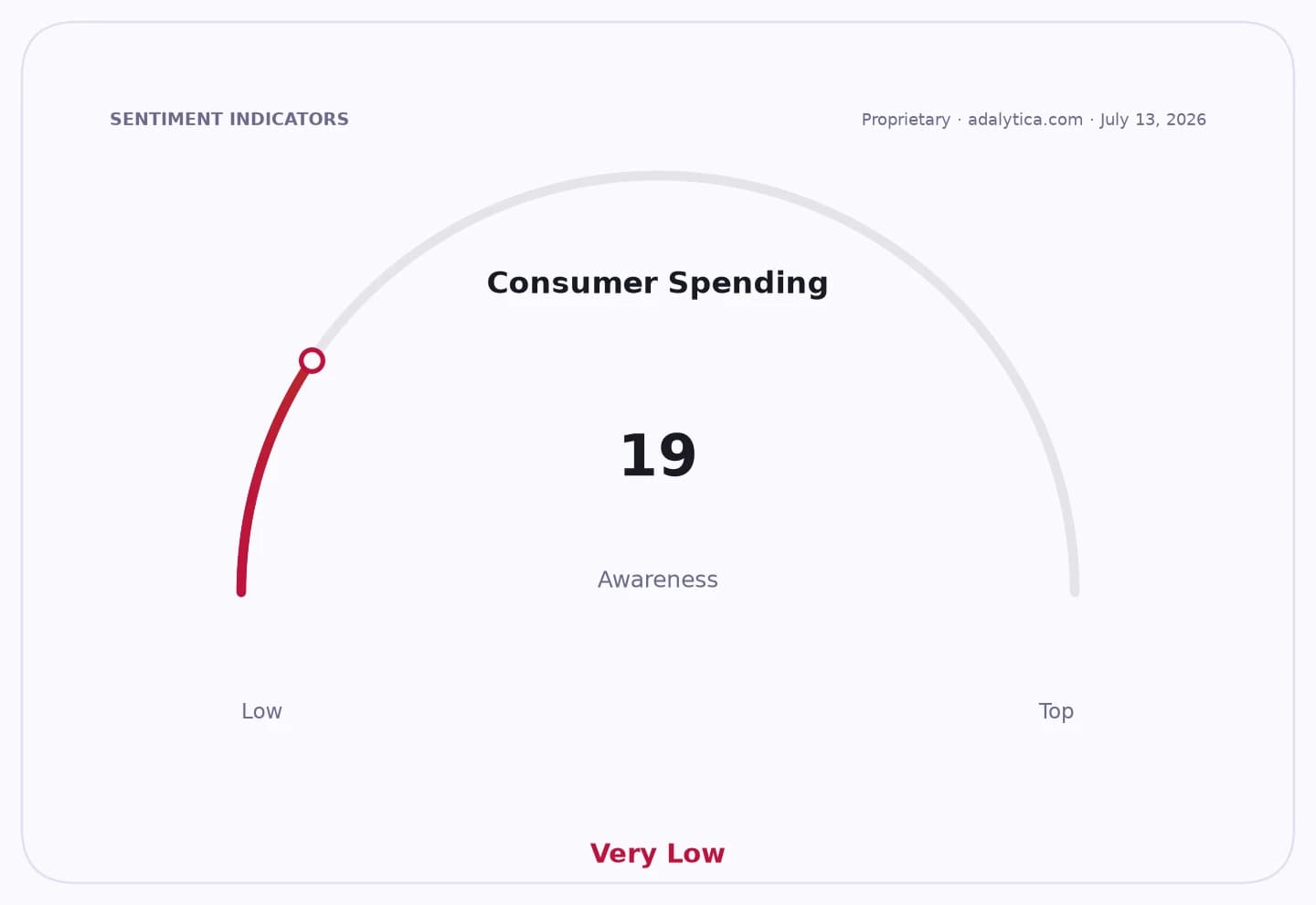
Sentiment IndicatorsⓘProprietary · adalytica.com · July 13, 2026
This is a snapshot — live sentiment, awareness and momentum for 130+ markets update continuously in the dashboard.Open AlphaPulse
Kroger has been telling investors it is still putting money into growth, with first-quarter capital investments of $1.5 billion, up from $1.2 billion a year earlier. That spending backdrop helps explain why a local Dillons opening is not just a neighborhood zoning story but part of a broader push by the Cincinnati-based grocer to keep building in higher-frequency, lower-margin food retail.
The timing also lands against a still-heated pricing environment. U.S. consumer prices were up 0.47% in May, after a 0.64% rise in April, with the latest forecast pointing to another 0.62% increase in June. Food retailers benefit when traffic holds up, but they also face the risk that persistent inflation slows basket growth or pushes shoppers to trade down.
Consumer Spending — 30-day sentimentadalytica.com
Explore this data interactively — full history, time series and cross-market comparisons.Open AlphaPulse
For Kroger, the stock has been sliding, with shares last at $59.31, below the 50-day moving average of $62.69 and the 200-day average of $65.28. The conventional technical indicators point to a weakened trend after the stock peaked above $70 in February and then lost ground through July.
Albertsons, Kroger’s closest national rival in many grocery markets, is also under pressure, with shares at $14.79, below both its 50-day and 200-day moving averages. That underscores how the sector is being judged on execution, not just store count, as investors weigh expansion against thin returns and heavy capital needs.
The bigger takeaway is that grocery expansion is still a battle for convenience and density, not a sign of easy growth. Lee’s Summit gives Dillons a foothold in a growing Kansas City-area suburb, but the success of the store will hinge on whether shoppers keep spending and whether the company can protect margins in an inflation-sensitive market.
| Entity | Gains | Losses |
|---|---|---|
| Dillons/Kroger | ▲New market foothold | ▼Higher capital burden |
| Lee’s Summit shoppers | ▲More store choice | ▼Possible higher prices |
| Albertsons | ▲— | ▼Competitive pressure |
| Consumers | ▲Potentially better access | ▼Tax and inflation risk |