Kroger Falls as Shoppers Shift to Walmart and Costco

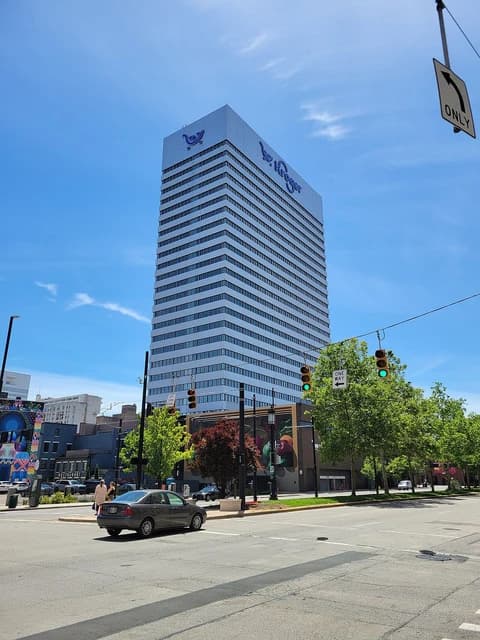
Kroger’s market value has evaporated by about $12 billion from its recent peak as shoppers increasingly direct grocery spending to bigger, lower-cost rivals, a sign the U.S. food retail business is entering a harsher phase of competition.
That matters because groceries are a volume game: even modest share losses can pressure sales growth, margins and valuation for a chain whose strategy depends on steady traffic and loyal households. The decline in Kroger’s shares to $60.91 on Sept. 14, from a high near $70 in February, has pushed the stock below its 200-day moving average and left it roughly 13% below its 50-day average, a technical setup that reflects fading momentum even after a brief rebound in September.
The underlying shift is not just about one company’s stock. Consumer spending patterns are tilting toward Walmart, Costco and Amazon, retailers with broader ecosystems, deeper traffic and in some cases stronger price perception. Walmart’s latest trading around $109 came after a year that included a surge above $130, underscoring the market’s preference for retailers seen as able to capture trade-down shoppers and keep grocery baskets moving. Costco, still priced near $919 despite a sharp summer pullback, continues to command a premium multiple because investors see its membership model and bulk-buy appeal as a hedge against weak discretionary demand.
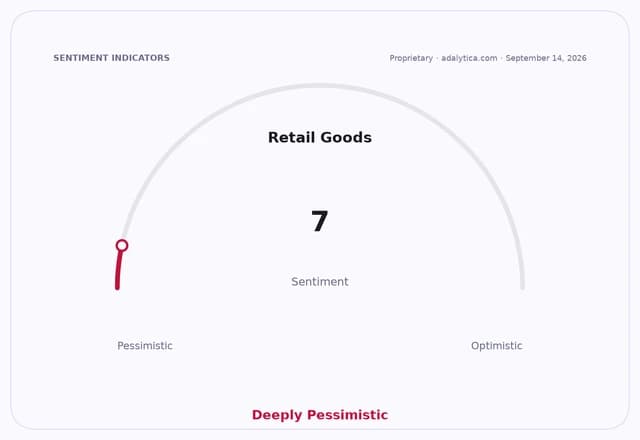
Kroger is more exposed to this behavioral change than its larger rivals. Food inflation has eased from its peak, but that has not restored basket growth the way investors once expected. Instead, households appear more selective, splitting purchases across stores, using private-label goods more aggressively and chasing deals with greater discipline. Adalytica’s consumer spending sentiment gauge is at “Extreme Greed,” but its retail goods spending sentiment is just 7, in “Extreme Fear,” a divergence that fits a market where consumers say they are willing to spend, yet remain choosy about where and on what.
For investors, the key issue is whether Kroger can defend volume without sacrificing profitability. A grocery chain can cut prices to protect traffic, but that often comes at the expense of gross margin. It can lean harder on e-commerce, loyalty programs and private label, but those investments add cost before they fully pay back. The recent recovery in Kroger’s share price to $60.91 from a July low near $55 suggests some investors think the selloff has gone too far, especially if the company can stabilize traffic and prove earnings resilience. The bear case is that Kroger’s value has been reset because the competitive gap with Walmart, Costco and Amazon is widening at the exact moment consumers are becoming more price-sensitive.
The broader narrative is that grocery is no longer a defensive refuge from retail competition. In a market where consumers are willing to shop around more aggressively, scale and ecosystem advantages matter more, and that shifts negotiating power toward the largest players. Kroger’s lost $12 billion in market value is the market’s way of pricing that change.
| Entity | Gains | Losses |
|---|---|---|
| Walmart | ▲Trade-down shoppers | ▼Smaller grocers |
| Costco | ▲Bulk-value demand | ▼Kroger traffic |
| Amazon | ▲Online grocery share | ▼Store-only chains |
| Kroger | ▲Potential rebound if pricing holds | ▼Market value, basket share |