Kroger, Walmart, Costco on staple demand
India’s plan to add wheat flour, rice, dal and ghee to budget ration kits would reinforce one of the world’s most important consumer themes: households will keep spending on food even when everything else gets squeezed.
For investors, that matters because food is the last expense families cut and the first one they defend. When governments broaden subsidized staples, they are usually responding to rising food stress, weaker rural purchasing power or supply shocks — and those pressures tend to keep demand for basic groceries elevated for longer than many traders expect. In other words, this is not just a welfare story. It is a reminder that food demand remains remarkably resilient, even when growth is uneven and inflation is uncomfortable.
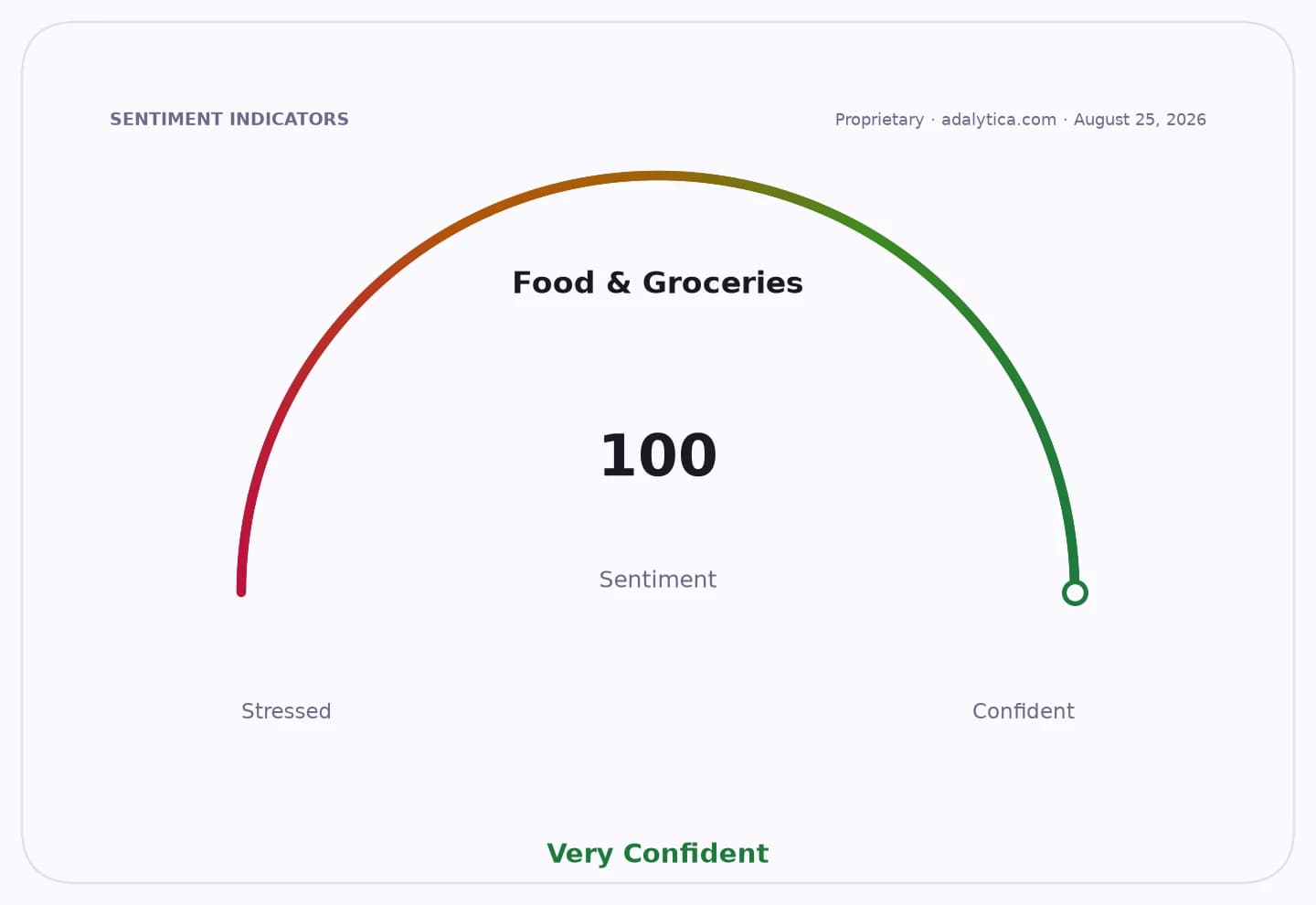
That backdrop helps explain why food and grocery spending sentiment in Adalytica’s gauge is flashing extreme greed, while CPI sentiment is showing fear. Consumers may be nervous about prices, but they are still prioritizing essentials. That combination is often good news for the biggest operators in food distribution, from grocers to warehouse clubs, because volume tends to hold up even when shoppers trade down to cheaper staples and private-label goods.
Kroger, Walmart and Costco fit that pattern in different ways. Kroger is the most directly levered to the U.S. grocery basket, where basic food spending is sticky and margins are defended by scale, logistics and loyalty. Walmart benefits when shoppers become value conscious, since its supercenter model and grocery reach make it a natural destination for budget-minded households. Costco can also win as families hunt for bulk savings, especially when food inflation makes membership-based value look more attractive.
The stock action lines up with that long-term thesis. Kroger has climbed back above its 50-day moving average and is trading near a recent breakout, with RSI readings improving and momentum turning less negative. Walmart remains well above its 200-day moving average, even after a sharp pullback from earlier highs, which suggests investors still trust its defensive earnings power. Costco has also recovered toward its recent highs, with strength returning after a softer patch.
The bigger investing lesson is that food spending booms are not always glamorous, but they are often durable. Governments can subsidize staples, consumers can downgrade brands and droughts can tighten supply, yet households still need to eat. That is why grocery chains, warehouse clubs and other scale retailers can compound quietly over years, especially when they combine pricing power, efficient distribution and steady free cash flow.
There are risks. If food inflation cools, the urgency around staples can fade. If subsidies are funded by broader budget stress, fiscal pressure can eventually change the policy mix. And if shoppers keep stretching budgets, even strong operators face tougher mix and margin comparisons. But for long-term investors, the core story remains intact: essential food spending is one of the most resilient demand streams in retail, and companies built to serve it deserve a place on the watchlist.
| Entity | Gains | Losses |
|---|---|---|
| Budget ration card holders | ▲Lower-cost staples | ▼Less cash strain |
| Grocery chains and warehouse clubs | ▲Sticky food demand | ▼Margin pressure from discounting |
| Consumers facing inflation | ▲Cheaper essentials | ▼Less discretionary spending |
| Food suppliers and distributors | ▲Higher volume | ▼Tighter pricing power |