Kyiv faces daily drone pressure and business disruptions
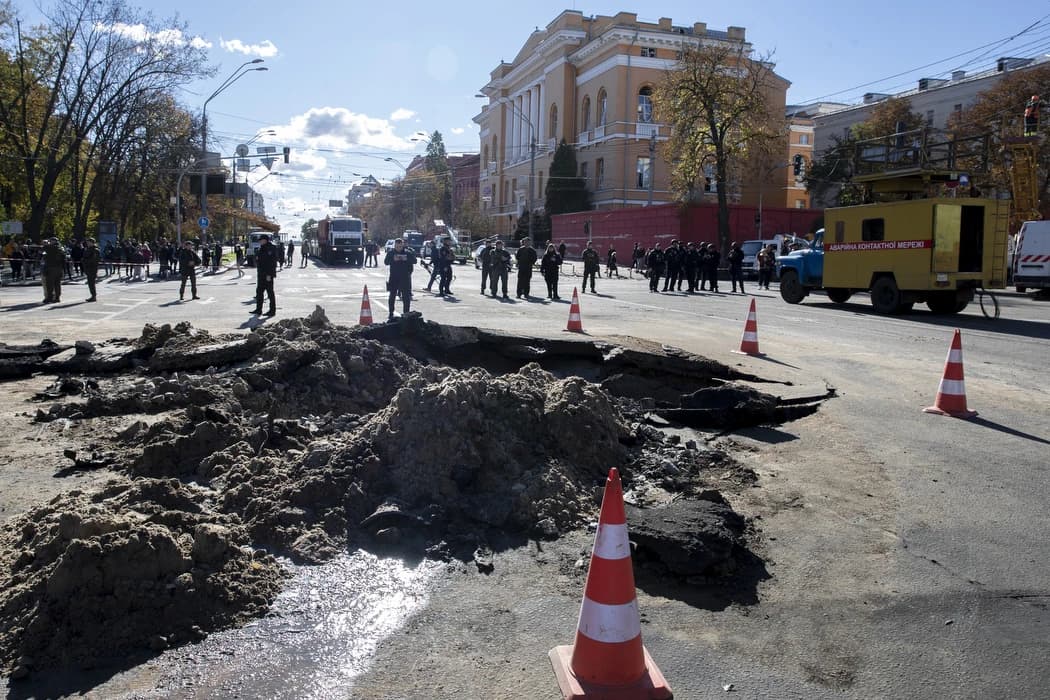
Russia is turning Kyiv into a city that can no longer count on uninterrupted work, transport or sleep, using daily drone waves and repeated air-raid alerts to impose economic damage without a ground siege.
That is the central shift in the war around the Ukrainian capital. After failing to seize Kyiv in 2022, Moscow is now trying to make the city function on Russian terms by stretching attacks across the day, forcing businesses and transit systems into repeated stoppages and draining air-defense resources that Kyiv needs elsewhere.
The latest strike on Tuesday killed three people and wounded 16, Ukrainian officials said, as missiles and drones hit high-rise buildings, a dormitory, a school, a clinic and warehouses. It came just hours after a three-day pause that had covered the visit of US envoys Jared Kushner and Steve Witkoff, underlining how selectively Moscow can suspend pressure when it serves diplomacy and resume it when talks falter.
The economic logic is straightforward. Every alert carries a cost far beyond physical destruction: workers are delayed, stores close, deliveries stop, trains are held, schools move children into shelters and emergency crews operate under constant threat. Ukraine’s government is now being forced to redesign the city’s operating rules around that reality, including a two-tier alert system that would let businesses remain open during drone threats but require shutdowns for missile attacks.
That change is a recognition that the Russian campaign is not aimed only at buildings. It is aimed at time, reliability and cash flow. In August, air alerts consumed 21.8% of scheduled operating hours for Ukrainian shopping centers, meaning malls lost more than one out of every five hours they were meant to be open. Agriculture Minister Taras Vysotskyi also said late last month that Russian strikes had destroyed roughly 90% of the food-logistics capacity run by major retail chains, contributing to short-lived shortages of milk, sugar, fruit and vegetables in Kyiv.
The aerial pressure has become more continuous and more difficult to intercept. Ukrainian officials say Russia launched more than 2,800 jet-powered drones against Ukraine in August, averaging about 90 a day, with use of those faster models rising fivefold in July from June. Kyiv Post said it documented more than 100 jet-powered drones approaching the capital during one 12-hour period. Unlike the slower Shahed-type drones used earlier in the war, jet-powered systems are harder to catch and can keep air defenses and civilian routines on edge for much longer.
The Institute for the Study of War says the key innovation is not necessarily a larger total volume of drones, but the distribution of attacks over more hours. That matters because even a single drone can trigger citywide sirens and shut down transport and business activity. During one four-day stretch in late August, Russia launched nearly 1,500 drones, more than half of them jet-powered, and Kyiv and the surrounding region faced five consecutive days of attacks that disrupted commutes and prevented metro trains from crossing the Dnipro River during alerts.
For investors and policymakers, the message is that Russia is pursuing a low-cost, high-friction strategy. It does not need to encircle Kyiv to make the capital more expensive to govern, defend and operate. By forcing Ukraine to keep air-defense crews on extended shifts and to spend scarce interceptors on frequent drone threats, Moscow is also creating trade-offs for the rest of the country. Radars, launchers and missiles assigned to Kyiv cannot simultaneously protect power plants, factories, airfields or frontline logistics.
That resource squeeze is especially important as winter approaches. President Volodymyr Zelensky said Ukraine is counting on a winter package covering air defense, energy support and access to US liquefied natural gas if the war continues. Yet the US delegation that met him in Kyiv did not announce any new Patriot batteries, while Britain has pledged additional air-defense support. Ukraine recently received a small number of Patriot interceptors, but officials still describe the shortage as severe.
The structural problem is that Patriot systems are essential against ballistic missiles but are too scarce and expensive to use against every drone. Ukraine is therefore trying to build a cheaper anti-drone layer, with Zelensky saying 67 domestic companies are working on systems that can intercept jet-powered drones, though only three to five have shown results. Even if the US licenses production of Patriot interceptors, as Rubio said negotiations remained under way, experts say building that capacity would still take at least a year.
| Entity | Gains | Losses |
|---|---|---|
| Russia | ▲Low-cost pressure on Kyiv | ▼International backlash |
| Kyiv businesses | ▲Tighter alert rules | ▼Lost hours and sales |
| Ukrainian air defenses | ▲Higher urgency for upgrades | ▼Ammo strain and fatigue |
| Moscow negotiators | ▲Leverage in talks | ▼Trust in ceasefire claims |