Libya Gas Export Plans Face Domestic Power Strain

Libya’s latest talk of supplying gas to Europe is colliding with a far more urgent problem at home: a power system so strained that officials are still struggling to keep the lights on. For investors, that gap matters because it underscores how much infrastructure and political stability come before any meaningful export story can take shape.
That is the real market takeaway. Europe may want diversified gas supplies after years of energy shocks, but Libya cannot credibly become a reliable exporter unless it first repairs domestic production, transmission and governance. In a country where electricity shortages remain politically explosive, every barrel and cubic foot also has to compete with local demand and a fragile state budget.
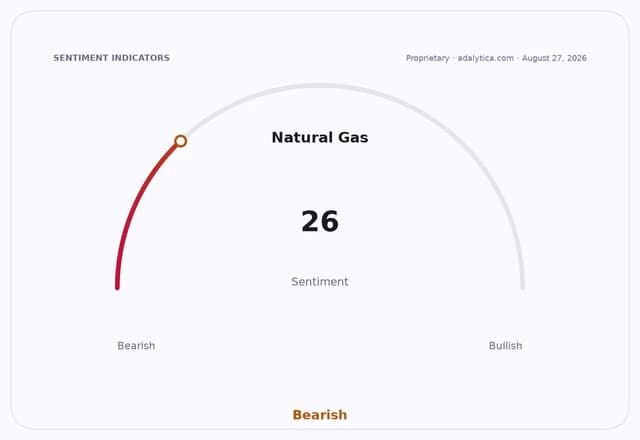
The timing is notable. Natural gas prices have been volatile, and conventional technical indicators on U.S. gas futures show the market trying to stabilize after a sharp swing lower. At the same time, oil prices remain elevated by historical standards, with WTI around $83.85 a barrel in the latest forecast and global oil market sentiment still flashing extreme greed on Adalytica’s gauges. That tells you energy markets are still sensitive to any hint of supply disruption or new export capacity. But Libya is not a marginal swing producer in the way investors need for dependable European gas supply; it is a high-risk jurisdiction where promises often run ahead of infrastructure.
For oil majors and LNG investors, the more practical implication is to treat Libya as optionality, not capacity. Exxon Mobil and Chevron have both seen strong upstream economics this year, and their shares remain well above longer-term moving averages, reflecting the market’s preference for producers with scale, cash flow and execution. Libya offers none of that certainty. If gas exports ever do materialize at meaningful levels, the beneficiaries would be Europe’s buyers and any shipping or midstream firms tied to new volumes. The losers would be those counting on the headline alone to solve Europe’s supply problem.
There is a broader lesson here for long-term investors: energy security is built on infrastructure, contracts and political continuity, not press statements. Libya may eventually contribute to Europe’s gas balance, but until it can reliably power its own economy, the export narrative remains more hope than asset. Worth watching, but not something investors should underwrite as if it were already real.
| Entity | Gains | Losses |
|---|---|---|
| Europe gas buyers | ▲More supply options | ▼Depend on uncertain Libya volumes |
| Libya officials | ▲Diplomatic leverage | ▼Credibility if power crisis persists |
| LNG/shipping firms | ▲Potential new trade flows | ▼Demand if exports stay stuck |
| Incumbent producers | ▲Higher share of reliable supply | ▼Share of attention to Libya hype |