Lithuania warns Russian drone wreckage could threaten NATO airspace
Russian drone wreckage recovered from attacks on Ukraine may be repurposed for strikes on NATO territory, Lithuania has warned, sharpening concern that the war’s fastest-evolving weapon could cross from the battlefield into alliance airspace.
The warning matters because it points to a more immediate and more asymmetric threat than tanks or missiles: cheap, mass-produced drones and salvaged components can be adapted quickly, at low cost and with little warning, while NATO’s layered defenses remain optimized for higher-end aircraft and cruise missiles. For eastern-flank states such as Lithuania, the risk is not only physical but economic, forcing governments to spend more on air defense, border surveillance and counter-drone systems just as budgets are already under pressure from broader rearmament.
The concern comes against a backdrop of repeated drone incidents and heightened security alerts across the region. A recent attack on Russia’s Yaroslavl area, which targeted a refinery, underscored how drones are being used to hit critical infrastructure and logistics nodes. European officials and security experts say such attacks expose gaps in detection, jamming and interception systems, especially against small, low-flying platforms that can be launched in large numbers and modified with battlefield salvage.
That dynamic is driving fresh demand for missile defense, radar, electronic warfare and counter-UAS systems, with investors already marking up shares of defense contractors. Lockheed Martin has climbed to $582.85 from $496.21 in October, while RTX has surged to $223.25 from $150.03 in September and Kratos Defense & Security Solutions has rebounded to $57.41 from $51.87 earlier this week after a sharp year-long pullback. The move reflects expectations that Europe will keep accelerating procurement as governments treat drone defense as a structural spending priority rather than a temporary wartime add-on.
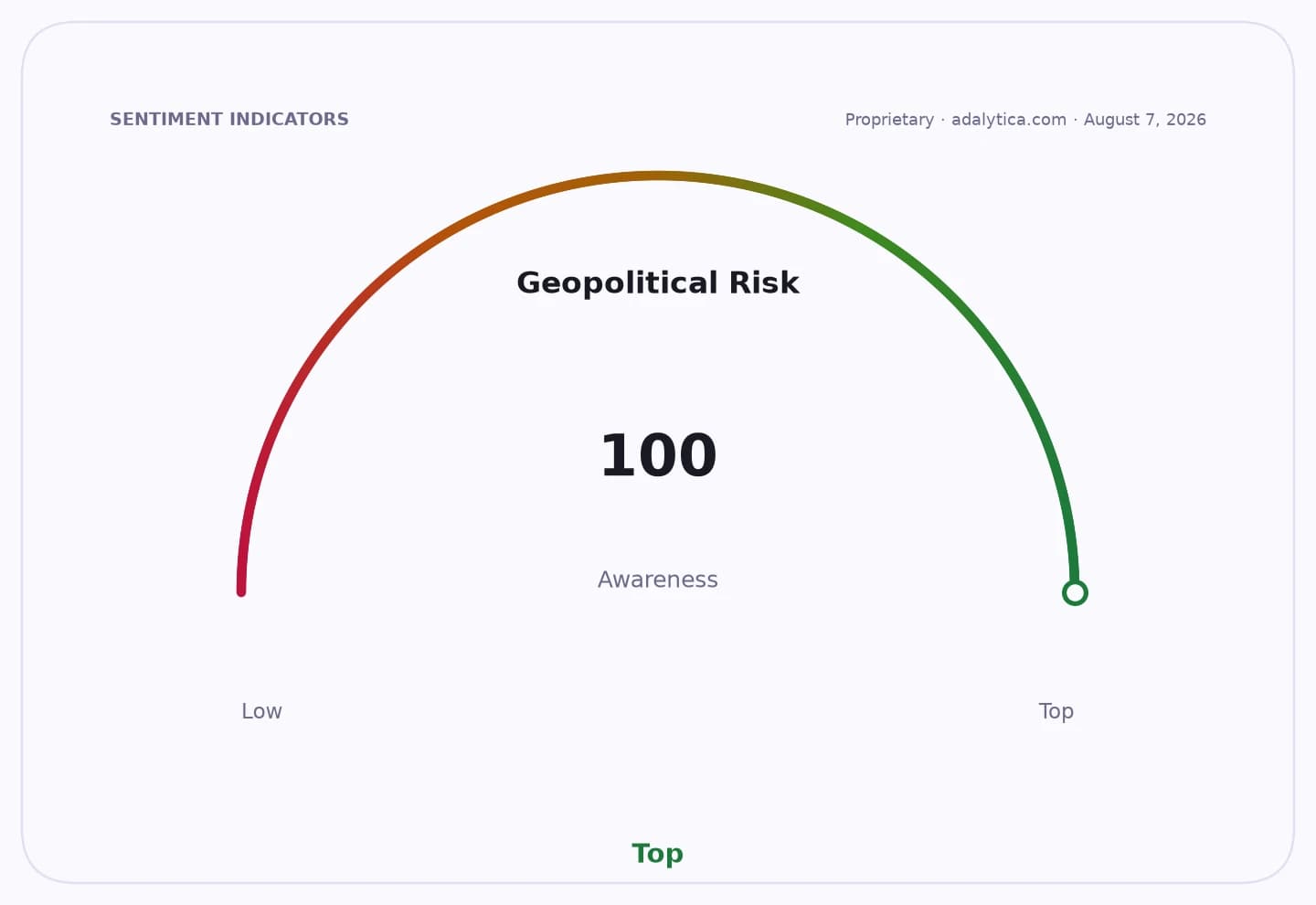
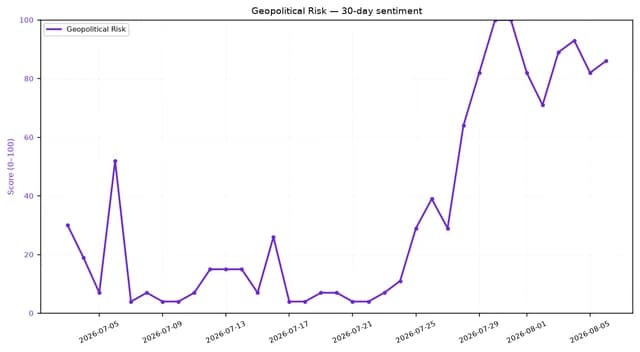
The market backdrop is also supportive. Benchmark U.S. yields remain elevated, with the 10-year Treasury around 4.61% and the 2-year near 4.17%, a level that still tends to favor firms with visible backlogs, recurring government demand and pricing power. Defense stocks have drawn a broader geopolitical bid as Adalytica’s Global Stability Sentiment gauge sits at an “Extreme Greed” reading of 86, while its gold index is at 100, showing investors are positioning for continued instability rather than a quick easing of risk.
For contractors, the opportunity is clear: NATO members need more interceptors, sensors and integrated command networks, and that favors primes such as Lockheed and RTX as well as smaller specialists like Kratos. The bear case is that procurement timelines are slow, labor shortages and contract execution issues can compress margins, and political support for higher defense spending can soften once immediate alarm fades. Kratos, in particular, has warned in its latest filing that retaining skilled production staff remains a drag on margins.
Still, Lithuania’s warning suggests the drone threat is no longer confined to Ukraine’s front line. If wreckage from one attack can be turned into the blueprint for another, NATO’s eastern members may be entering an era of persistent, low-cost aerial harassment that requires expensive, long-term defenses — and keeps defense stocks in focus.
| Entity | Gains | Losses |
|---|---|---|
| NATO eastern-flank states | ▲Stronger case for air-defense spending | ▼Higher security and budget costs |
| Lockheed Martin, RTX | ▲More demand for missile and drone defense | ▼Execution risk and margin pressure |
| Kratos Defense | ▲Interest in counter-drone systems | ▼Labor shortages and volatile earnings |
| Russia | ▲Potentially reusable drone tactics | ▼Greater NATO preparedness and scrutiny |