Little Rock Water Reclamation Authority Cuts Capital Spending
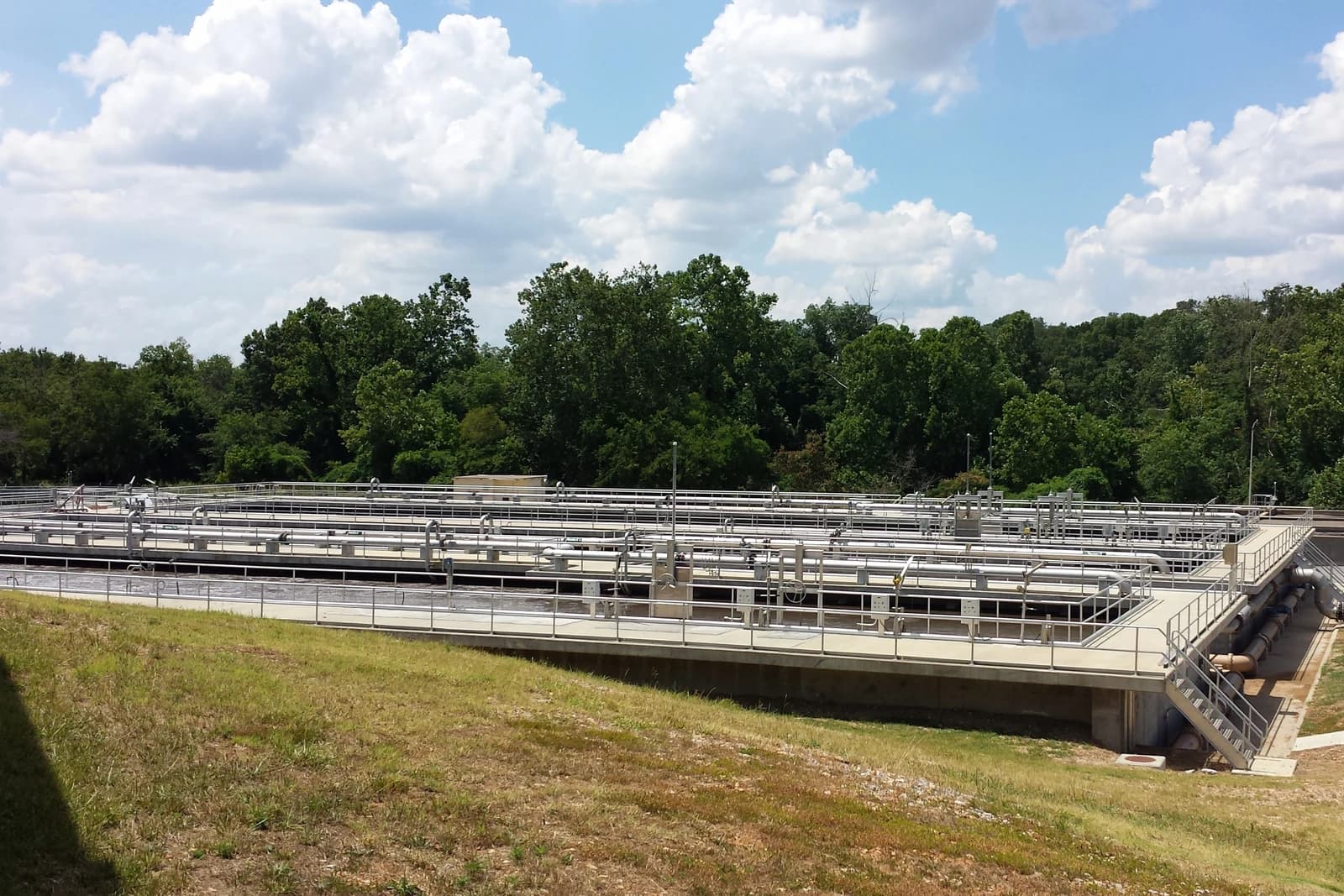
Little Rock’s wastewater utility is spending far less than planned on this year’s capital program, a shortfall that matters because it could slow upgrades to treatment plants and pump stations at a time when utilities across the U.S. are already juggling aging infrastructure, grant rules and long lead times for equipment.
The Little Rock Water Reclamation Authority has spent $24.5 million of the roughly $64.6 million budgeted for capital improvements in 2026, or 38% of the plan, officials told the Water Reclamation Commission on Wednesday. That is below the utility’s typical pace of about 42% at this point in the year, suggesting some of the gap is timing-related, but not all of it.
Ryan Benefield, the utility’s chief operating officer, said the under-run reflects a mix of favorable and unfavorable factors. One major project, the $18 million pump-station upgrade at the Adams Field Water Reclamation Facility, is expected to come in about $1 million under budget, with spending now forecast at $5 million this year instead of $6.2 million. Another project tied to a diversion structure at Interstate 440 and Springer Boulevard was delayed after the utility was awarded federal congressionally directed funding in January, as staff waited to make sure grant requirements were met.
But the utility is also being squeezed by supply-chain bottlenecks and property access problems. Benefield said some contractors have warned that key parts will not be available for 52 weeks, effectively pushing work into next year and making approved projects look like budget misses even when the spending simply slips into a later period.
The authority expects spending on nine projects in the 2026 capital budget to land about $9.5 million below plan, at $21.6 million versus $31.1 million. Benefield told commissioners that was “not where we want to be,” underscoring that the gap is not just a matter of savings.
For investors and bondholders, the issue is less about one quarter’s spending and more about execution. Wastewater utilities rely on steady capital deployment to maintain regulatory compliance, protect service reliability and justify future rate increases or debt issuance. Delays can compress timelines for contractors and equipment suppliers, but they can also push needed investment into later years, raising the risk of a bigger funding spike when projects finally move.
The timing is notable because Little Rock’s utility has recently shifted toward more investment in major assets after completing long-running legal settlements tied to sanitary sewer overflows. The authority was released from those agreements in 2024, giving management more room to focus on treatment plants and pump stations rather than court-mandated sewer overflow fixes. That makes execution on the current capital plan more important: the utility is no longer simply trying to stay in compliance, but trying to rebuild and modernize core infrastructure.
Commissioners also approved nearly $4.8 million as the guaranteed maximum price for phase two of rehabilitation work at the Fourche Creek Water Reclamation Facility, where concrete degradation and corrosion are being addressed. Combined with earlier phase-one work of $2.4 million, the project is expected to cost nearly $7.9 million and wrap up in October 2027. The approval shows the utility is still advancing major projects, even as the pace of overall spending trails the budget.
The next test is whether the authority can convert delayed work into actual construction in the months ahead. If equipment availability improves and easement issues clear, the current shortfall may prove temporary. If not, the under-spend could signal a more structural slowdown in capital execution, with implications for service reliability, project costs and future financing needs.
| Entity | Gains | Losses |
|---|---|---|
| Little Rock Water Reclamation Authority | ▲Near-term budget flexibility | ▼Project momentum |
| Ratepayers/Taxpayers | ▲Possible cost savings now | ▼Delayed infrastructure upgrades |
| Contractors/Suppliers with inventory | ▲Later project demand | ▼Firms facing long lead times |
| Bondholders/Investors | ▲Less immediate capital outlay risk | ▼Greater execution and timing risk |