Lockheed Martin and Defense ETFs Gain on Space Race
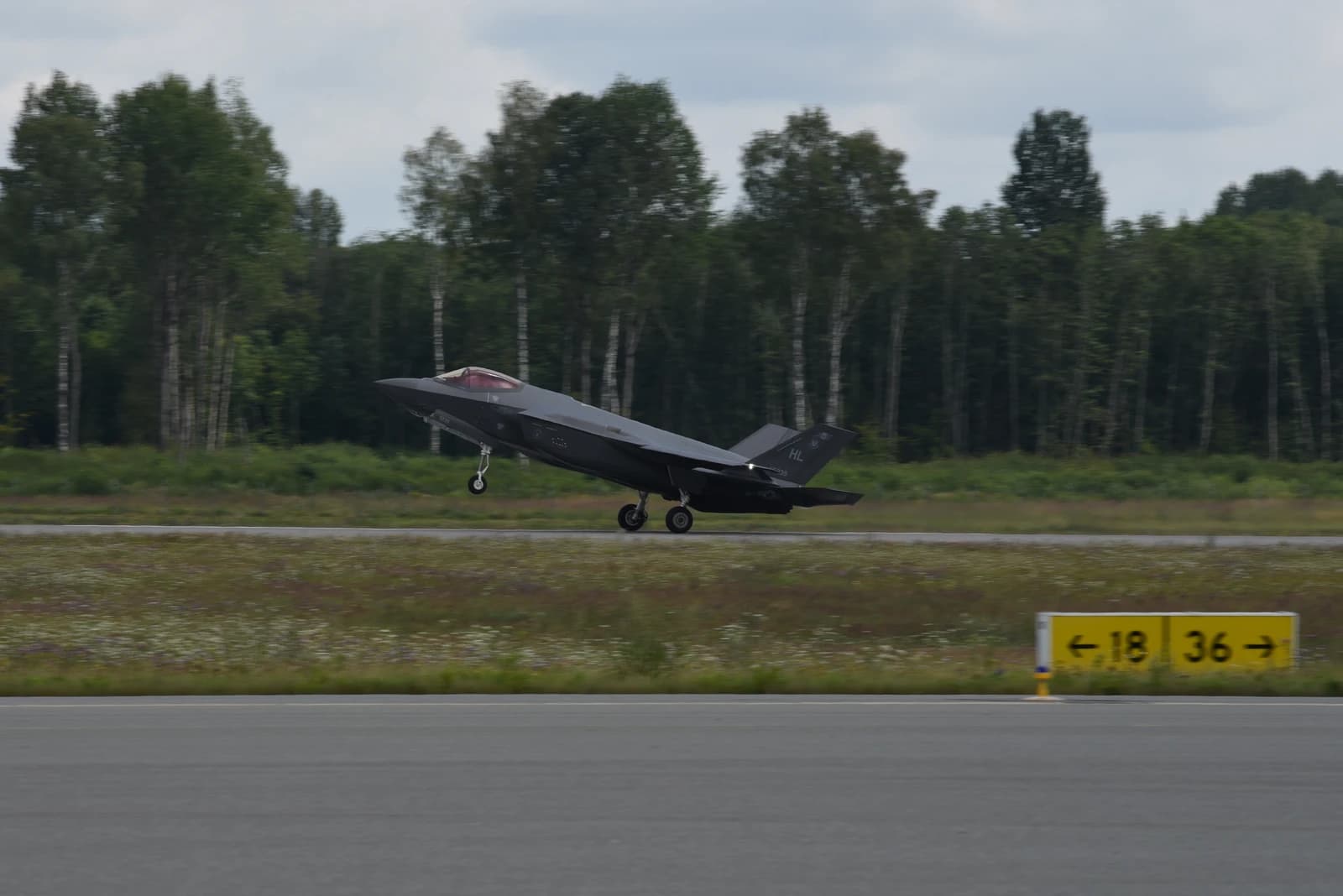
The real market-moving story is not just that Washington and Beijing are arguing over weapons in orbit — it is that the two powers are now accelerating simultaneously across space, artificial intelligence and advanced defense systems, making a long-running strategic rivalry more expensive, more persistent and harder to de-escalate.
That matters because once a competition becomes a race, restraint stops looking like prudence and starts looking like weakness. Both governments appear to believe the same thing: if they slow down, the other side wins. That logic has already pushed defense budgets higher and is now spilling into the next generation of military technology, from orbital systems to autonomous AI agents and the chips, power and compute needed to run them.
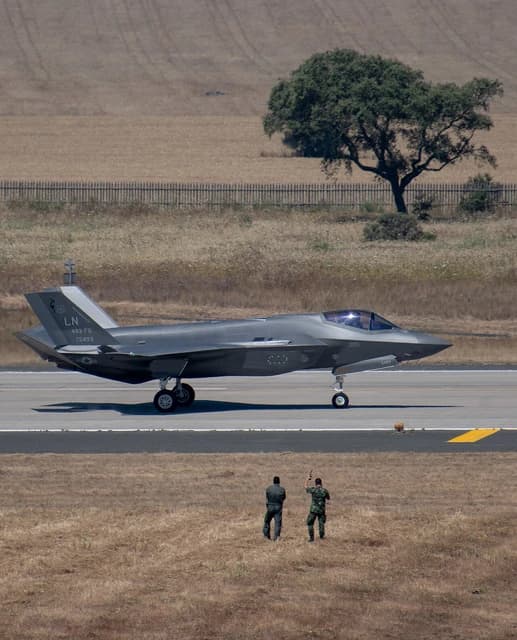
For investors, that changes the long-term setup for aerospace and defense. The winners are likely to be the companies that sit at the intersection of national security, space, missile defense, sensors, propulsion and secure computing. Lockheed Martin, Northrop Grumman, RTX and the broader defense ecosystem are already trading as if geopolitical demand will stay elevated, but the bigger point is that this is no longer a one-cycle surge. It is becoming a structural spending theme.
The stock action reflects that reality. Lockheed Martin has climbed from the low $490s late last year to above $530, while the SPDR Aerospace & Defense ETF has held up better than the broad market in recent months even as technical indicators show some short-term cooling. Lockheed’s share price remains close to its 200-day moving average, suggesting the market still sees enduring demand even after a sharp run. The ETF has also pulled back from its highs but remains far above where it started the year, a sign that investors are not abandoning the sector — they are rotating within it.
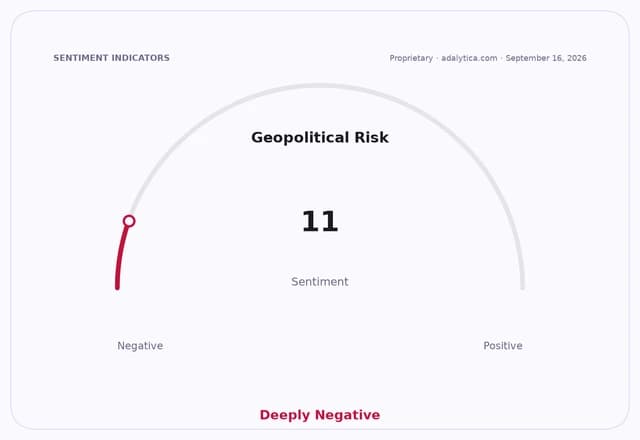
The broader macro backdrop reinforces the trade. Adalytica’s Global Stability Sentiment sits at 11, in “Extreme Fear,” while the S&P 500 trade-signal gauge is also in “Extreme Fear.” That is exactly the kind of environment in which money tends to flow toward industries with visible government demand, long order books and strategic relevance. Defense contractors have all three. They also benefit from the uncomfortable truth that geopolitical stress often outlasts the headlines.
The new wrinkle is space. China’s warning after confirmation of US weapons systems in orbit shows how quickly the rivalry is moving beyond traditional battlefields. Space militarization is not just about hardware in orbit; it also pulls in launch systems, satellite networks, missile defense, ground infrastructure and cyber resilience. That expands the addressable market for defense suppliers while raising the strategic value of firms that can support command, control and surveillance across domains.
At the same time, the AI race is giving the competition a second engine. Beijing and Washington are both racing to scale compute, energy supply and chip access because AI has become a strategic asset, not just a commercial one. The article’s most important economic point is that this race is self-reinforcing: more AI capability demands more chips, more power and more infrastructure, while military AI raises the stakes further. China’s ability to mobilize coal, nuclear buildout, dams and lithium resources gives it an industrial edge in scaling power for compute, even as US export controls try to slow the flow of advanced hardware.
That is why the long-term investment story is bigger than any one contractor or one ETF. It points to a multi-year boom in defense capex, space systems, semiconductors tied to sovereign AI and the infrastructure that supports both. In other words, this is not a trade on fear alone. It is a compounding story built on procurement, replacement cycles, deterrence and the permanent premium nations place on strategic independence.
The risk, of course, is escalation. Any misstep in Taiwan, space or cyber could bring sanctions, procurement delays or diplomatic freezes. And if Washington and Beijing ever decide they need to slow the race together, some of today’s assumptions about sustained demand could be tested. But investors should remember that in the meantime, the incentives are aligned for continued spending, not restraint.
| Entity | Gains | Losses |
|---|---|---|
| Lockheed Martin, Northrop Grumman, RTX | ▲Higher defense and space spending | ▼Dependence on geopolitics staying hot |
| Aerospace & Defense ETFs | ▲Continued investor inflows | ▼Broad-market underperformance risk |
| US and China militaries | ▲Faster capability buildup | ▼Higher fiscal and strategic costs |
| Diplomatic de-escalation efforts | ▲Greater urgency | ▼Credibility as tensions deepen |