Lockheed, Northrop and RTX Rise on Lebanon Tensions
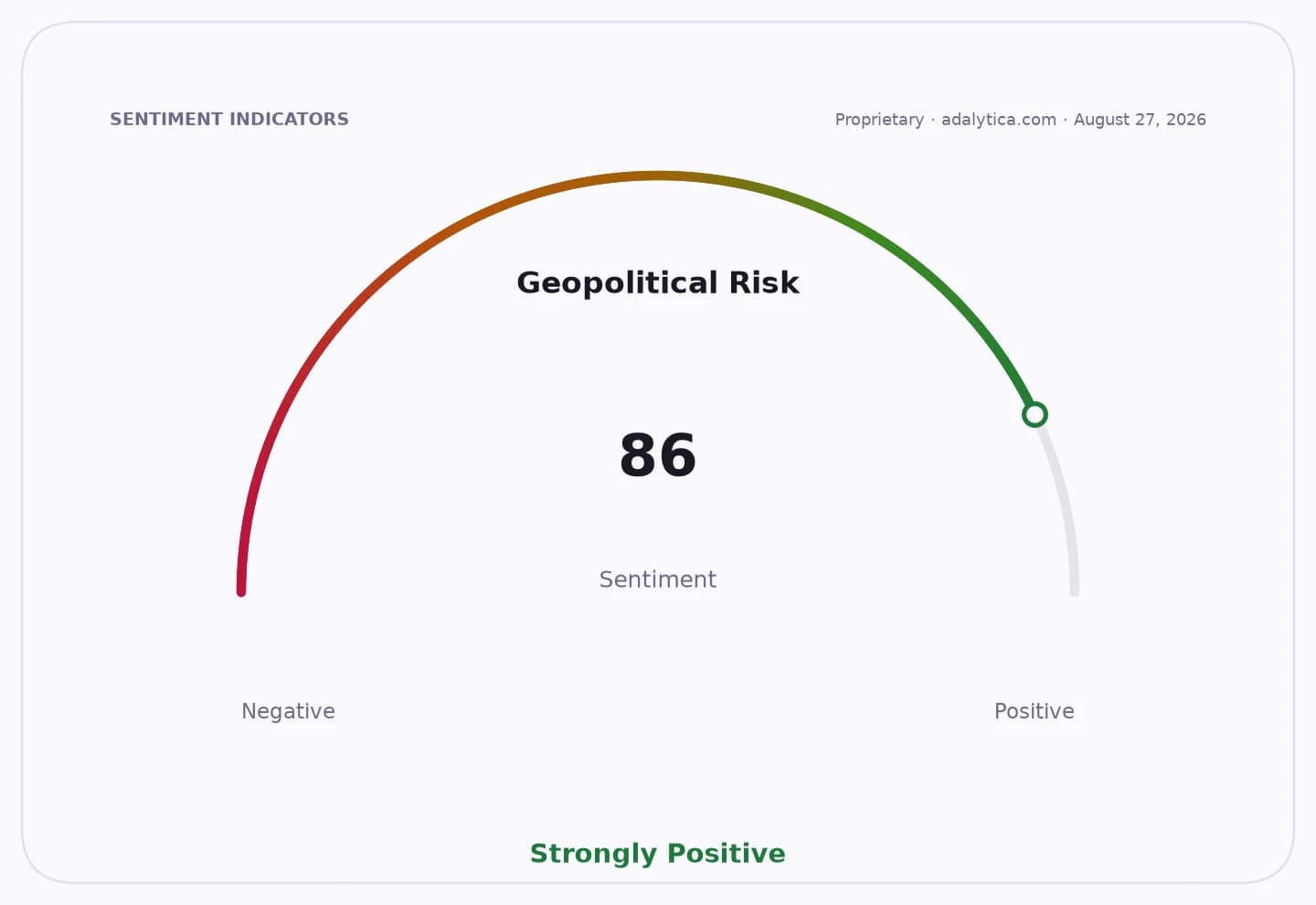
A fresh escalation in Lebanon is sharpening a broader question for Western governments and defense investors alike: whether the US and its allies have enough munitions, production capacity and replenishment speed to cope with simultaneous pressure points from the Middle East to the Indo-Pacific.
The immediate geopolitical problem is the erosion of the June settlement framework in Lebanon after Israeli strikes in the south killed 11 people, including civilians, according to the news context. But the market-relevant story runs deeper. The violence is a reminder that the allied defense industrial base is being asked to sustain higher operational tempo across multiple theaters at once, while policymakers in Washington and Europe still talk about long-dated procurement cycles that were built for peacetime, not crisis management.
That mismatch is what analysts often describe as a “window of fragility” — a period in which stockpiles are thinner than the threat environment, and replacement capacity has not yet caught up with demand. For defense contractors, that can mean more orders, longer backlogs and stronger pricing power. For governments, it means less margin for error if a regional flare-up in the Levant coincides with higher tension around China or renewed pressure in Ukraine.
The equity market has already begun to price in that backdrop. Lockheed Martin has climbed to $561.86 from below $500 in late June, while Northrop Grumman closed at $546.40 after a sharp recovery from a May trough near $526. At RTX, shares were changing hands at $211.12, down from the August peak near $225 but still well above the spring lows. All three names remain structurally supported by the same thesis: allied governments are being forced to spend more on air defense, missiles, interceptors and replacement inventories.
The technical setup reflects that rerating, even after the latest pullback. Lockheed Martin remains close to its 50-day moving average and above its 200-day average, while Northrop Grumman is also hovering near its 50-day line after a volatile year. RTX is holding well above its 200-day moving average. None of that changes the fundamental risk, but it shows investors are still willing to buy defense exposure on geopolitical stress rather than treat it as a short-lived trade.
The economic stakes are straightforward. Munitions shortages and slow restocking can constrain deterrence, raise the cost of sustaining allies, and force governments into emergency procurement at higher prices. That favors prime contractors with scale, established missile franchises and dense supplier networks. It also raises a broader policy issue: whether the US can preserve credible stockpile levels while simultaneously supporting Israel, deterring Iran, backfilling European inventories and preparing for a potential China contingency.
The bull case for the sector is that this is exactly the kind of environment that justifies multi-year capital spending and higher defense budgets. The bear case is that procurement bottlenecks, appropriations delays and political fatigue eventually cap the upside, even if near-term demand stays strong. Investors are also watching whether elevated expectations have already been discounted into valuations after the sector’s steep run-up.
For now, the message from both the battlefield and the tape is the same: geopolitical fragility is becoming a budgeting problem, and budgeting delays are becoming an investment thesis. If ceasefires keep fraying and stockpile concerns intensify, the next beneficiaries will be the firms that can deliver interceptors, precision weapons and sustainment capacity faster than governments can rebuild them.
| Entity | Gains | Losses |
|---|---|---|
| Lockheed Martin, Northrop Grumman, RTX | ▲stronger missile demand | ▼inventory depletion risk |
| US and allied militaries | ▲new replenishment urgency | ▼thinner stockpiles |
| Iran-backed militias and regional spoilers | ▲leverage from instability | ▼greater military pressure |
| Defense budgets | ▲higher justification | ▼fiscal flexibility |