London House Prices Fall as Rents Rise

London’s housing market is cracking unevenly, and the sharpest falls in four boroughs are a warning that higher borrowing costs are finally overwhelming even the capital’s most resilient property pockets.
The biggest takeaway for investors is not just that average London house prices slipped 3.3% in the year to July, but that the pain is now concentrated in local markets where affordability, taxes and financing costs are colliding at the same time. More than one borough is in retreat: three others saw declines of more than 10%, while Hammersmith and Fulham fell 9%, Lambeth 6.3%, Wandsworth 5.5%, Newham 5% and Barnet 4.9%. That is the kind of spread that tells you this is no longer a broad soft landing story — it is a repricing of demand in high-cost London postcodes.
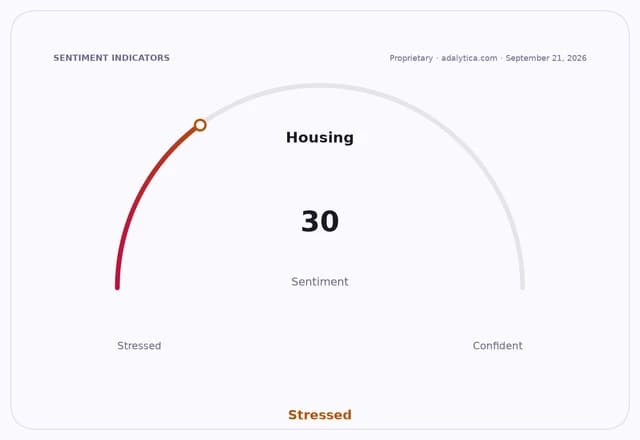
Why it matters economically is simple: housing is the transmission mechanism for rates. David Hollingworth of L&C Mortgages said markets are becoming more sensitive to stubborn inflation, geopolitical uncertainty and higher fuel and energy prices, while homeowners have had to “come to terms with higher mortgage rates and a less favourable mortgage market.” That matters because London is disproportionately exposed to mortgage affordability and to discretionary demand from buyers who can wait. When rates stay elevated, the ceiling on prices becomes much lower, especially in boroughs where valuations had been stretched furthest.
The rental market is sending the opposite signal. Average rents in London rose 3.6% in the 12 months to August, and agents say supply remains tight as landlords keep leaving the sector. Amy Reynolds of Antony Roberts said tenants are facing stiff competition and that she does not expect relief this autumn. That divergence — weaker sales prices, firmer rents — is the core investment narrative here. It points to a housing market being squeezed from both ends: owners are hit by expensive debt and softer capital values, while renters absorb the cost of scarce supply and shifting regulation.

There are second-order winners and losers. Homebuilders and brokers tied to high-end London transactions face a tougher volume backdrop. Private landlords are under pressure from rising operating costs, regulatory change and council tax increases, with more than a million Londoners facing larger bills after central funding cuts to boroughs including Westminster and Wandsworth. Yet rental housing operators with scale and pricing power can still benefit from the shortage. The message for the market is that scarcity is not disappearing; it is moving from ownership to rental, and that supports firms with institutional exposure to multifamily income streams.
For investors, this is a tactical warning and a strategic opportunity. The warning is that London residential asset values can still reprice lower if mortgage rates stay restrictive and inflation remains sticky. The opportunity is in the winners from that same squeeze: rental platforms, housing operators, and the broader infrastructure around affordability, refurbishment and managed living. In a market where the capital’s most expensive boroughs are now posting double-digit declines, I believe the smarter trade is not chasing London house-price recovery — it is owning the businesses that profit from persistent housing scarcity.
| Entity | Gains | Losses |
|---|---|---|
| London renters | ▲More bargaining power in some segments | ▼Higher rents and tighter supply |
| Private landlords | ▲Possible rent increases on retained stock | ▼Higher costs and exits from sector |
| London homeowners | ▲Some resale opportunities in weaker boroughs | ▼Falling prices and dearer mortgages |
| Rental housing operators | ▲Stronger demand for managed stock | ▼Pressure from regulation and taxes |