London housing incentives and tighter rules
A London move to reward a builder for speeding up housing construction underscores the bigger issue in housing policy: governments are becoming more willing to use financial incentives, but they are also tightening standards around transparency, solvency and accountability.
That matters because housing shortages are no longer just a social problem. They are a supply-side economic constraint, feeding rent inflation, slowing household formation and keeping pressure on consumer spending. When policymakers intervene, they are trying to unlock more homes without creating a free-for-all in which undercapitalized developers, speculative buyers or opaque sales practices distort the market.
The London committee’s support for waiving about $553,000 of interest for Westdell is a small number in market terms, but the signal is bigger: authorities want faster delivery, and they are prepared to compensate builders who help meet targets. At the same time, broader proposals to increase transparency in apartment transactions and to hold portions of purchase prices until ownership paperwork is finalized point to a stricter rulebook. In other words, the market may get more support, but only if participants can prove they are financially and technically sound.
For investors, that combination cuts both ways. Builders with strong balance sheets, reliable execution and access to capital stand to benefit most from any pro-development policy regime. Weaker players could find that the same reforms that encourage construction also raise compliance costs and slow deal flow. That is why housing policy is increasingly a stock-selection story, not just a macro one.
The read-through extends beyond London. In the U.S., single-family rental owners such as Invitation Homes and American Homes 4 Rent have already warned in filings that the regulatory environment around institutional ownership of housing is evolving. That could mean more scrutiny, more costs and less flexibility, even as housing shortages keep demand for professionally managed rental stock intact.
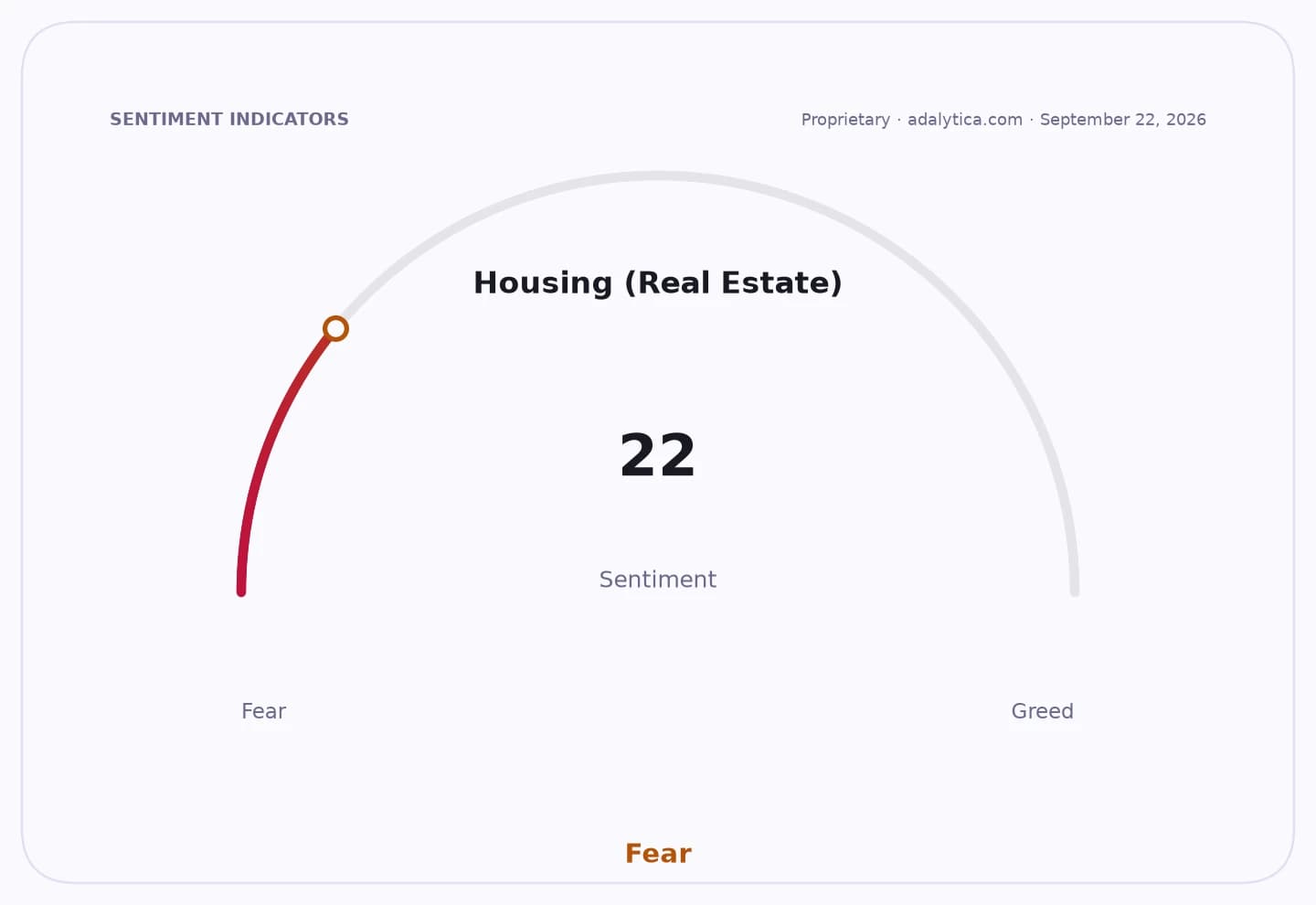
Technical signals in the housing-related ETF XHB, tracked by Adalytica’s Housing Fear & Greed Index, show sentiment in “Fear” territory, a reminder that investors remain cautious even after policy chatter. That caution is understandable: housing is still dealing with affordability stress, high financing costs and uneven execution by developers.
For long-term investors, the takeaway is straightforward. Housing remains a structural theme, but policy is shifting toward a tougher balance between incentives and controls. The winners are likely to be the companies that can build, comply and scale without stretching their finances. That makes the strongest operators worth watching — and the weakest ones worth avoiding.
| Entity | Gains | Losses |
|---|---|---|
| Strong developers | ▲Faster approvals and incentives | ▼Less room for weak execution |
| Homebuyers and tenants | ▲More supply over time | ▼Slow relief if delivery lags |
| Regulators | ▲More transparency and control | ▼Greater pressure to enforce standards |
| Weak builders/speculators | ▲Little benefit | ▼Higher compliance and financing pressure |