Mach-E Refresh Tests Ford's EV Strategy
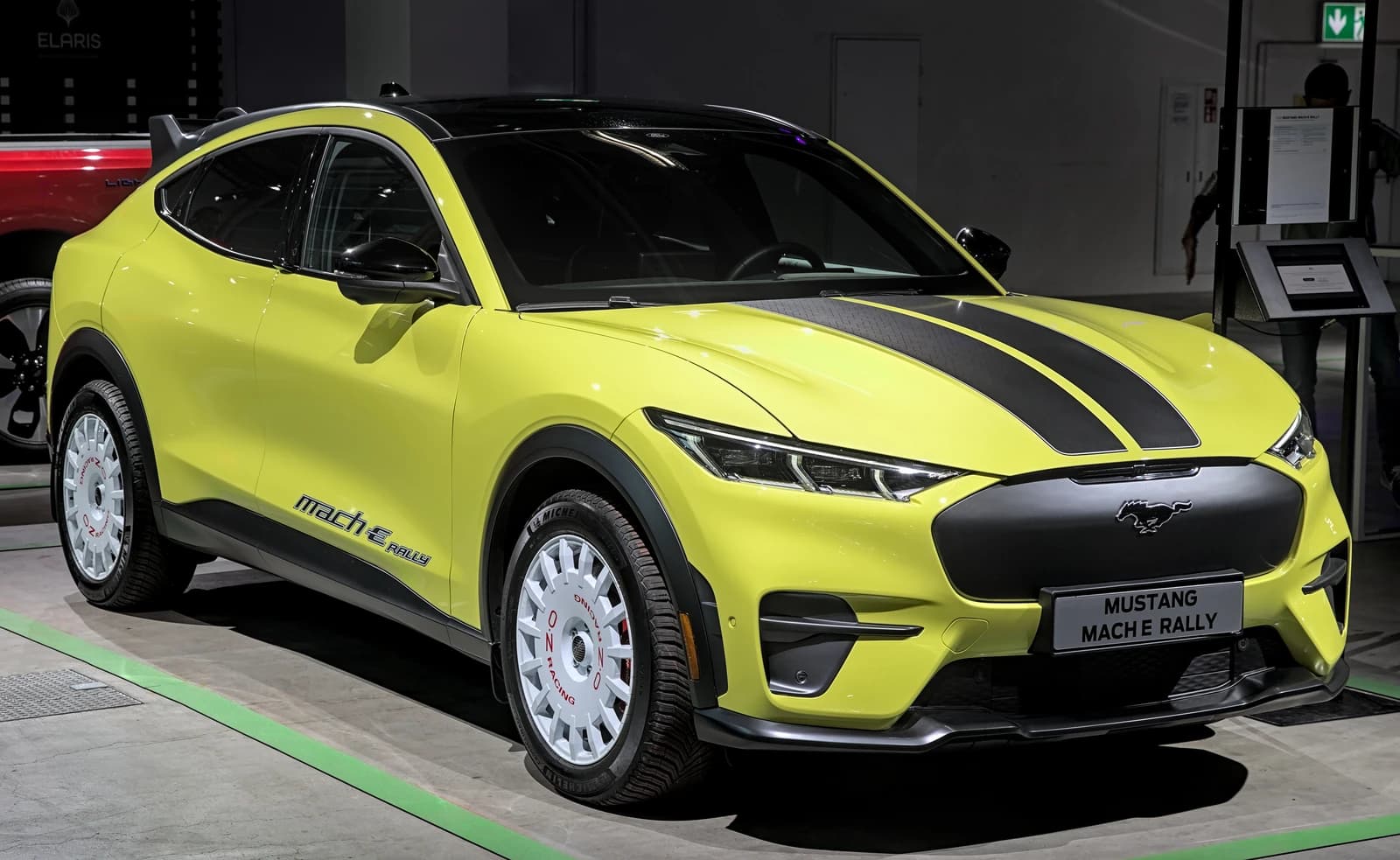
Ford’s Mustang Mach-E is one of the clearest proof points that the electric SUV market is moving from hype to discipline, and that matters because the winners now will be the brands that can price, scale and refresh EVs without destroying margin.
The question behind the 2026 Mach-E is not whether Ford can sell another electric crossover. It is whether Ford can keep one of its most important EV nameplates competitive in a market where buyers have become far more selective, incentives are less reliable and the best products are increasingly judged on range, software, charging speed and real-world utility rather than novelty. That is why a model-year update matters to investors: if the Mach-E holds its own, Ford protects a key bridge between its combustion franchise and its EV future. If it slips, the company loses more ground in the fastest-growing part of the utility-vehicle market.
The stock market is already telling part of that story. Ford shares have climbed to the mid-teens and are sitting near their 50-day and 200-day moving averages, a sign investors are treating the company as a turnaround and cash-flow story rather than a broken EV play. But the broader EV tape is less forgiving. Tesla’s shares, while still far above Ford’s in absolute terms, have pulled back from prior highs and are now trading below both the 50-day and 200-day moving averages, while Adalytica’s Tesla earnings snapshot shows elevated fear even as headline sentiment has stabilized. That combination suggests the market is rewarding execution, not just brand power, and punishing anything that looks even slightly out of step with demand.
For Ford, that makes the Mach-E strategically important. It sits in the middle of a crowded electric SUV field where practical design and value increasingly beat aspirational marketing. The 2026 version needs to answer the same four questions buyers care about: how far it goes, how fast it charges, how easy it is to live with, and whether the price still makes sense after federal and dealer incentives. The two biggest risks are equally clear: EV depreciation remains a buyer concern, and Ford still has to prove it can make its electric lineup profitable at scale. In other words, the Mach-E is not just another SUV launch — it is a test of whether Ford can convert EV interest into a durable business.
That is why the competitive backdrop matters. Rivals are crowding into the electric and hybrid SUV lane with better efficiency, fresh styling and broader global reach. Kia’s expansion in compact SUVs underscores how aggressively legacy automakers are leaning into family-friendly crossovers with hybrid and AWD options, while General Motors is still reshaping its EV capacity around demand and policy shifts. The consumer takeaway is simple: buyers have more choices than ever. The investor takeaway is more consequential: the automakers that can keep their SUVs relevant without overbuilding inventory will capture the next wave of margin.
The market underestimates how much this kind of mid-cycle EV refresh can matter for Ford’s valuation. A well-received Mach-E helps defend U.S. retail share, supports dealer traffic and keeps Ford in the EV conversation while the company continues to rely on trucks and profitable SUVs for the bulk of its earnings power. Just as important, it gives investors a clearer read on whether Ford’s electric strategy is becoming a real franchise or just an expensive transition.
My thesis is that the 2026 Mach-E is less about one model and more about Ford’s right to participate in the next phase of EV adoption. If Ford can keep the Mach-E competitive on range, pricing and usability, the upside is not only more unit sales but a better multiple on the entire company as investors begin to value Ford less like a cyclical automaker and more like a diversified mobility platform. The best way to play that inflection point is to focus on the companies that own the EV picks-and-shovels and the high-volume SUV channels — Ford among them, if it executes.
| Entity | Gains | Losses |
|---|---|---|
| Ford | ▲EV credibility, SUV sales | ▼Margin pressure if pricing slips |
| Tesla | ▲Premium EV halo if demand stays strong | ▼Share if rivals refresh faster |
| Kia / GM | ▲Cross-shopping traffic | ▼Must defend share in crowded SUVs |
| Buyers | ▲More EV choices | ▼Less pricing power from incentives |