Malawi household borrowing reaches K1 trillion

Household borrowing in Malawi has climbed to K1 trillion, overtaking lending to commercial borrowers and underlining how quickly banks are leaning on consumers even as credit conditions appear to be tightening.
That shift matters because it points to a change in where Malawi’s financial system is finding growth — and where the risks are accumulating. More lending to individuals can support short-term consumption, but it also increases exposure to wage stress, inflation and repayment strain at a time when borrowers have less room to absorb shocks.
The Reserve Bank of Malawi figures, as cited in the seed headline, suggest household credit has become the largest single destination for bank lending. That is a meaningful inflection for an economy where business borrowing normally carries the more direct growth payoff through investment, working capital and job creation. If households are now absorbing a bigger share of credit, the banking system is increasingly financing spending rather than productive expansion.
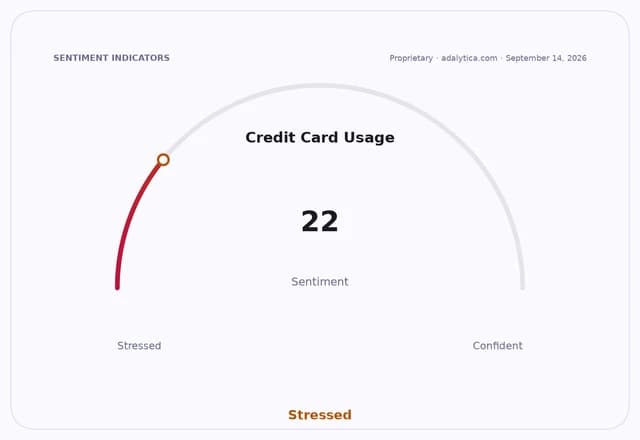
For lenders, the appeal is obvious. Retail loans can be easier to distribute, often carry higher margins and can grow quickly when corporate demand is weak. But the market backdrop also shows why the trend deserves caution. Financial institutions elsewhere in the region have been benefiting from stronger loan demand, yet consumer-credit sentiment has deteriorated sharply in the Adalytica gauge, which shows fear around card usage. That aligns with a broader picture of households becoming more selective as the cost of debt rises.
The economic risk is that credit growth may be outpacing the ability of incomes to support it. If wages do not keep up, household loans can quickly turn into a drag on bank asset quality, pushing up provisions and squeezing profitability later. The separate Adalytica wage-inflation gauge points to mixed conditions: wage pressure remains present, but not strong enough to guarantee borrowers can comfortably service a larger debt load.
For investors, the question is not simply whether loan books are expanding, but whether the mix is improving or deteriorating. A stronger tilt toward household credit can lift near-term interest income, but it may also make earnings more cyclical and more sensitive to delinquency trends. That is especially important for banks with concentrated retail exposure or thinner buffers against bad debts.
The broader narrative is that Malawi’s credit market is being pulled toward the consumer at a moment when the economy would benefit more from business lending. Whether that becomes a temporary response to weak corporate demand or a more lasting reallocation will depend on inflation, employment and the banking sector’s willingness to price risk more aggressively. For now, the headline number is less a sign of healthy credit deepening than a warning that growth is coming with a heavier household debt burden.
| Entity | Gains | Losses |
|---|---|---|
| Banks | ▲Higher retail loan yields | ▼Higher default risk |
| Households | ▲Easier credit access | ▼Debt-service strain |
| Businesses | ▲Less immediate competition for deposits | ▼Tighter credit availability |
| Malawi economy | ▲Short-term consumption support | ▼Weaker investment-led growth |