Production restrictions planned at the Martigues gas plant matter because they tighten an already fragile European gas balance at a time when the market is highly sensitive to any outage, whether industrial, weather-driven or geopolitical.
Martigues Gas Curbs Lift Europe Energy Security Trade
For investors, the key point is not the plant itself but the price signal. European gas has been trading on fear for months, and even localized supply constraints can amplify volatility across LNG, utilities and industrial power costs. That is exactly how marginal disruptions become macro events: they force buyers back into the spot market, lift replacement costs and keep the premium for secure supply elevated.
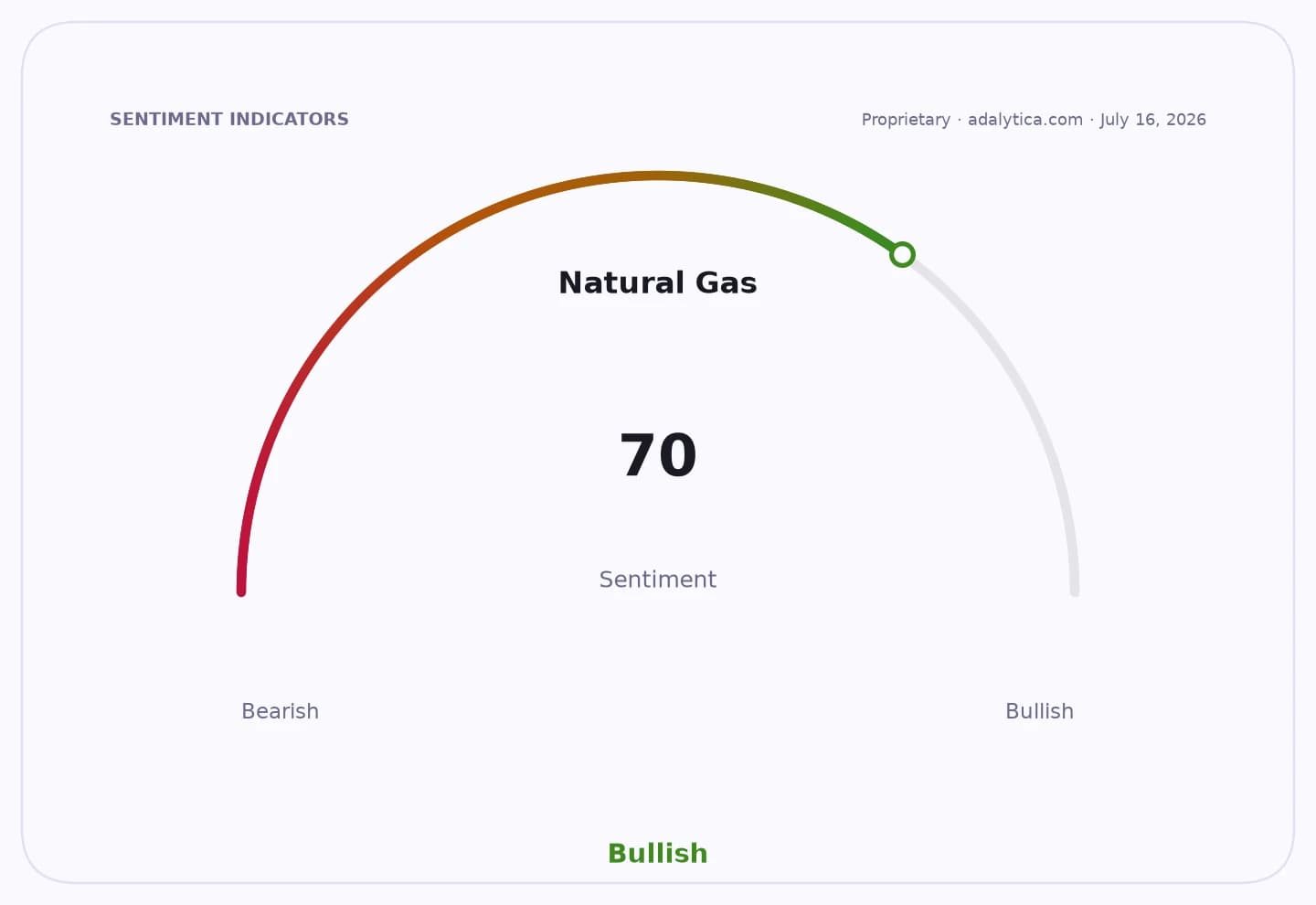
Sentiment IndicatorsⓘProprietary · adalytica.com · July 16, 2026
This is a snapshot — live sentiment, awareness and momentum for 130+ markets update continuously in the dashboard.Open AlphaPulse
The broader setup remains constructive for gas bulls, even if day-to-day price action is choppy. U.S. natural gas futures remain far below their winter spikes in absolute terms, but the latest technical posture still shows a market that can reprice quickly when supply news hits. The current contract at $2.85 is below its 50-day moving average of $3.08, and the RSI reading of 21.7 points to an oversold market that could snap back on any fresh supply shock. In Europe, that leaves room for a sharper reaction than many expect if Martigues restrictions prove persistent.
That matters because Europe’s gas system is no longer just a utility story — it is a capital allocation story. Every supply disturbance reinforces the investment case for LNG terminals, storage, flexible generation and the companies that own the infrastructure that keeps molecules moving. It also supports the thesis that energy security, not just clean transition rhetoric, will guide spending decisions through the rest of the decade.
The market underestimates how quickly these localized bottlenecks can ripple outward. If French output curbs feed into tighter regional balances, import demand rises, arbitrage widens and the European gas complex can drag up prices for power, industrial feedstock and shipping-linked energy contracts. That is the kind of second-order effect that creates asymmetric opportunity in the names that control transport, storage and supply flexibility.
The investable takeaway is simple: treat Martigues as another reminder that energy infrastructure remains a toll road in a geopolitically brittle world. I believe the best way to play this is through diversified energy exposure and LNG-linked infrastructure names rather than trying to time the commodity itself.
| Entity | Gains | Losses |
|---|---|---|
| LNG exporters | ▲Higher spot demand | ▼None |
| European gas infrastructure owners | ▲Bigger utilization | ▼Supply bottlenecks |
| Industrial gas users | ▲None | ▼Higher input costs |
| Short-term gas bears | ▲None | ▼Squeeze risk |