Meta, Nvidia, Microsoft on AI safety and spending

Meta Platforms chief Mark Zuckerberg is pushing back against calls to slow artificial intelligence development, arguing that market competition will force labs to make systems safer and more aligned rather than simply race ahead unchecked.
His comments matter because they frame the central policy and investment debate around AI: whether frontier-model developers should voluntarily ease the pace of progress, or whether competition itself will produce enough incentives to harden systems before they are widely deployed. Zuckerberg’s view effectively rejects the idea that safety requires a pause, and instead argues that trust, reliability and alignment will become the key commercial differentiators.
For investors, that keeps the spending cycle intact. Meta, Microsoft and Nvidia remain tied to an AI buildout that has already driven enormous capital allocation into data centers, chips and model training. If the industry were to slow materially, that would soften demand for advanced semiconductors, cloud infrastructure and AI services. Zuckerberg’s stance suggests the opposite: labs will keep pouring resources into training and deployment, even as they spend more on guardrails, independent testing and oversight.
The Meta chief also said companies face strong liability risks if their models cause harm, reinforcing the case that safety spending is not a drag on the business but part of the cost of competing. Meta has already delayed launches such as its Muse system for months to prioritize safety, a sign that the company wants to avoid the reputational and regulatory damage that could follow a rushed release. That balance matters for a group of firms already operating under rising legal scrutiny over data use, content moderation, intellectual property and frontier-model risks, as reflected in recent SEC filings from Meta, Microsoft and Nvidia.
The market backdrop shows why the debate is not academic. Meta shares have climbed back to about $673, well above both the 50-day and 200-day moving averages, even after a series of violent swings earlier this year that showed how sensitive investor confidence has become to AI execution. Nvidia, the clearest beneficiary of the AI buildout, closed around $214, also above its 50-day and 200-day averages, while Microsoft was near $490 and still trading above its long-term trend. That suggests investors continue to price AI as a capital-intensive race rather than a regulated slowdown.
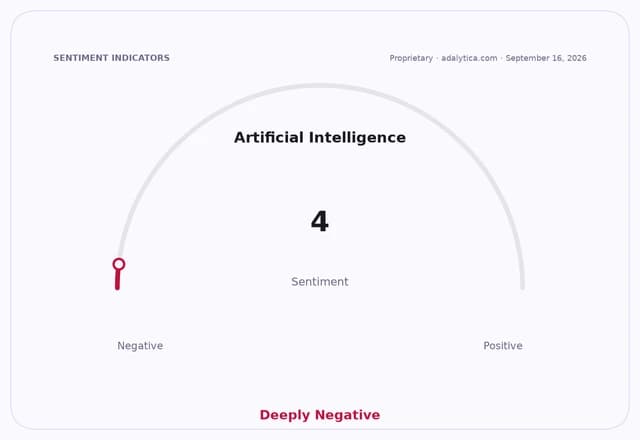
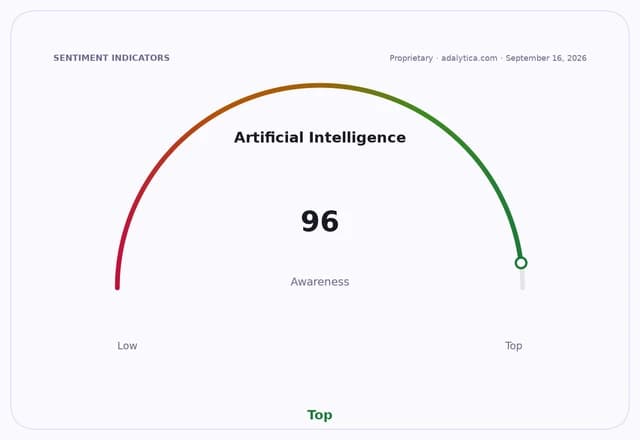
There is, however, a clear bear case. If policymakers in the U.S. or Europe decide that market discipline is not enough, rules around frontier models, compute usage or model releases could raise costs and delay monetization. That risk is already embedded in the sector, and Adalytica’s AI sentiment gauge shows extreme fear even as awareness remains elevated, a sign that the debate is intensifying rather than fading. For now, though, Zuckerberg is signaling that the industry’s default mode remains to accelerate — but with more testing, more external review and a stronger emphasis on trust as a competitive weapon.
For investors, the key question is no longer whether AI will continue to draw heavy spending, but which companies can turn that spending into durable products without triggering a regulatory or safety backlash. Meta’s argument is that speed and caution are not mutually exclusive. The next catalyst will be whether rivals, regulators and enterprise customers agree.
| Entity | Gains | Losses |
|---|---|---|
| Meta Platforms | ▲Keeps AI spending momentum | ▼Faces higher safety and liability costs |
| Nvidia | ▲Sustained chip demand | ▼Slower frontier-model rollout |
| Microsoft | ▲Continued cloud AI investment | ▼Greater regulatory and compliance burden |
| Regulators / safety advocates | ▲More attention to oversight | ▼Less support for a development slowdown |