Meta AI spending keeps Nvidia demand strong
Mark Zuckerberg is betting that the race to build artificial intelligence is safer with more competition, not less, and that view keeps Meta on the offensive just as investors are trying to separate AI winners from the companies most exposed to regulatory and legal risk.
That matters because the industry’s core debate is no longer whether AI will be built, but who will control the pace, the safety standards and the enormous capital spending that comes with it. Zuckerberg’s rejection of a coordinated slowdown puts Meta squarely with the camp that says market pressure, liability and rival labs will discipline the sector better than any pause could — a stance that aligns him with Donald Trump, Jensen Huang and other executives who warn that overcaution could hand strategic advantage to China.
The implications extend well beyond one company. If Zuckerberg is right, the AI buildout stays on an accelerated path, which supports demand for chips, cloud infrastructure, data centers and power — the real toll roads of the next technology cycle. That is constructive for Nvidia and, indirectly, for the broader semiconductor and infrastructure supply chain, even as it raises the odds of bigger compliance costs and more headline risk for the platforms trying to commercialize advanced models.
Zuckerberg argued that every AI lab has both the responsibility and the incentive to move at the right speed and to build in safeguards. He said Meta delayed the launch of Muse, one of its AI agents, earlier this year to strengthen safety systems, and pointed to independent evaluators working with Meta Superintelligence Labs as a model the rest of the industry could follow.
For investors, the key point is that Meta is signaling it will not trade away AI ambition for caution. That supports the bull case that Meta remains one of the largest long-term beneficiaries of AI monetization across ads, agents and consumer products. But it also means the company is choosing a path that keeps legal and regulatory exposure front and center, especially after settling US state claims tied to Facebook and Instagram for as much as $18 billion.
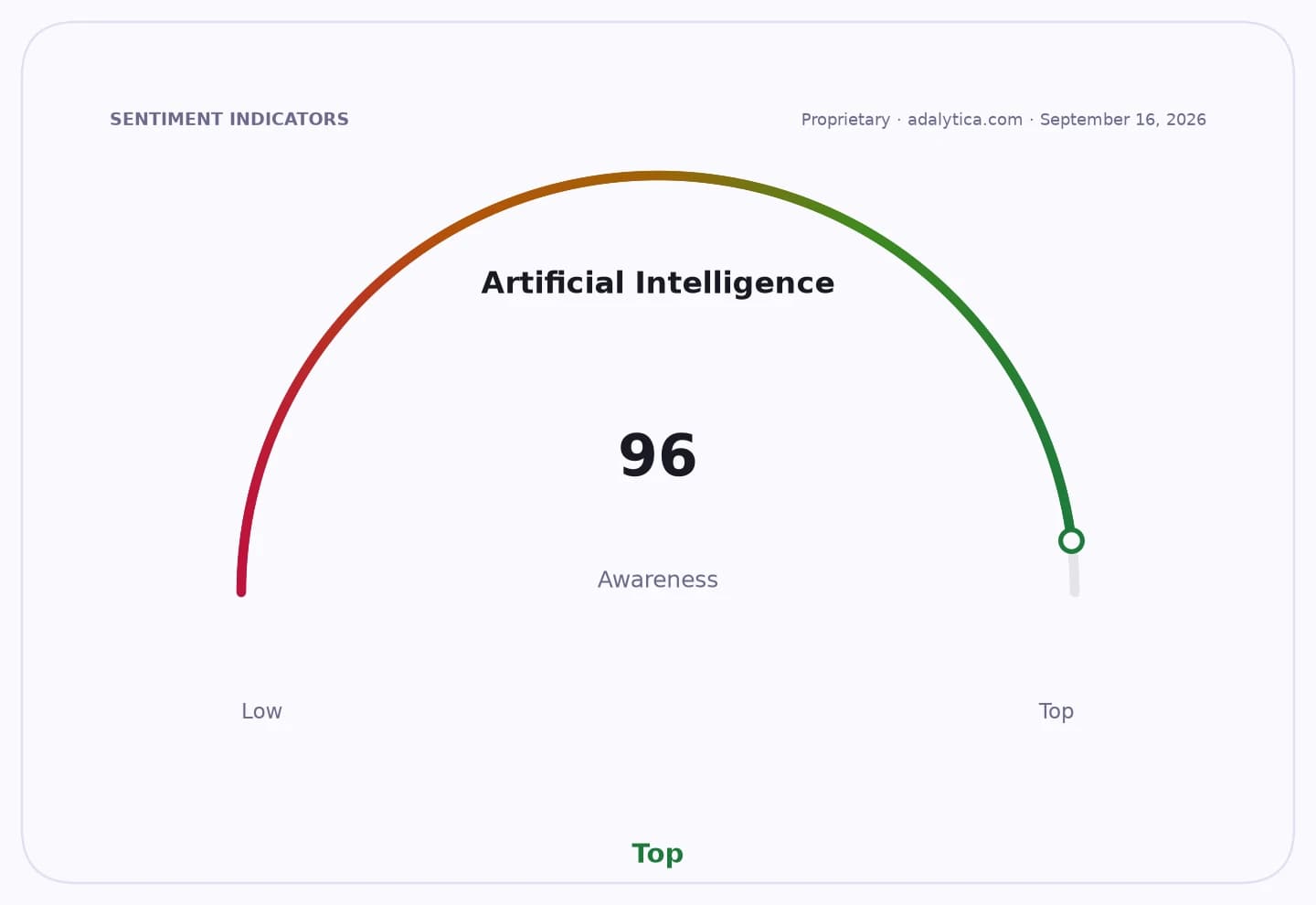
The market should read this as a continuation of the AI arms race, not a truce. Adalytica’s AI sentiment gauge shows extreme fear even as awareness remains elevated, a sign the debate is getting louder while conviction stays shaky. That kind of setup often creates the best opportunities: the market underestimates the staying power of the capex cycle, and overestimates the chance that safety rhetoric alone will slow it.
The investment takeaway is clear: stay positioned for AI infrastructure, but do not ignore the second-order beneficiaries. Nvidia remains the purest lever on continued compute demand, while Meta is trying to convert AI scale into a product advantage. The winners are the companies that keep spending, shipping and compounding. The losers are the firms that get pushed into hesitation while the competition keeps moving.
| Entity | Gains | Losses |
|---|---|---|
| Meta | ▲AI product lead | ▼safety/legal scrutiny |
| Nvidia | ▲sustained compute demand | ▼slowdown risk |
| AI rivals seeking pause | ▲safety legitimacy | ▼pace of rollout |
| Regulators and plaintiffs | ▲more oversight leverage | ▼less industry restraint |