Meta backs open AI against OpenAI and Anthropic

Mark Zuckerberg is making a bigger argument than a simple product pitch: Meta wants the next era of artificial intelligence to look open, distributed and consumer-friendly, not locked behind a few corporate gates.
That matters because the winner in AI may not be the company with the flashiest demo, but the one that controls the ecosystem developers, users and enterprises build around. Zuckerberg is drawing a sharp line against OpenAI and Anthropic, saying closed systems concentrate too much power and slow innovation, while Meta is betting that widely accessible models can create a larger, stickier market over time.
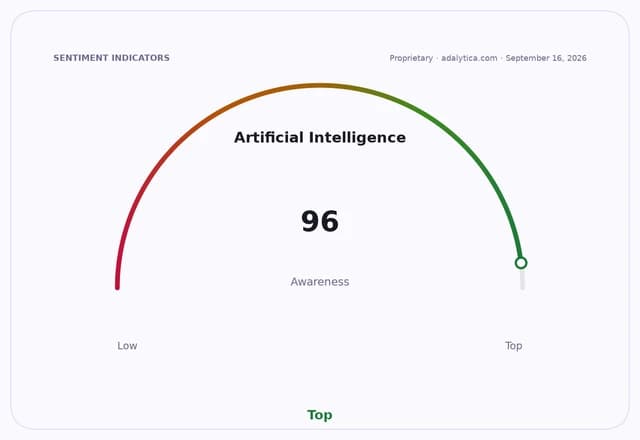
For investors, the stakes go well beyond philosophy. Open AI can help Meta recruit developers, lower adoption barriers and widen the reach of its own AI tools across social media, advertising and consumer apps. Closed models, by contrast, can protect pricing power and keep rivals dependent on a handful of providers. This is the core competitive debate in artificial intelligence: broad access versus tighter monetization.
Zuckerberg also brushed aside the idea that one “superintelligence” will solve every problem, favoring personalized systems tuned to individual users and everyday data. That vision fits Meta’s business model better than a single all-purpose model would. Meta wins when AI is embedded into products people already use, improving engagement, ad targeting and productivity without forcing them into a separate enterprise software stack.
The company’s shares have reflected how powerful that AI story can be, even as the stock has been volatile. Meta closed at $673.31 on Sept. 16, above both its 50-day moving average of $605.11 and its 200-day moving average of $623.23, while the RSI reading of 83.8 suggests the stock has run hot after a strong rebound. In other words, investors are already pricing in a meaningful share of Meta’s AI opportunity, which raises the bar for execution.
Zuckerberg’s comments also land in a broader industry fight over safety, regulation and geopolitics. Anthropic has argued for a slower pace of model development, while some governments are considering tighter oversight of frontier AI systems and access to Chinese models. Meta is effectively taking the opposite side: innovation should stay open, competition should come from better products, and barriers should not be used to freeze out rivals.
Nvidia, the hardware backbone of the AI boom, remains a central beneficiary of that spending cycle. But the bigger long-term question for investors is which software platforms turn that spending into lasting profits. Meta is trying to prove that open models can be the foundation of a durable consumer AI franchise, not just a research talking point.
That makes Meta worth watching closely. If open AI lowers costs, speeds adoption and keeps the company’s ecosystem central to how people work and communicate, the payoff could compound for years. If closed-model rivals keep the most powerful capabilities behind paywalls and partnerships, Meta may still benefit from the AI wave — but without fully owning it.
| Entity | Gains | Losses |
|---|---|---|
| Meta | ▲Wider developer adoption | ▼Closed-model rivals |
| Open-source AI users | ▲Lower access barriers | ▼Proprietary model vendors |
| OpenAI / Anthropic | ▲Premium positioning | ▼Open-access advocates |
| Nvidia | ▲More AI infrastructure demand | ▼None in the debate directly |