Copper, silver and gold are telling investors the same thing: this is a market built on macro fear, industrial demand and a hunt for safety, not just a quick trade. The big story is the way the precious-metals complex has become a pressure gauge for global uncertainty, while copper keeps the “growth” side of the equation alive. For long-term investors, that mix matters because it can point to where inflation, central banks and capital flows may go next.
Metals Signal Fear, Growth, and Inflation Hedges
Gold is still the headline act, even after a pullback from recent highs. GLD rose sharply through the spring and summer, touching 490 in early March before cooling, and the latest close near 368 shows how fast momentum can reverse when the dollar strengthens and traders trim risk. Conventional technical readings back up that tension: GLD is below its 50-day and 200-day moving averages, while the RSI has eased from extremely overbought levels earlier in the year. That kind of reset often scares short-term buyers, but it can also create better entry points for patient investors who want portfolio ballast rather than a momentum fling.
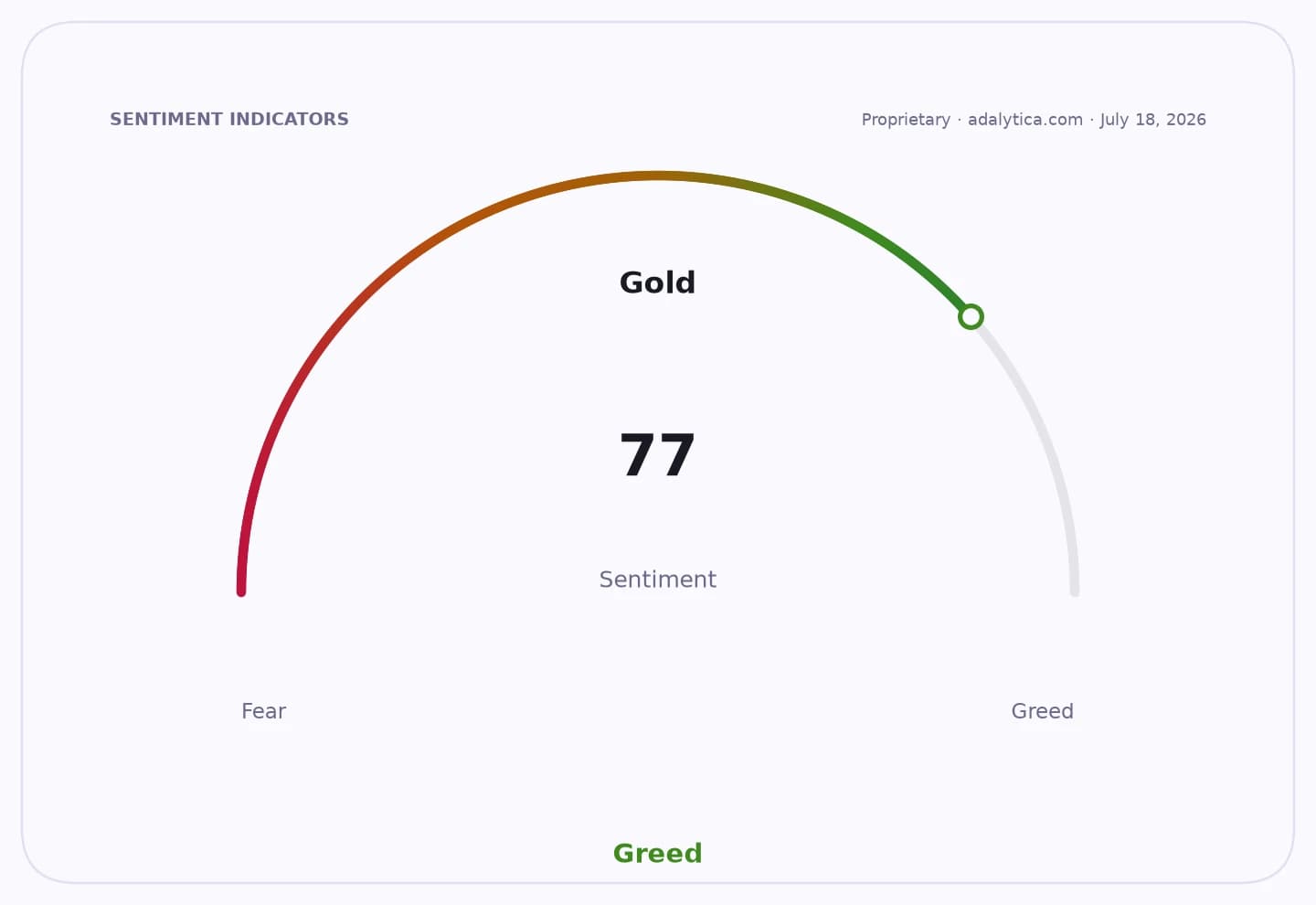
What makes this move economically important is that gold and silver are being bid for the same reasons the broader market stays nervous. Adalytica’s Gold Fear & Greed snapshot still shows greed at 77, but awareness is in extreme fear territory, a combination that suggests investors are paying up for protection even as they remain jumpy. That fits the broader backdrop: oil has jumped on renewed Strait of Hormuz tensions, wheat has climbed on supply worries, and commodity markets generally are reacting to geopolitics and central-bank uncertainty. In other words, this is not a narrow metals story. It is a story about the market’s appetite for hedges.
Silver adds a more cyclical twist. SLV soared earlier in the year, but the latest reading near 50.78 leaves it well below its 50-day and 200-day moving averages, showing how sharply speculative enthusiasm can fade. Silver tends to straddle two worlds: it behaves like a precious metal when fear spikes, but it also moves with manufacturing and electrification demand. That makes it especially relevant for investors looking beyond the next headline. If global growth stabilizes, silver can recover quickly. If recession risks deepen, it can get hit from both sides.
Gold — 30-day sentimentadalytica.com
Explore this data interactively — full history, time series and cross-market comparisons.Open AlphaPulse
Copper may be the most interesting piece of the puzzle for long-term investors. COPX, the copper miners ETF, remains far above where it started the year even after giving back some gains, which tells you that the market still sees a structural demand story underneath the volatility. Copper is tied to power grids, data centers, EVs and the buildout of the energy transition. That means pullbacks can be less about broken fundamentals and more about traders de-risking. For investors with a three- to 10-year horizon, copper exposure is less a bet on one week’s price action and more a wager on industrialization, electrification and infrastructure spending.
The immediate takeaway is that the metals complex is offering a useful roadmap for diversified portfolios. Gold is behaving like insurance, silver like a leveraged hybrid of fear and growth, and copper like a barometer for the real economy. That’s why this matters beyond commodity desks: these moves can influence miners, industrial stocks, inflation expectations and even central-bank policy assumptions. If rates stay elevated and the dollar stays firm, precious metals may need to consolidate further. If geopolitics worsen or growth weakens, the case for hard assets only improves.
For investors, the lesson is simple. Don’t try to outguess every swing in gold or silver. Use weakness to build exposure gradually, keep positions sized sensibly, and remember that the best commodity investing usually comes from patience, diversification and a willingness to hold through volatility. In a world of rising geopolitical risk and uneven growth, these metals are worth watching — and copper may be the one with the most long-term compounding power.
| Entity | Gains | Losses |
|---|---|---|
| Gold holders | ▲Safe-haven demand | ▼Dollar strength |
| Silver miners | ▲Upside on recovery | ▼Growth scare volatility |
| Copper producers | ▲Electrification trend | ▼Near-term de-risking |
| Industrial users | ▲Potential hedges available | ▼Higher input costs |