Mexican peso carry trade favors local bonds

The Mexican peso’s carry trade remains supported by a still-wide rate advantage, but investors are being told to favor local bonds and shorter-duration positions as volatility picks up and the dollar weakens unevenly.
That is the central market message from the latest move in peso assets: rates in pesos have eased, yet the trade is not being sold as a clean one-way bet. The peso has strengthened through the 17-per-dollar level and reached its best level since May 2024, but the recent pullback in carry-trade sentiment shows how quickly gains can be challenged by global risk swings, especially when U.S. rates remain elevated and geopolitical headlines hit broader currency markets.

The backdrop still favors Mexico over developed-market peers on yield. The U.S. 10-year Treasury is around 4.7%, while the fed funds rate is holding near 3.63%, leaving room for investors to earn a premium in peso-denominated instruments if the currency stays firm. Mexico’s own curve is also still offering support, with the 2-year yield near 4.24% and the 10-year around 4.69%, reinforcing the appeal of duration for buyers who expect the peso to remain resilient.
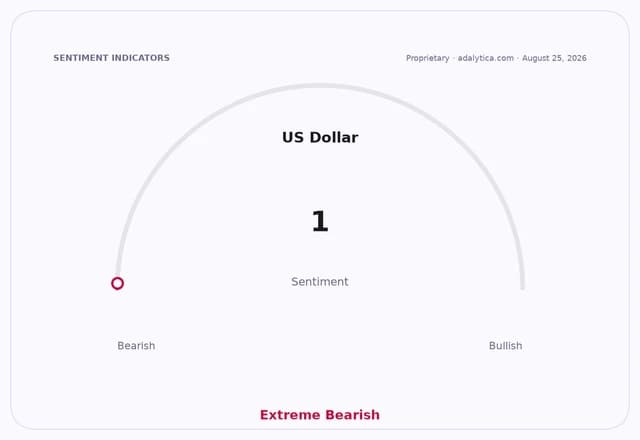
But the trade is no longer being framed as risk-free. Adalytica’s FX carry-trade trading signals show sentiment at 64, labeled neutral, while awareness sits at 18, in fear territory, even after a 57-point jump over seven days. That split captures a market that still sees opportunity but is wary of crowded positioning and sudden reversals. The U.S. dollar, meanwhile, is flashing extreme-fear readings in Adalytica’s signals, reflecting a weaker dollar backdrop that has helped the peso but can turn abruptly if U.S. growth, inflation or risk aversion shift.
That helps explain why analysts are leaning toward bonds rather than simply extending peso carry outright. The logic is that fixed-income exposure can capture carry while limiting the direct sensitivity to sharp spot moves in the currency. In practice, that tends to favor shorter-dated local bonds and selective exposure to Mexico’s sovereign curve over leveraged FX expressions, especially after the peso’s strong run and as the 50-day moving average on the peso ETF FXY sits close to the latest price, suggesting momentum has cooled.
The ETF tape is consistent with that cautious stance. FXY has slipped to 57.6 from an August peak near 58.5, while its 200-day moving average remains above the current level, a sign that the broader trend is still not fully repaired. EMB, the emerging-market bond ETF, has held firmer around 95.15, with its 50-day moving average slightly above the latest close and its 200-day average near 94.05, indicating steadier demand for EM debt than for outright peso currency risk. BND has also been stable, underscoring that investors are still treating the current market as one where carry matters, but so does ballast.
For investors, the key issue is whether Mexico’s yield premium can keep offsetting volatility in the dollar and in global rates. A benign U.S. rate outlook and continued peso strength would support the carry trade and Mexico’s local debt market. A renewed jump in Treasury yields or a broader risk-off move would quickly compress returns, especially for those leaning too heavily on currency appreciation rather than bond income.
The near-term catalyst is not simply the level of Mexican rates, but whether the peso can stay below 17 per dollar without fresh intervention from global risk markets. If it does, analysts’ preference for bonds over the pure carry trade could prove prescient. If it doesn’t, the market is likely to reward investors who stayed close to the curve and kept their currency risk light.
| Entity | Gains | Losses |
|---|---|---|
| Mexican local bonds | ▲Carry income seekers | ▼Sharp peso pullbacks |
| Peso bulls | ▲Stable FX gains | ▼Crowded positioning risk |
| U.S. dollar | ▲Safe-haven demand in shocks | ▼Weakness from lower-rate bets |
| EM bond ETFs | ▲Inflows from yield hunters | ▼Outflows if volatility rises |