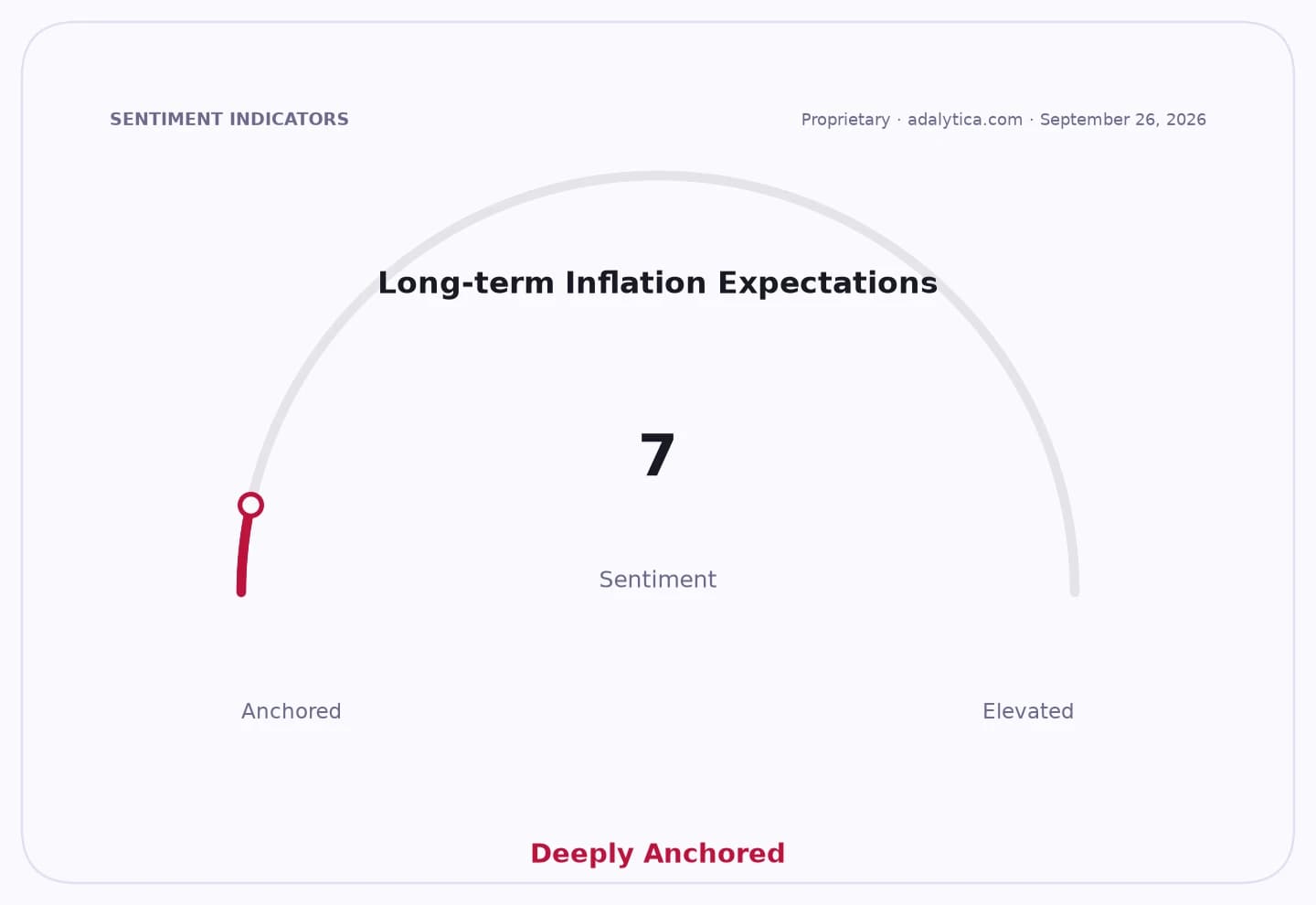
Mexico is getting some relief from lower fuel prices, but households and investors still face stubbornly high costs in the basic basket and transport, underscoring how uneven the inflation slowdown remains.
Mexico Inflation Cools, But Core Pressures Persist

That matters because the latest inflation pattern suggests the shock from food and services is fading only gradually, even as energy prices cool. In Mexico, that split complicates the central bank’s job: easier fuel costs can help headline inflation, but they do little to repair the affordability squeeze where families feel it most, and where wage demands and transport costs can keep second-round price pressures alive.
Sentiment IndicatorsⓘProprietary · adalytica.com · July 14, 2026
This is a snapshot — live sentiment, awareness and momentum for 130+ markets update continuously in the dashboard.Open AlphaPulse
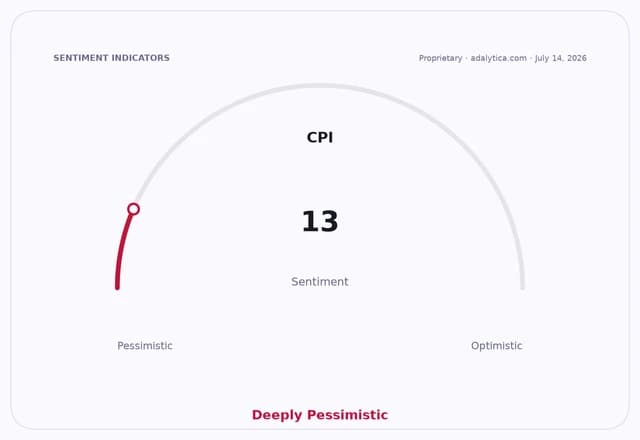
The broader macro picture is one of moderation, not victory. June inflation in Mexico eased to 4.4%, helped by declines in meat and vegetables, and that has supported the peso, which edged stronger after the data. But the composition of inflation is more important than the headline number. Energy, transport and housing remain key sources of price pressure, which means the disinflation process is vulnerable to renewed spikes in logistics, imported costs or geopolitical shocks.
That is why markets are watching oil and transport-linked sectors closely. Adalytica’s WTI trade signals turned neutral after a sharp drop in near-term sentiment, reflecting how quickly energy expectations can swing on Middle East risks. In equities, U.S. energy fund XLE has rebounded to the upper end of its recent range, while industrials and consumer staples have held up, a sign that investors are still positioning for a world where input costs remain sticky even if crude softens.
For Mexico, the implication is straightforward: cheaper fuel can help inflation headlines, but it does not by itself restore purchasing power. If the basic basket stays elevated, households will continue to cut discretionary spending, which pressures domestic demand. For policymakers, that argues for caution on rate cuts. For investors, it keeps the focus on retailers, transport operators and consumer names that are most exposed to real-income strain, while leaving the peso dependent on whether the inflation improvement broadens beyond food and fuel.
The key test ahead is whether the cooling in gasoline and other energy-linked prices can filter through supply chains fast enough to pull down transport and basket inflation. If not, Mexico’s inflation story will remain one of partial relief rather than a clean turn lower.
| Entity | Gains | Losses |
|---|---|---|
| Consumers | ▲Lower fuel bills | ▼Higher basic basket costs |
| Mexico’s central bank | ▲Easier headline inflation | ▼Sticky core pressures |
| Transport firms | ▲Demand resilience from pricing power | ▼Higher operating costs |
| Peso bulls | ▲Softer inflation surprise | ▼Risk of inflation persistence |