The debut of a MiCA compliance tool from a global law firm signals that Europe’s new crypto regime is quickly moving from policy text to day-to-day operating reality for exchanges, custodians and token issuers.
MiCA Compliance Tool Signals Industry Shakeout

That matters because the Markets in Crypto-Assets framework is no longer just a legal milestone for the bloc; it is becoming a competitive filter that will determine which firms can sell into the EU market, how quickly they can expand and what kind of legal and compliance overhead they must carry to do it. For crypto businesses, the cost of delay is rising. For investors, the bigger implication is that regulatory readiness is turning into a valuation driver, with compliant platforms better positioned to win institutional flows while weaker operators face margin pressure or exclusion.
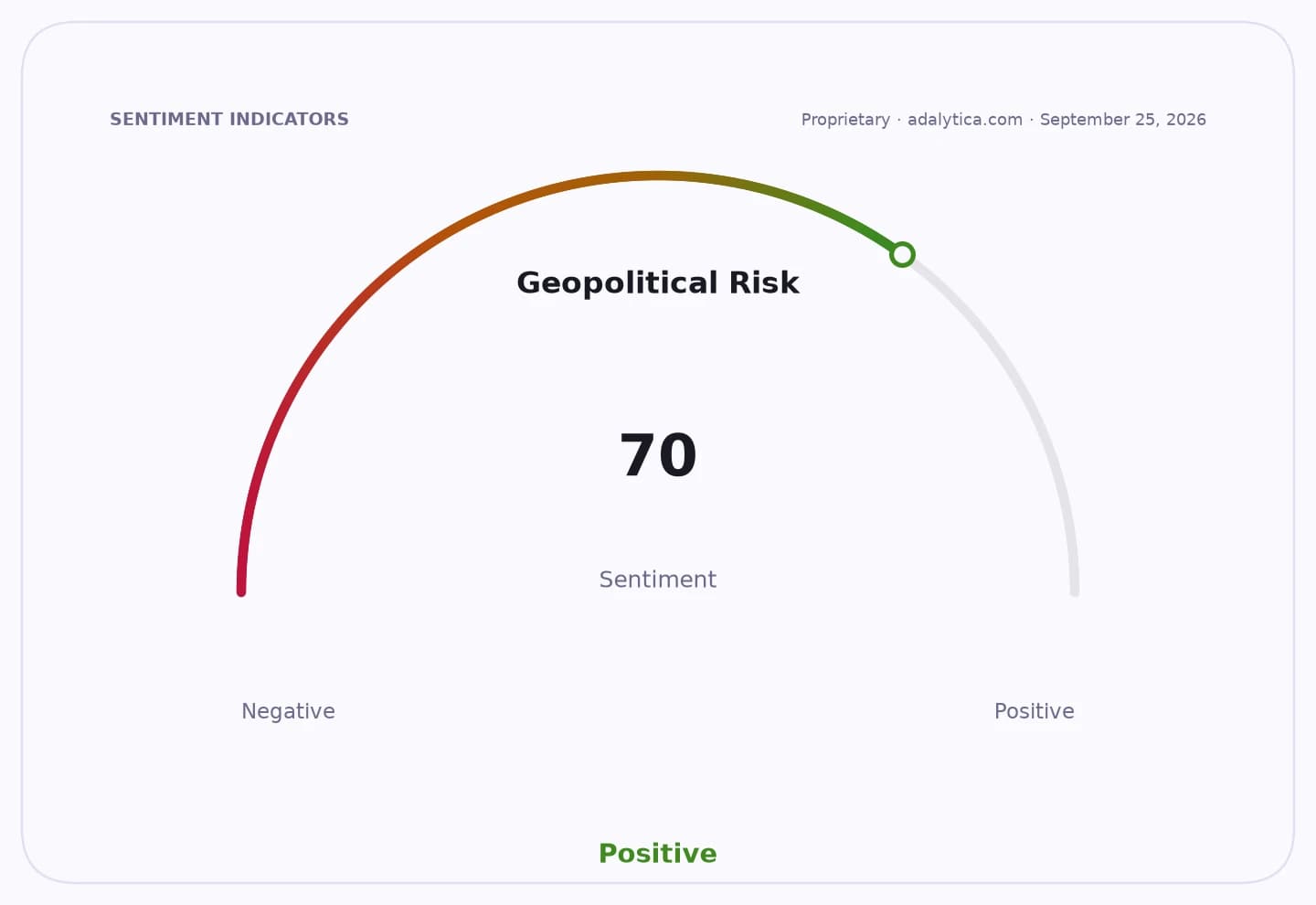
Sentiment IndicatorsⓘProprietary · adalytica.com · July 14, 2026
This is a snapshot — live sentiment, awareness and momentum for 130+ markets update continuously in the dashboard.Open AlphaPulse
The need for a dedicated tool reflects the complexity of MiCA’s implementation. Firms offering crypto-asset services across the EU now have to navigate authorization, disclosures, governance, custody, marketing and stablecoin-related requirements under a common regime that still leaves room for national supervisory interpretation. A product designed to map those obligations suggests demand is building for standardised compliance infrastructure rather than one-off legal advice, which in turn points to an industry-wide shift from speculative growth to operational discipline.
That shift has direct market consequences. Crypto exchanges and brokerages have spent the past two years under pressure from tighter enforcement, weaker trading volumes and higher scrutiny of custody and onboarding practices. In that environment, being able to demonstrate MiCA readiness can support banking access, institutional partnerships and cross-border expansion. It can also help large platforms defend share against smaller rivals that may not have the resources to absorb legal and technology costs.
The stock market backdrop underscores how sensitive investors have become to regulation and risk appetite across crypto-linked names. Coinbase Global, MicroStrategy and Robinhood have all seen pronounced swings over recent months, reflecting not only bitcoin volatility but also changing views on the durability of crypto demand and the earnings power of platform businesses tied to it. Conventional technical indicators on those shares show mixed momentum rather than a clear trend, while broader sentiment gauges for bitcoin and the S&P 500 have also turned more cautious, suggesting investors are demanding more proof that the sector can translate regulatory progress into sustained revenue.
For Coinbase, the EU’s rulebook is relevant even though the company is primarily a U.S. story, because global exchanges increasingly compete on regulatory credibility as much as product breadth. For MicroStrategy, which remains a leveraged proxy for bitcoin, the main link is indirect: any framework that broadens institutional participation and reduces regulatory ambiguity can support underlying crypto liquidity. For Robinhood, which has pushed deeper into crypto offerings, clearer European standards may help normalize the asset class, but they also raise the bar for compliance execution across every market.
The bullish case is that MiCA will help consolidate the industry around better-capitalised, better-governed firms and open the door to more institutional adoption in Europe. The bearish case is that the framework adds cost, slows product launches and rewards incumbents with the scale to handle compliance, leaving smaller venues squeezed or forced to retreat. Both outcomes would still mark a major change: crypto in Europe is becoming less about access to a token and more about whether the business behind it can meet banking-grade standards.
The next test will be whether this first wave of compliance tooling is followed by faster licensing decisions, clearer supervisory guidance and actual revenue gains for firms that adapt early. If that happens, MiCA could become not just a regulatory burden but a moat.
| Entity | Gains | Losses |
|---|---|---|
| Large crypto firms | ▲Faster MiCA readiness | ▼Higher compliance costs |
| Smaller exchanges | ▲Niche advisory access | ▼Greater regulatory burden |
| Law firms / consultants | ▲New fee stream | ▼Less ad hoc work |
| Investors in compliant platforms | ▲Lower execution risk | ▼Fewer high-growth shortcuts |