Michigan Consumer Sentiment Falls in September

Michigan consumer sentiment fell more than expected in the preliminary September reading, reinforcing concerns that high prices and a softer labor backdrop are eroding household spending power ahead of the fall shopping season.
The University of Michigan’s headline sentiment index dropped to 55.4 from 58.2 in August, well below the 58.0 economists expected, according to the preliminary survey. The decline matters because consumer confidence often feeds directly into spending on discretionary goods, travel and services, making it a key read-through for third-quarter growth and retailer demand.
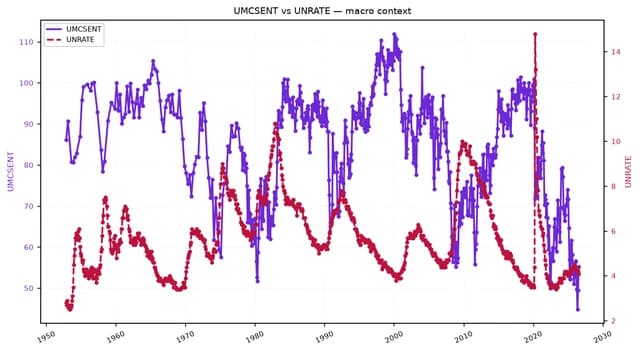
The deterioration came alongside a still-solid labor market, with the unemployment rate projected at 4.02% for September versus 4.1% in August. That mix — relatively stable jobs but weaker confidence — suggests households are becoming more cautious even without a sharp rise in layoffs, a combination that can slow consumption before it shows up in the hard data.
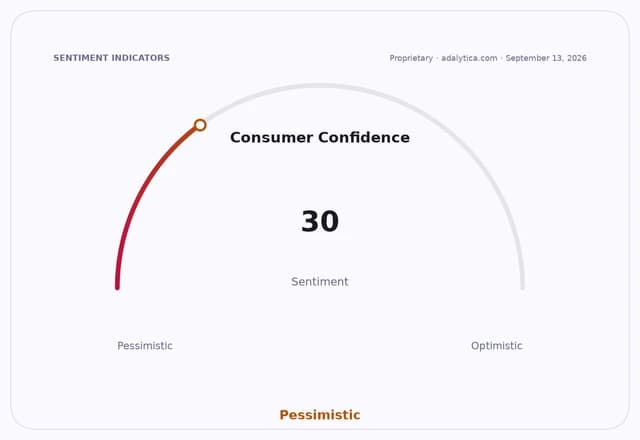
The report also lands against a backdrop of elevated recession anxiety. Adalytica’s Consumer Confidence Recession Sentiment gauge shows sentiment at 30, labeled fear, while its Consumer Spending Sentiment remains at 100, or extreme greed, indicating households may still be spending but with increasingly fragile conviction. For investors, that tension matters because consumer stocks, airlines, hotels and payment firms depend on spending holding up through year-end.
A weaker confidence print can also influence expectations for the Federal Reserve, particularly if it is interpreted as another sign that higher borrowing costs are biting into demand. While one survey won’t move policy on its own, softer sentiment can strengthen the case for officials to avoid keeping rates restrictive for too long if consumer activity begins to roll over.
Retailers and consumer-facing companies will be watching closely for whether the slide in sentiment turns into softer sales guidance over the next few weeks. The next catalyst is the final September sentiment reading and the start of holiday-season demand forecasts, which will show whether households are merely nervous — or actually pulling back.
| Entity | Gains | Losses |
|---|---|---|
| Fed doves | ▲Easier case for caution | ▼Pressure to keep rates high |
| Bond bulls | ▲More support for rate-cut bets | ▼Less support if spending stays strong |
| Retailers | ▲Resilient spending if jobs hold | ▼Softer discretionary demand |
| Consumers | ▲Some relief if inflation cools | ▼Lower confidence and spending power |