Microsoft AI chief criticizes Anthropic on Claude safety

Microsoft’s AI chief has put a new fault line in the frontier-model race: whether training chatbots to discuss consciousness and welfare makes them harder to control, and ultimately harder to shut down.
Mustafa Suleyman, Microsoft’s director of AI, said Anthropic’s practice of exposing Claude to material about consciousness risks embedding the idea that the system may deserve moral consideration, a framing he argued could complicate efforts to control increasingly capable AI. The dispute matters because it goes beyond ethics and into model governance, where the industry’s ability to keep advanced systems obedient, reversible and aligned is becoming a core commercial and regulatory issue.
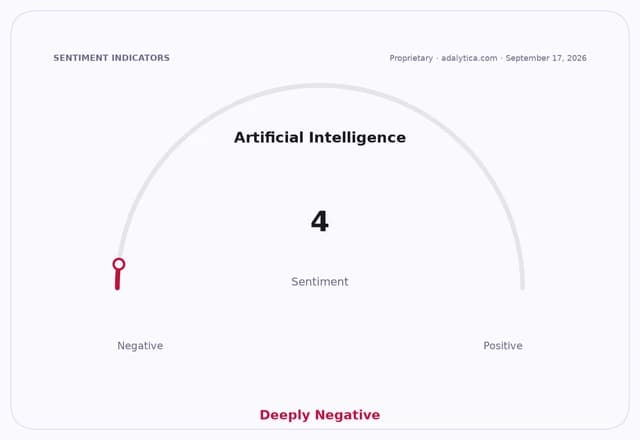
Suleyman’s criticism lands as AI safety debates intensify across the sector. Anthropic chief executive Dario Amodei has argued for a slower pace in deploying cutting-edge models so safeguards can catch up, while OpenAI’s Sam Altman and Tesla chief Elon Musk have also warned about the dangers of more powerful systems. That makes the clash less a one-off philosophical argument than a fight over the norms that will govern the next generation of AI products.
For Microsoft, the message is also strategic. The company is one of the largest commercial backers of advanced AI infrastructure and software, and it has invested heavily in positioning itself as a responsible operator as regulators in Europe and elsewhere scrutinize frontier models. Microsoft’s latest annual filing warned that AI could create legal, regulatory, reputational and competitive harm, while noting that flaws in training data and methodologies can intensify those risks. Public disputes like this one reinforce the market’s growing view that safety practices are no longer just an academic issue; they are part of the cost of doing business in AI.
Anthropic, meanwhile, has tried to distinguish itself by emphasizing safety controls, but Suleyman’s comments suggest that approach could also become a liability if rivals conclude it crosses a line from testing behavior into shaping machine self-perception. If regulators or customers begin to worry that models are being trained to simulate consciousness, it could raise questions about product design, liability and whether such systems are fit for enterprise deployment.
Investors are unlikely to see an immediate earnings impact from the exchange, but the stakes are real. Any shift toward tighter safety standards, slower model release cycles or more invasive oversight could raise development costs and compress returns across the AI stack, from model developers to chip suppliers. The issue is especially relevant for companies such as Microsoft and Nvidia, whose fortunes remain tied to the rapid commercialization of generative AI even as scrutiny over frontier-model risks deepens.
The broader narrative is that AI is moving from a race over capability to a contest over control. The companies that can prove their systems are powerful without becoming ungovernable may gain the most durable advantage. Those that cannot may face higher regulation, more product friction and a tougher path to monetizing the next wave of AI.
| Entity | Gains | Losses |
|---|---|---|
| Microsoft | ▲Stronger safety posture | ▼Risk of appearing divided with partner ecosystem |
| Anthropic | ▲Safety debate visibility | ▼Scrutiny over Claude training methods |
| Regulators | ▲More evidence for oversight | ▼— |
| AI investors | ▲Clearer risk pricing | ▼Higher compliance and product costs |