Microsoft Alphabet Amazon AI spending and data control

Donald Trump’s dismissal of Big Tech’s latest warnings about artificial intelligence is sharpening a far more immediate investor issue: who controls the data, the infrastructure and the economics of enterprise AI.
The louder Silicon Valley talks about existential AI risk, the more it looks like a bid to slow scrutiny of its spending spree, defend pricing power and box out smaller rivals. For investors, the question is not sci-fi panic but whether the hyperscalers can justify tens of billions of dollars in chip and server outlays when many corporate customers are already shifting to cheaper, smaller models and local hosting.
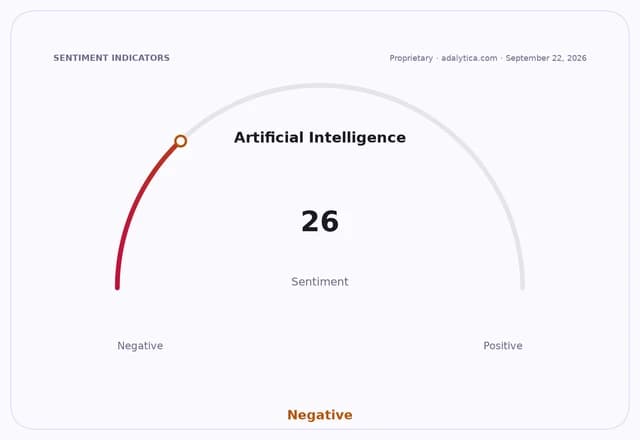
That matters because Microsoft, Alphabet, Meta and Amazon are pouring capital into AI infrastructure while returns remain uneven. The German commentary behind the debate argues that a collective safety pause could give the industry cover to cool spending without admitting that margins are under pressure, while tougher certification rules would raise compliance costs for startups and open-source competitors more than for the incumbents.
The economics of AI adoption are proving less glamorous than the marketing. The article says many companies are discovering that they will not hand over sensitive data — from drug formulas and banking records to factory designs and newsroom archives — to U.S. cloud operators, and that the “buy a frontier model and solve everything” pitch is breaking down in production.
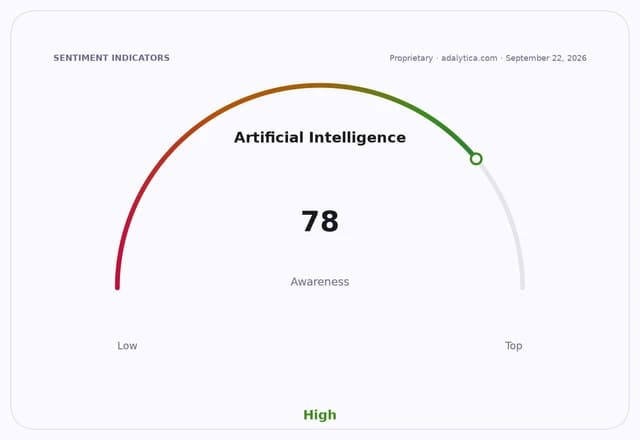
New analysis cited in the piece says 70% to 85% of generative AI initiatives inside companies fail to reach productive use or produce no measurable financial gain. Once a workflow is stabilized, firms often move to smaller open-source systems, sometimes hosted locally, because the running costs of the biggest models are too high and the results are often more dependable.
That is a direct challenge to the business model of the hyperscalers. The real winners, at least for now, may be the toolmakers supplying the AI arms race — Nvidia on chips, ASML on lithography and Siemens on design software — rather than the model developers burning cash in the race for scale.
The political angle is becoming just as important as the corporate one. The piece argues that Bern and Berlin should resist both overregulation and dependence on foreign cloud platforms, keeping sensitive citizen, health and judicial data out of overseas AI pipelines while building regional hosting and open-source systems at home.
That fits a broader policy push around data sovereignty, and it comes as data-center expansion itself faces growing local resistance in the U.S., with recent reports pointing to disruptions to projects worth $68 billion. For Big Tech, the risk is that AI infrastructure becomes harder and more expensive to deploy just as investors are demanding clearer proof of monetization.
Microsoft, Alphabet and Amazon remain exposed to that debate in different ways. Microsoft shares closed at $501.61 on Monday, above the 50-day moving average of $466.54 and the 200-day average of $430.15, while Adalytica’s Microsoft earnings sentiment sits at 89, or “Extreme Greed,” even as its awareness reading is only 15, or “Extreme Fear.”
Alphabet ended at $354.97, slightly above its 50-day average of $345.36 and 200-day average of $337.29, while Amazon finished at $258.45, just over its 50-day average of $256.10. That suggests the market still gives these companies the benefit of the doubt, but the underlying narrative is shifting from AI enthusiasm to capital discipline, data control and return on investment.
For investors, the next catalysts are straightforward: spending guidance, enterprise AI adoption rates, regulatory moves on cross-border data flows and any sign that customers are choosing smaller, cheaper and more secure alternatives over the biggest cloud platforms.
| Entity | Gains | Losses |
|---|---|---|
| Local-hosting and open-source providers | ▲More enterprise demand | ▼Hyperscaler lock-in |
| Nvidia, ASML, Siemens | ▲AI infrastructure spending | ▼Frontier-model margin pressure |
| Microsoft, Alphabet, Amazon | ▲Short-term AI narrative support | ▼Scrutiny on returns and data control |
| Bern and Berlin policymakers | ▲Strategic autonomy agenda | ▼Dependence on foreign cloud platforms |