Microsoft India PIPs Raise Cost Discipline Concerns
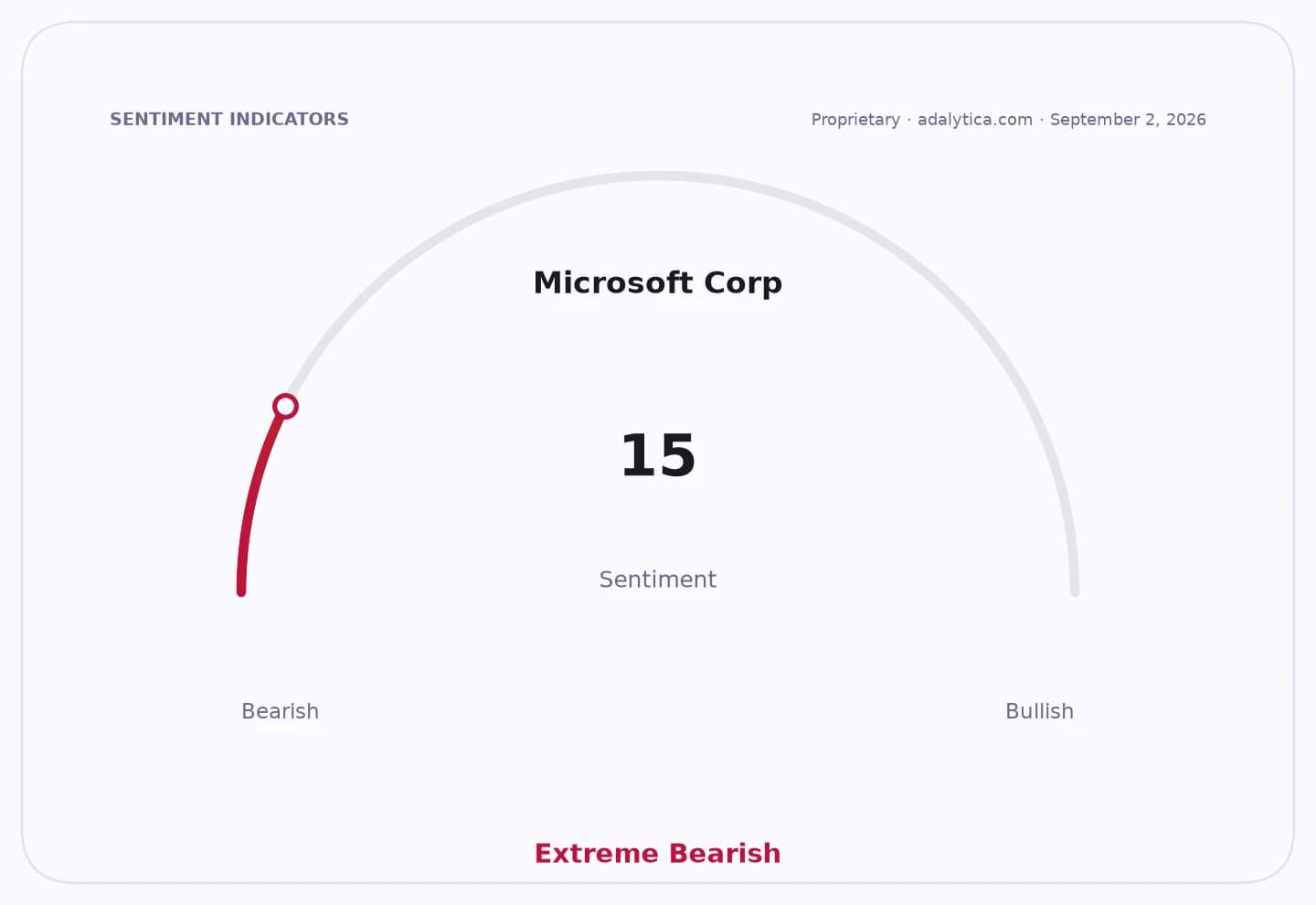
Microsoft’s move to place about 500 employees in India on performance improvement plans has deepened worries that the region’s Big Tech hiring boom is giving way to a more punitive phase of cost discipline, even as companies keep pouring money into artificial intelligence.
For workers, the message is blunt: the premium for staying inside a global tech franchise is rising, while the window to switch jobs for higher pay may be narrowing. For investors, the significance lies in the trade-off between AI investment and operating leverage. The more aggressively Microsoft and its peers spend on data centers, chips and software infrastructure, the more they need to protect margins elsewhere — including payroll and headcount.
The development comes alongside Oracle’s announcement of roughly 3,000 layoffs, adding to a sense that multinational technology groups are tightening labor use in India after years of expansion. The sector has long been a key delivery base for engineering, support and cloud operations, so any shift in staffing policy can ripple through local labor markets, subcontractors and household spending in major hubs such as Bengaluru, Hyderabad and Pune.
Microsoft’s shares have already reflected the strain. The stock closed at $496.82 on Wednesday, well below a recent $513.53 peak and above its 50-day moving average of $437.70, suggesting the market still values the company’s AI and cloud franchise but is no longer rewarding it unconditionally. Conventional technical indicators also show momentum cooling: RSI was 50.6 and the MACD had slipped just below its signal line, consistent with a pause after a strong run.
That matters because Microsoft is one of the clearest proxies for enterprise AI monetization. If the company is moving harder on performance management while still maintaining heavy capex, investors may read that as a sign management is trying to preserve earnings quality rather than simply chase growth at any cost. The bullish view is that disciplined labor management helps fund AI without a larger margin hit. The bearish view is that repeated workforce tightening points to slower productivity gains than the market has priced in, especially if AI returns take longer to show up in revenue.
The broader narrative is not just about one Indian employee explaining why he quit a Big Tech job. It is about a labor market recalibrating under the pressure of capital-intensive AI spending, where the easiest place for global tech groups to find savings is often far from headquarters.
What to watch next is whether the Microsoft PIP push remains limited to performance management or broadens into deeper restructuring, and whether other U.S. tech companies follow Oracle and Microsoft with similar measures in India.
| Entity | Gains | Losses |
|---|---|---|
| Microsoft | ▲Lower payroll pressure | ▼Employee morale |
| Big Tech investors | ▲Margin discipline | ▼Faster hiring growth |
| Indian tech workers | ▲— | ▼Job security |
| AI capex bulls | ▲Funding for spending | ▼Labor-cost flexibility |