Microsoft and Nvidia Gain From Court AI Adoption
Justice CSU’s push to give judges AI assistants points to a bigger shift in how governments may deploy artificial intelligence: not as a flashy consumer product, but as infrastructure for overloaded public institutions. If courts can use AI to draft routine orders, summarize case files and speed legal research, the payoff is faster decisions, lower administrative costs and less strain on already stretched judicial systems.
That matters economically because judicial delay is expensive. Backlogged courts slow contract enforcement, property disputes, bankruptcy resolutions and labor cases, all of which raise friction costs across the economy. A more efficient justice system can reduce uncertainty for businesses, improve credit conditions and support investment by making it easier to resolve disputes. In that sense, AI in the courtroom is not just a technology story — it is a productivity story.

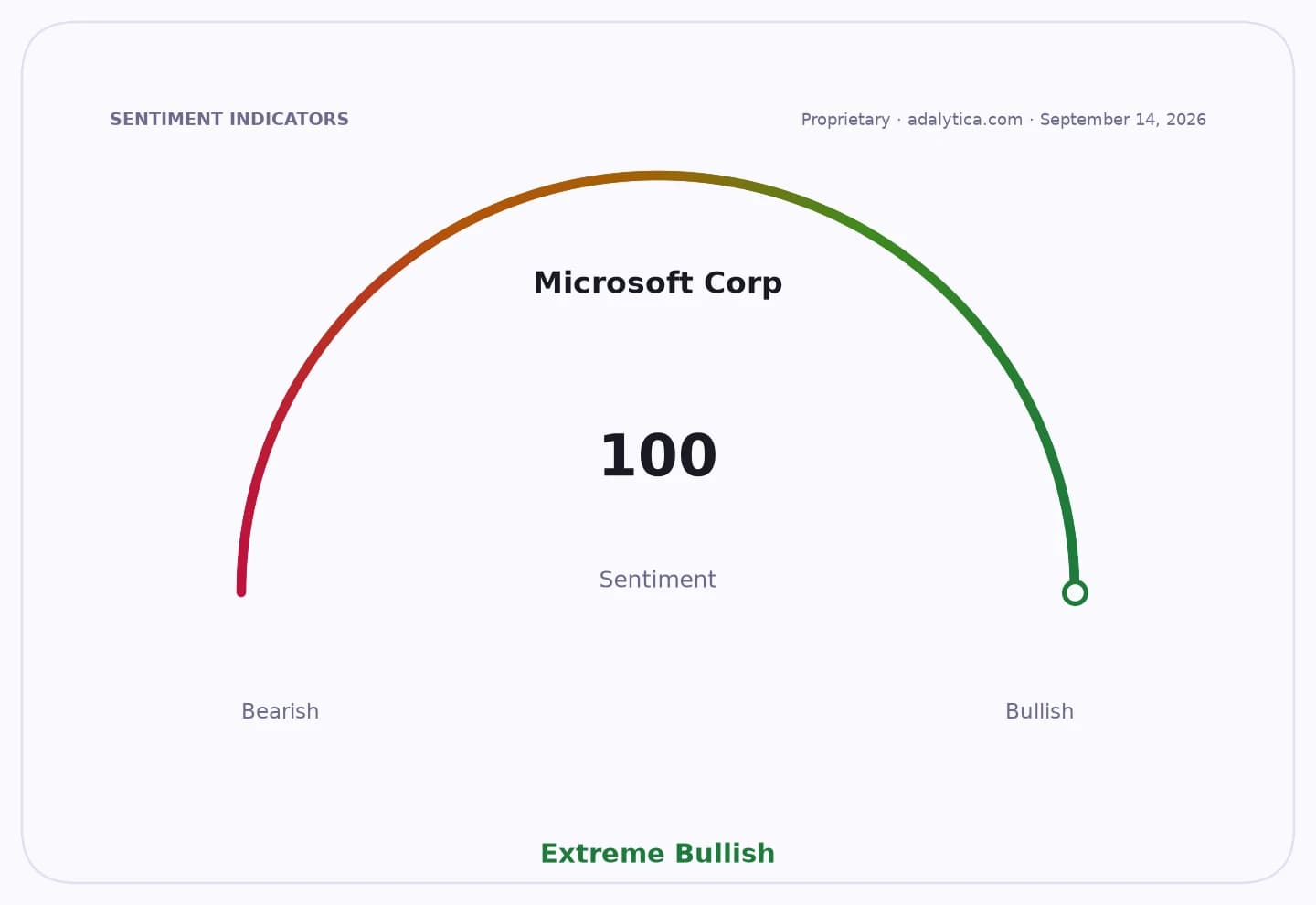
For investors, the implication is that the first beneficiaries of AI adoption may not be the headline-grabbing application names, but the platform providers and infrastructure owners behind them. Microsoft, with its enterprise AI stack, and Nvidia, which supplies the compute powering these systems, remain central to that trade. Microsoft shares were recently trading around $495.63, above the 50-day moving average near $453.12, while Nvidia sat near $218.29, above its 50-day average of about $212.36, showing the market still rewards firms tied to AI rollout even after a volatile year. The broader message is that adoption is moving from experimentation into workflow integration, where recurring usage can justify heavy capex.
That is exactly why the market underestimates the second-order effect: once a public institution like the judiciary embraces AI assistants, procurement can spread through legal services, compliance software, document management and secure cloud hosting. The opportunity is not limited to one country or one court system. It is the template for how regulated sectors — from government to healthcare to financial oversight — will buy AI in the next phase of the cycle.
The risk, of course, is that adoption comes with strict guardrails. The legal sector will demand traceability, data protection and human oversight, which should favor vendors with enterprise-grade security and deep distribution rather than lightweight startups. But that is also why the theme is investable: responsible AI is likely to be sticky AI. Once embedded in mission-critical processes, these tools become harder to rip out and easier to scale.
For investors, the takeaway is straightforward: the next wave of AI upside may come from boring but essential institutions adopting the technology at scale. I believe the best position is in the picks-and-shovels names supplying compute, cloud and workflow software, because that is where the durable monetization will show up first.
| Entity | Gains | Losses |
|---|---|---|
| Microsoft | ▲More AI workflow demand | ▼Firms without enterprise reach |
| Nvidia | ▲Higher compute demand | ▼Slow-adoption chip rivals |
| Courts / Justice system | ▲Faster case processing | ▼Backlog-driven inefficiency |
| Legal-services incumbents | ▲Better productivity tools | ▼Manual-process providers |