Microsoft becomes Pershing Square's top AI holding

Bill Ackman’s Pershing Square made Microsoft its largest AI holding in the latest quarter after trimming Alphabet, a move that underscores where the smart money sees the best risk-adjusted exposure to the artificial intelligence buildout.
The switch matters because this is no longer just a story about which hyperscaler has the flashiest AI demos. It is about where the market believes the durable monetization, enterprise lock-in and balance-sheet firepower will compound fastest as the AI infrastructure boom enters its second act. Microsoft sits at the center of that trade because it owns the operating system for corporate software, the cloud stack through Azure and a growing set of AI products that can be sold into an installed base with enormous switching costs.
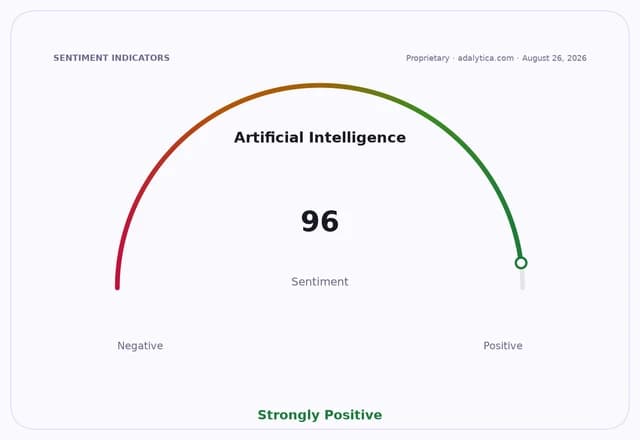
That is the kind of setup long-only capital wants when valuations are demanding and the AI cycle is moving from novelty to spend discipline. Alphabet still has a powerful AI franchise, but the market continues to debate how quickly its investments in models, TPUs and data centers translate into earnings power. Microsoft, by contrast, is already tied to enterprise budgets that tend to be stickier and more predictable. In a capital-intensive race, predictability matters.
The price action tells the same story. Microsoft has rebounded sharply from a late-June low near $352 and closed at $491.71 on Aug. 25, above both its 50-day and 200-day moving averages, while bullish momentum has improved from deeply oversold conditions earlier in the summer. Alphabet, meanwhile, has lagged, trading around $346.96 and still below its 50-day moving average. Nvidia remains the core AI hardware beneficiary, but the recent move in Microsoft suggests investors are increasingly looking past the chip cycle and toward the software and cloud layers where AI revenue can be recurring.
That is why Pershing’s repositioning should matter to investors. Ackman is effectively signaling that the best asymmetric opportunity may no longer be the pure AI narrative, but the companies that can monetize AI without relying solely on hardware demand or search advertising reinvention. Microsoft can spread AI capex across a much broader revenue base, and that makes the return profile more attractive if enterprise adoption keeps widening. The market underestimates how powerful that operating leverage can be once AI becomes embedded in productivity software, developer tools and cloud services.
There is also a second-order effect here. As large investors rotate toward the infrastructure toll roads of AI, capital is likely to keep flowing into the names that control distribution, data, compute and enterprise workflow. That supports Microsoft, of course, but it also reinforces the broader ecosystem trade in Nvidia and other AI infrastructure suppliers. By contrast, companies that are still proving how to convert AI leadership into faster earnings growth may face more scrutiny.
For investors, the takeaway is straightforward: the AI trade is maturing, and the winners are shifting from the most hyped names to the most monetizable ones. Microsoft looks like the cleaner compounding story from here, and Ackman’s move argues for owning the platforms that can turn AI spend into durable cash flow rather than chasing the most speculative part of the cycle. This is where the next leg of the AI megatrend is likely to be made.
| Entity | Gains | Losses |
|---|---|---|
| Microsoft | ▲Bigger AI capital inflow | ▼Alphabet rotation |
| Alphabet | ▲— | ▼Relative investor support |
| Nvidia | ▲Ongoing AI infrastructure demand | ▼Software-layer share of enthusiasm |
| Long-only AI investors | ▲Cleaner monetization exposure | ▼Pure hype-driven bets |