Middle East tensions drive risk-off move in markets
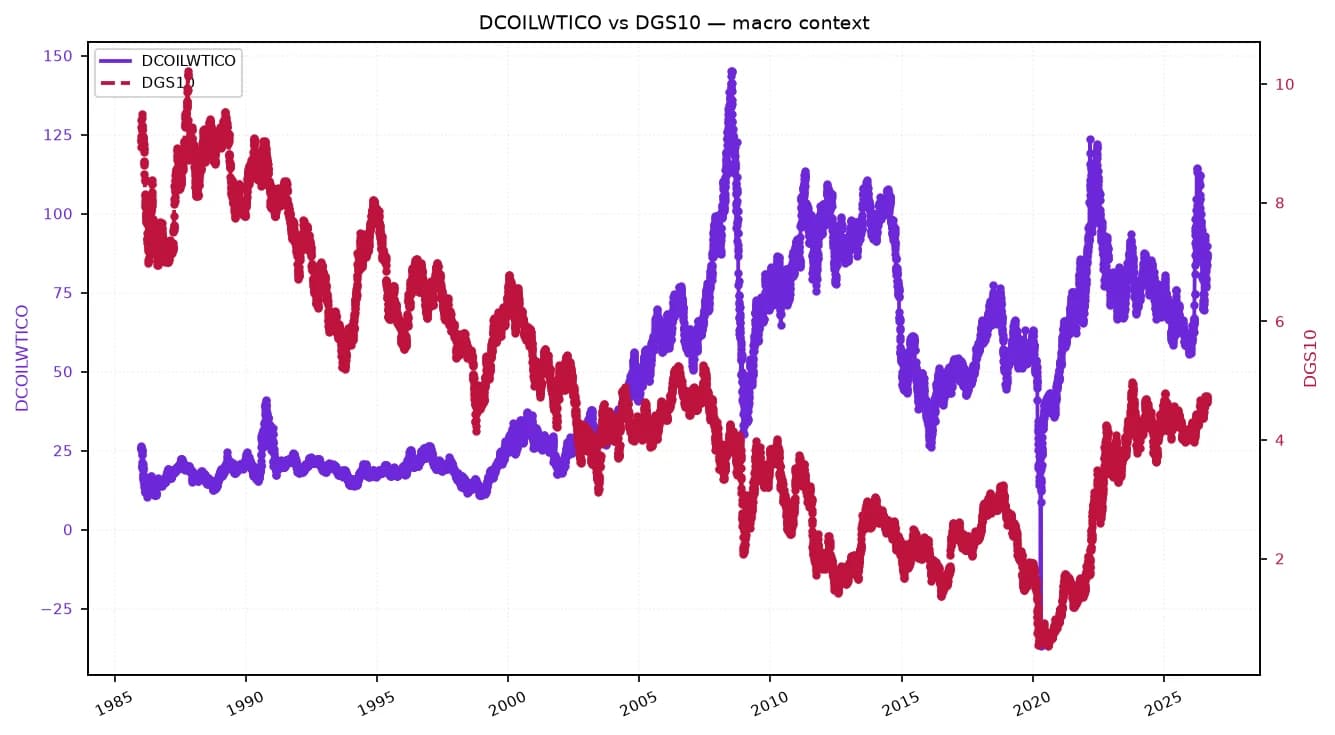
Escalating tensions in the Middle East are driving a broad risk-off move in global markets, with Germany’s DAX lower, Asian stocks ultimately retreating and Japan’s Nikkei deep in the red as investors rush into safer assets and reassess inflation and growth risks.
The trigger is a fresh jump in geopolitical uncertainty that threatens to unsettle energy markets, trade routes and corporate supply chains. Brent’s U.S. benchmark, West Texas Intermediate, was indicated around $83.85 a barrel, while U.S. 10-year Treasury yields held near 4.78%, a sign that traders are hedging for a more volatile macro backdrop rather than betting on an immediate economic slowdown.
Higher oil prices matter because they can feed through to transport, manufacturing and consumer costs just as central banks are trying to keep inflation under control. That mix is especially uncomfortable for equities, where valuations have been stretched in parts of the market and investors have been leaning on expectations for easier monetary policy later this year.
The flight to caution is also showing up in trade signals. Adalytica’s S&P 500 snapshot puts sentiment at 44, neutral, but awareness at 19, labeled fear, with sentiment down 22 points on the day and 44 points over 30 days. Gold’s fear-and-greed reading has slipped to 0, or extreme fear, even as U.S. dollar sentiment has improved, underscoring a classic defensive rotation.
Against that backdrop, Dell stands out as a rare positive. The stock rose after the company reported record sales, and it remains one of the market’s stronger large-cap performers despite a volatile tape. Dell closed at $452.23 on Sept. 2, down from $456.01 a day earlier, but still well above its 50-day moving average at $434.46, showing the market is still rewarding growth tied to artificial intelligence infrastructure.
Apple also held up better than the broader market, with the shares closing at $325.40, above their 50-day moving average of $313.39. Broadcom, however, looked weaker, closing at $367.24, below its 50-day average of $384.58, while RSI readings of 24.1 point to technically oversold conditions after a sharp pullback.
The split underscores how investors are balancing geopolitics against company-specific earnings stories. Defensive cash flows and AI-linked hardware demand are still attracting buyers, but the wider market is vulnerable to any further shock in the Middle East, especially if crude prices push higher or U.S. bond yields stay elevated.
With regional tensions still unresolved, traders are likely to stay focused on oil, Treasury yields and any sign that the conflict is spreading beyond the current flashpoints. That leaves global equities exposed to another round of volatility even as select tech and industrial names continue to trade on earnings momentum.
| Entity | Gains | Losses |
|---|---|---|
| Oil producers | ▲Higher crude prices | ▼Demand fears if tensions worsen |
| Treasury bulls | ▲Safe-haven buying | ▼Rising yields pressure bond prices |
| Dell shareholders | ▲Record-sales momentum | ▼Broader risk-off selling |
| Global equity investors | ▲Select AI winners | ▼Geopolitical volatility and lower indices |