Farm equipment makers are heading into the 2026 selling season with a mixed backdrop that matters well beyond US row-crop fields: demand is soft in some large markets, pricing is still doing much of the heavy lifting, and investor attention is shifting toward smaller, lower-cost machines that can serve fragmented farms in India and other emerging economies.
Mini Harvesters Emerge as Farm Equipment Growth Pocket
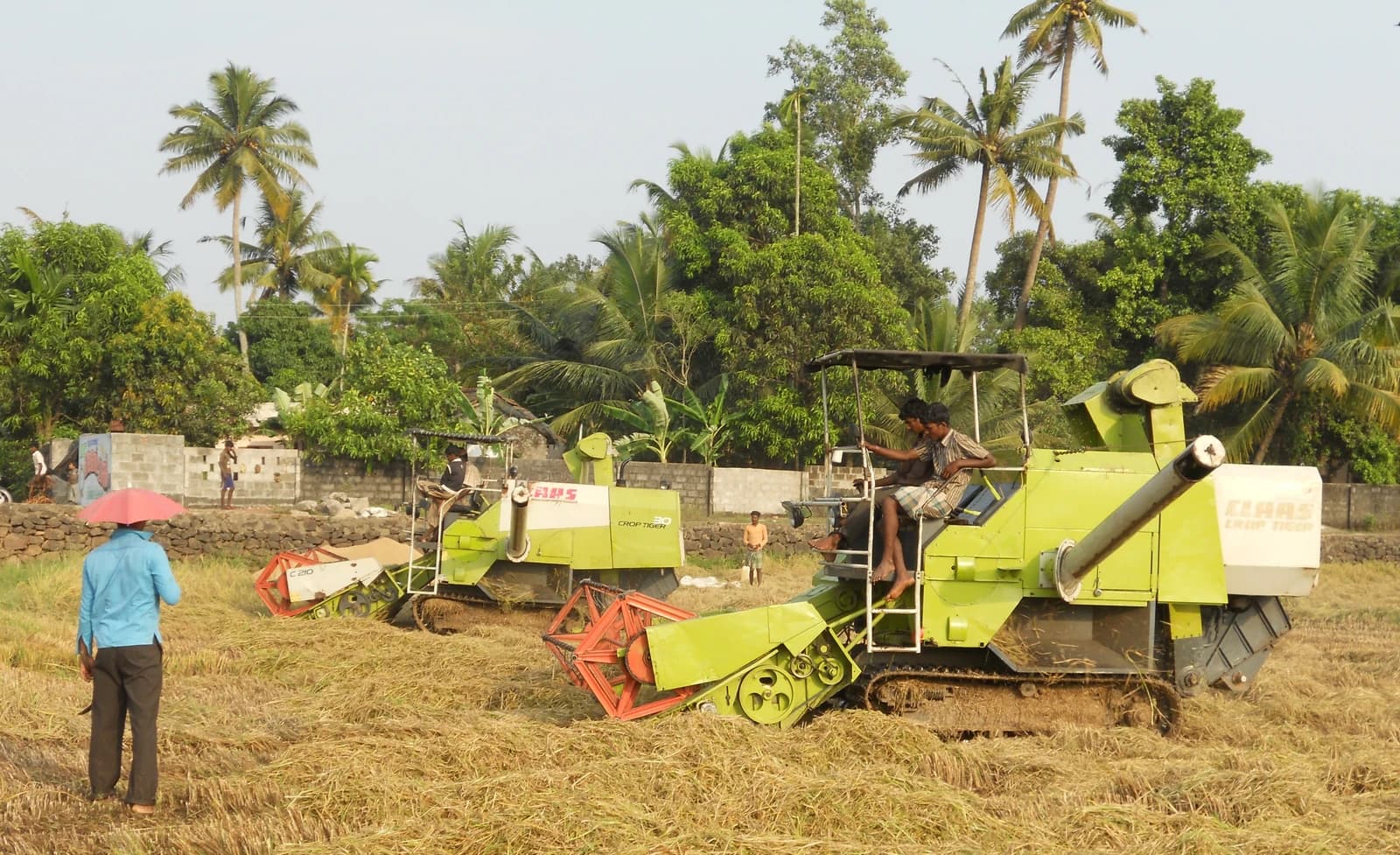
That matters because the mini harvester market is tied to one of agriculture’s most persistent structural problems: labor scarcity and rising wage costs. In India, where smallholders dominate and harvest timing can determine whether a crop is profitable, compact harvesters and mini combine harvesters can lift productivity, reduce post-harvest losses and improve farm economics. But the same affordability pressure that makes these machines attractive also limits adoption, which keeps the market sensitive to financing, subsidies and rural incomes.
The public companies most exposed to broader farm equipment demand are not seeing a clean rebound. Deere’s shares, which had climbed as high as $635.24 in early July before easing to $585.64 on July 13, are still trading well above their 200-day moving average of about $534.80, suggesting the market continues to price in resilience despite choppy momentum. AGCO’s stock has been steadier but less exciting, ending July 13 at $114.08, only modestly above its 200-day average of $113.93 and below its 50-day average of $115.28, a sign of a market waiting for clearer evidence of a cyclical turn.
The technical picture reinforces that caution. Deere’s RSI has cooled to 46.5 from overbought levels above 70 in April and June, while its MACD remains positive but has narrowed, hinting at slowing upside momentum after a strong run. AGCO’s RSI near 50 and a MACD that has slipped back toward flat territory point to a market that sees no obvious catalyst yet for a sustained rerating. In other words, the sector is not in distress, but it is also not in a broad-based expansion phase.
That is why the India mini-harvester story matters. Unlike Deere’s and AGCO’s core North American business, the mini harvester segment is driven less by large-acreage replacement cycles and more by cost-per-acre economics, rural wage inflation and the ability of dealers and financiers to reach small farms. For domestic and regional manufacturers, that can mean a bigger opportunity than the current headline numbers suggest. For global players, it is a reminder that growth in agricultural machinery is increasingly coming from lower-ticket products and localized distribution rather than only premium tractors and combines.
There is also a geopolitical and social dimension. Recent reports from India describing farmer protests over low crop prices and field labor exploitation underscore the pressure on agricultural incomes. If growers cannot earn a fair margin, they are less able to buy mechanization; if labor costs keep rising or remain unreliable, demand for compact harvesters strengthens. That tension is exactly why mini harvesters occupy a strategic niche: they can be a productivity upgrade for farmers and a substitute for scarce labor, but only if the equipment is priced for thin margins.
For investors, the key question is not whether farm mechanization is a long-term theme — it is — but where that growth will be captured. Deere and AGCO still have strong balance sheets, scale and pricing power, and Deere in particular retains a premium valuation justified by its software, precision-agriculture and aftermarket ecosystem. But the near-term earnings mix looks more defensive than expansive, with company filings pointing to subdued crop-farming conditions and relatively flat global equipment demand in 2026. That leaves room for nimble competitors, local assemblers and finance-linked distributors to gain share in markets like India’s mini harvester segment.
The bull case is that mechanization in smallholder agriculture is still underpenetrated, and any pickup in rural credit, subsidies or harvest prices could quickly translate into unit growth. The bear case is that affordability, erratic farm incomes and policy uncertainty keep the addressable market fragmented, limiting margins and slowing adoption. For now, the sector’s message is clear: the next growth pocket in farm equipment may come not from the biggest machines, but from the smallest ones.
| Entity | Gains | Losses |
|---|---|---|
| Smallholder farmers | ▲Lower labor dependence | ▼Upfront equipment cost |
| Mini harvester makers | ▲Volume growth potential | ▼Margin pressure |
| Deere and AGCO | ▲Long-term mechanization demand | ▼Near-term growth visibility |
| Farm laborers | ▲Safer, less grueling work | ▼Fewer field jobs |