Minor International Delays Singapore REIT Listing

Minor International’s decision to delay its planned $1 billion REIT listing in Singapore is a reminder that property monetization is only attractive when financing conditions, asset valuations and investor appetite line up. For REIT sponsors, the structure can unlock capital and crystallize value; when rates stay elevated and markets turn selective, it can also force a pause, leaving developers and hotel owners to carry more risk on their own balance sheets.
That is the economic core of the story. REITs are often marketed as a clean way to recycle capital from hard assets into growth, but they are highly sensitive to the cost of money. The 10-year U.S. Treasury yield is sitting around 4.7% and the two-year near 4.2%, while the Federal Funds rate is still about 3.6%, a backdrop that keeps real-estate discount rates and refinancing costs high by historical standards. In that environment, buyers demand more yield and lower leverage, which can make planned listings fail to clear at the price sellers want.

For Minor International, the delay means the company is pushing back a key step in monetizing a portfolio tied to its hospitality business and its former NH Hotel Group assets. The original plan was meant to tap a recovery in Thai tourism and return capital to shareholders or fund new investment. Instead, the company is opting to wait, suggesting it would rather preserve valuation than launch into a market that may punish new supply. That is a sensible defensive move, but it also postpones the benefits of de-gearing and value realization.
The broader REIT market has been moving, but not in a straight line. U.S.-listed real estate ETFs such as VNQ and IYR have held above their 50-day and 200-day moving averages, showing the sector has stabilized after earlier volatility. But the improvement in prices has not erased rate risk. VNQ’s latest reading around $98.50 and IYR near $104.73 reflect a market that is constructive but still cautious, while technical momentum has cooled from earlier overbought levels. In plain terms, investors are willing to own real estate, but not at any price.
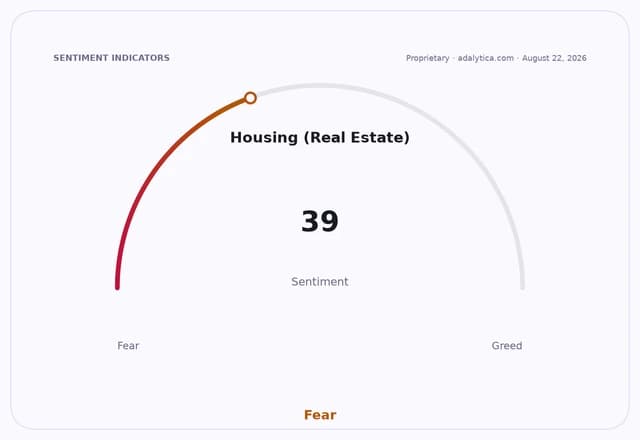
Adalytica’s Housing Fear & Greed Index for XHB has also slipped to neutral territory, with sentiment down sharply over the past month, a sign that housing-related risk appetite is no longer running hot. That matters for REITs because public property valuations tend to hinge on the same macro inputs: interest rates, financing spreads, cap rates and consumer demand. When those variables move against issuers, the REIT model becomes less about cheap capital and more about waiting for a better window.
The bull case remains intact for sponsors that can delay. If tourism in Thailand continues to recover, supported by stimulus and inbound travel, the asset base behind Minor International’s proposed trust could still command stronger demand later. A better rate backdrop would also help Singapore’s listing market absorb a larger deal. The bear case is that every delay carries an opportunity cost: financing remains costly, operating risk stays on the sponsor’s books, and market enthusiasm can fade if the macro backdrop deteriorates further.
For investors, the lesson is that REITs are not just income instruments; they are also rate-sensitive financing vehicles. The same structure that can create value by levering stable assets can quickly become vulnerable when yields rise and capital markets tighten. Minor International’s pause is therefore less about one company’s timing than about the limits of REIT arbitrage in a higher-for-longer rate world.
| Entity | Gains | Losses |
|---|---|---|
| Minor International | ▲Preserves valuation | ▼Delays capital recycling |
| REIT buyers | ▲Potentially better entry point later | ▼Miss current issuance |
| Existing shareholders | ▲Less dilution risk now | ▼Slower value unlock |
| Rate-sensitive real estate issuers | ▲More time to wait for yields to ease | ▼Higher financing pressure |