Moldova EU support shifts to reforms and security
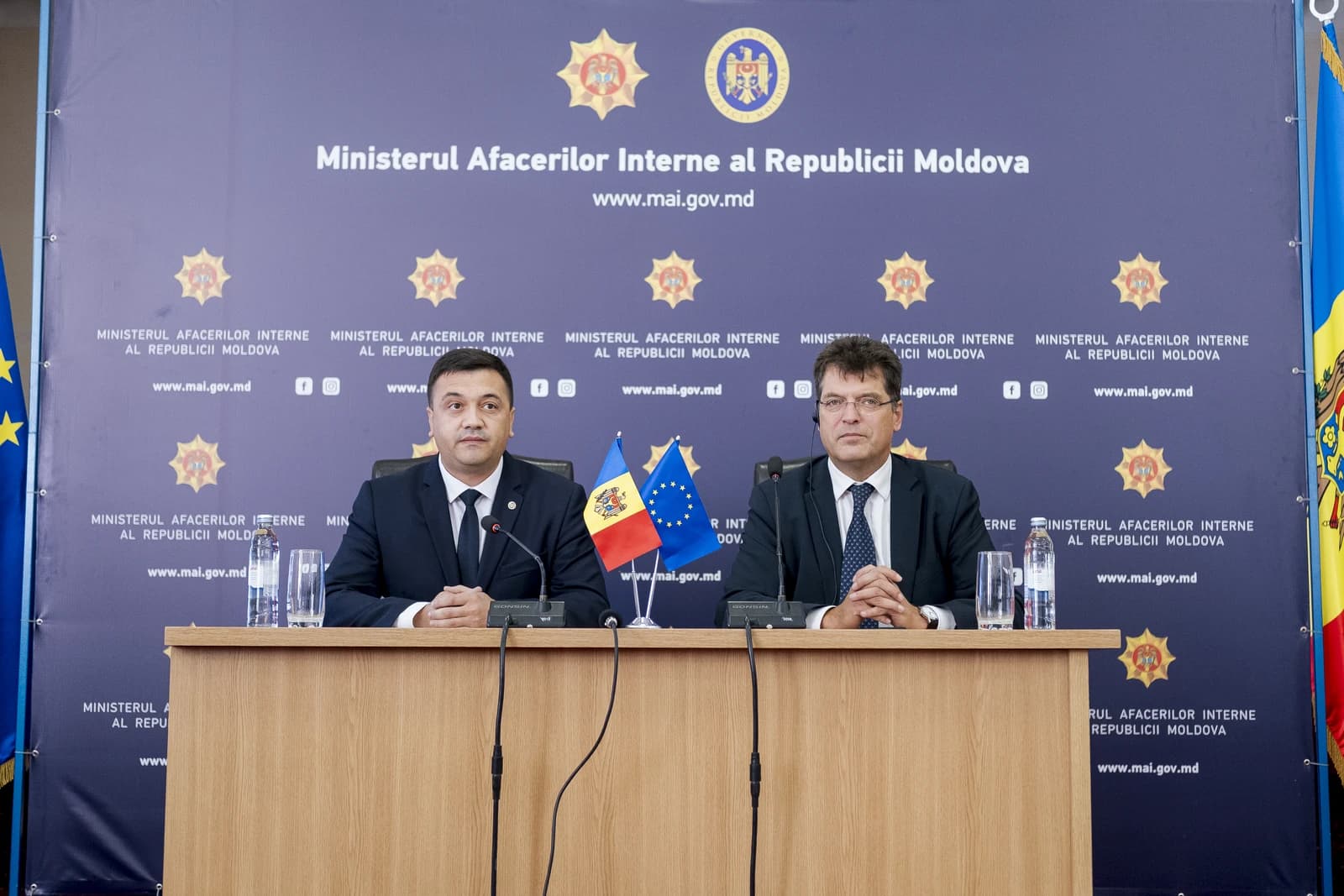
European support for Moldova is shifting from broad political encouragement to a more operational, security-linked partnership, as EU crisis management commissioner Hadja Lahbib opened her first visit to Chisinau with talks on reforms, civil protection and refugee response. That matters because Moldova sits on the frontline of the bloc’s eastern security perimeter, and Brussels is increasingly treating resilience, emergency preparedness and rule-of-law reform as part of the same strategic package.
Lahbib’s meeting with President Maia Sandu focused on progress in reforms tied to Moldova’s European path, including the rule of law and protections for people with special needs and vulnerable groups, according to the EU delegation in Chisinau. The message is economically significant for a country whose accession ambitions depend not only on political alignment but on the state’s capacity to absorb EU funds, enforce standards and manage shocks.
The visit also underscored how Moldova is being folded deeper into the EU’s crisis-response architecture. Brussels highlighted Moldova’s participation in the EU Civil Protection Mechanism since 2023 and pointed to the country’s deployment this summer to support firefighting in Greece. For investors and policymakers, that is more than symbolism: it shows a small candidate economy moving from aid recipient to contributor, strengthening its case for deeper integration while building the institutional muscle needed for infrastructure, energy and humanitarian funding.
Lahbib’s itinerary — including meetings with the prime minister and several ministers, a visit to the La Strada rights group, a refugee shelter, and a demonstration by Moldova’s urban search-and-rescue team using EU-supported equipment — was designed to showcase practical EU engagement rather than abstract enlargement rhetoric. That approach matters in a region shaped by the war in Ukraine, where resilience, border security and emergency logistics are now core investment and policy variables.
The bull case for Moldova is that tighter EU ties bring more grants, better governance and a lower geopolitical risk premium over time. The bear case is that reform delivery remains uneven and the country’s institutions are still vulnerable to external pressure, which could slow accession and keep financing costs elevated. For markets, the near-term impact is limited, but the medium-term implications are clearer: every step that improves Moldova’s rule of law, disaster readiness and social protection strengthens the economic case for closer European integration.
The next test will be whether Chisinau can translate symbolic support into measurable progress on reforms ahead of the next stage of its EU bid. If it does, the country could become a stronger recipient of European capital and political backing; if not, the gap between diplomatic praise and practical convergence will remain a drag on its investment appeal.
| Entity | Gains | Losses |
|---|---|---|
| Moldova government | ▲EU backing for reforms | ▼Pressure to deliver faster |
| EU institutions | ▲Stronger eastern resilience | ▼Exposure if reforms stall |
| Vulnerable groups/refugees | ▲More protection focus | ▼Continued reliance on aid |
| Investors in Moldova | ▲Lower long-term risk premium | ▼Near-term policy uncertainty |