Morocco’s march to the 2026 World Cup quarter-finals is more than a football story; it is the latest sign of a country that has spent years turning industrial ambition into real economic influence.
Morocco's Industrial Push Strengthens Nearshoring Appeal
That matters because Morocco is no longer just a regional manufacturing stopover. It has become one of Africa’s clearest examples of how infrastructure, trade policy and patient investment can pull a country up the industrial ladder. The same state-backed push that built out ports, logistics and export zones has also helped Morocco draw in automakers, aerospace suppliers and phosphate-linked industries that give the economy a broader base than many of its peers.
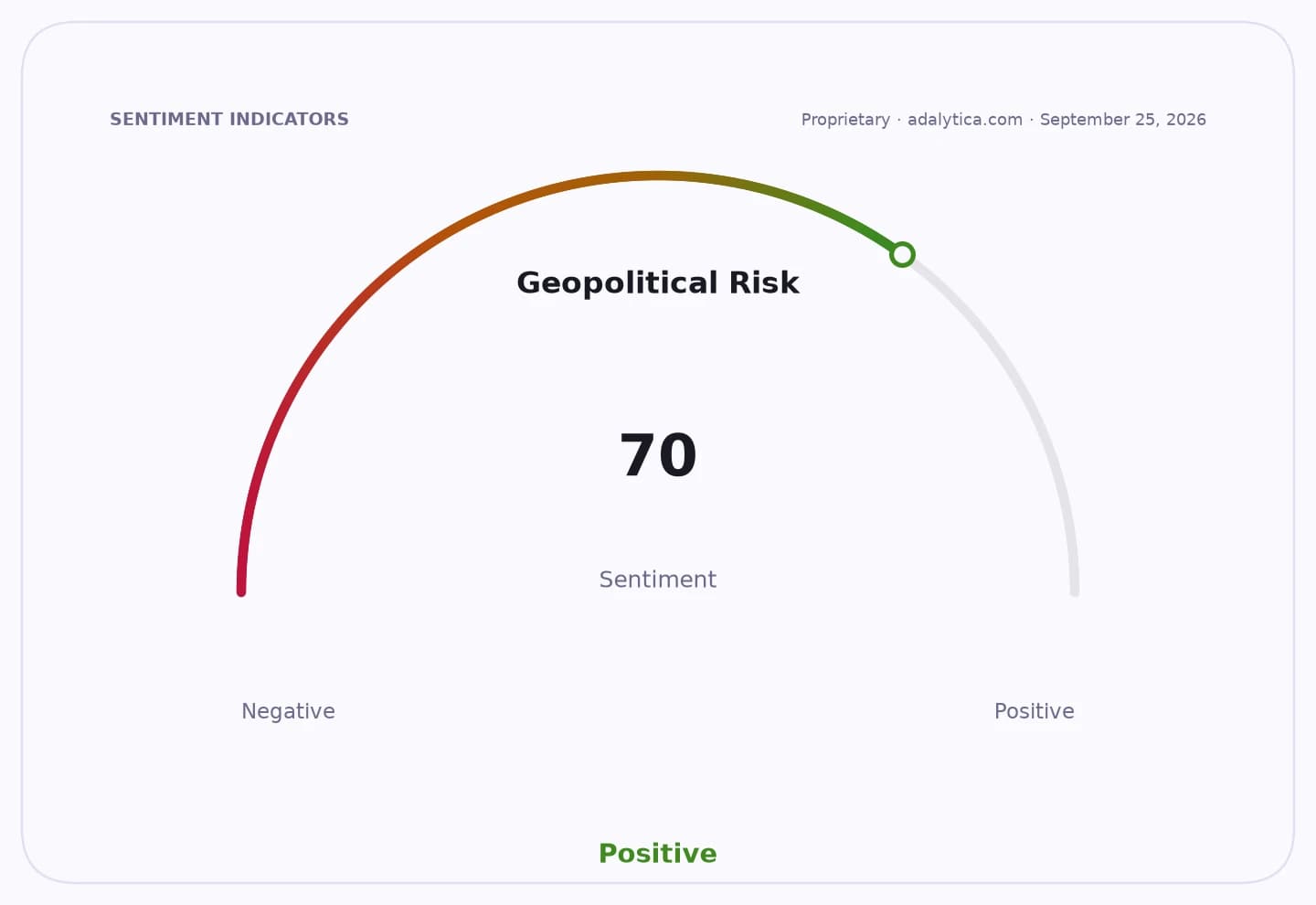
Sentiment IndicatorsⓘProprietary · adalytica.com · July 14, 2026
This is a snapshot — live sentiment, awareness and momentum for 130+ markets update continuously in the dashboard.Open AlphaPulse
For investors, the significance is straightforward: Morocco is deepening its role as a production hub for Europe, Africa and the Middle East at a time when companies are rethinking supply chains. Nearshoring is not a slogan anymore. It is a competitive advantage, especially when a country can pair political stability, access to the Atlantic and Mediterranean, and a manufacturing ecosystem that is increasingly hard to ignore.
The comparison to other African economies is what makes Morocco stand out. Its industrial strategy has been more deliberate and more export-oriented than many rivals, allowing it to move beyond commodity dependence. Phosphates remain important, but the bigger story is how those earnings and state capacity have been recycled into roads, ports, industrial parks and training. That helps explain why Morocco has been able to attract long-term capital rather than just short-term speculative money.
The current market backdrop adds another layer. Adalytica’s global stability sentiment shows extreme fear, while the U.S. dollar trade signals point to fear as well. In that kind of environment, investors tend to favor countries and companies tied to tangible assets, reliable logistics and export competitiveness. Morocco fits that profile better than many emerging markets because it is selling itself as a platform, not just a destination.
There is also a broader narrative here about national branding. Morocco’s football success amplifies a message that investors already understand: the country is increasingly comfortable on the world stage. That matters because perception shapes capital flows. A country that looks organized, ambitious and globally connected often finds it easier to attract manufacturers, tourists and infrastructure investment.
The risks are real, of course. Industrial momentum can slow if Europe weakens, if energy costs rise or if the global trade cycle turns. And Morocco still has to keep upgrading skills, deepen domestic supply chains and ensure growth is broadly shared. But the long-term direction is clear.
For investors thinking in years, not weeks, Morocco looks like one of the more resilient industrial stories in Africa. The World Cup headline is the flashy part. The investable story is the one underneath it: a country that has already redrawn the map of industrial influence and may still be early in the process.
| Entity | Gains | Losses |
|---|---|---|
| Morocco | ▲Global visibility and industrial credibility | ▼Less room for doubters |
| Export manufacturers | ▲Nearshore production base | ▼Higher-cost distant hubs |
| Investors in infrastructure and logistics | ▲Long-term growth runway | ▼Short-term traders seeking quick moves |
| Rival African industrial centers | ▲— | ▼Relative share of foreign investment |