A fresh wave of US mortgage guidance could make it harder for some migrants to buy homes or access loans, raising the cost of credit for a group that has been a key source of household formation and housing demand.
Mortgage Guidance Pressures Housing Demand

The policy shift matters because access to mortgage finance is one of the main channels through which immigrants build wealth in the US. If lenders tighten documentation, eligibility or underwriting around non-citizen borrowers, the immediate effect is not just fewer approvals; it is weaker demand in parts of the housing market, especially entry-level homes, and a further squeeze on already strained affordability.
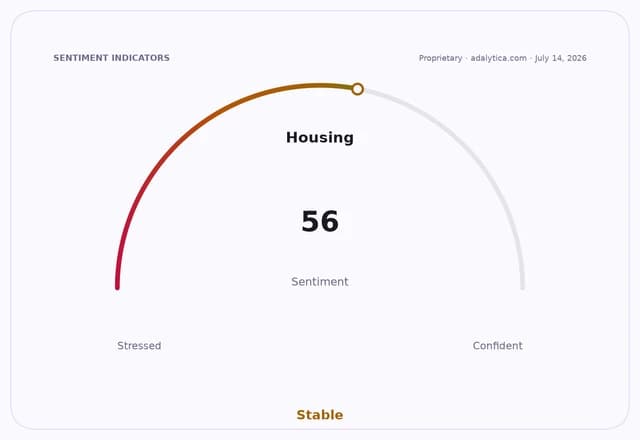
Sentiment IndicatorsⓘProprietary · adalytica.com · July 14, 2026
This is a snapshot — live sentiment, awareness and momentum for 130+ markets update continuously in the dashboard.Open AlphaPulse
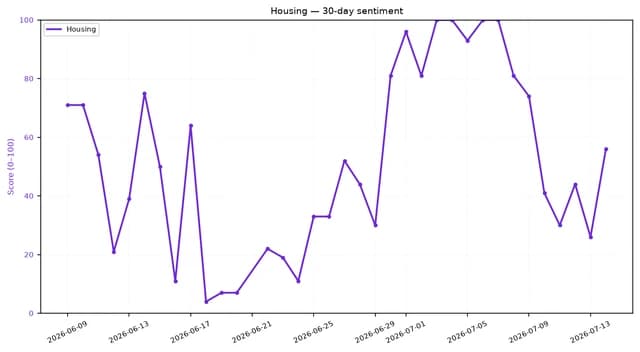
That comes at a delicate moment for the broader housing cycle. Housing starts have softened again, with the latest reading at 1.177 million annualized in May, down 15.5% from the prior month and well below levels seen earlier in the recovery. The forecast for June points to only a modest rebound to 1.253 million. Home prices, meanwhile, remain elevated near record territory: the S&P CoreLogic Case-Shiller national index stood at 332.678 in April, extending a long run of gains even as borrowing costs stay high.
The macro backdrop helps explain why policy changes that affect mortgage access can reverberate quickly. Unemployment is still relatively low at 4.2% in June, but mortgage rates remain stubbornly elevated, and builders have already been leaning on incentives and rate buydowns to preserve sales. Homebuilder filings from D.R. Horton and Lennar point to continuing affordability pressure and cautious demand, with Lennar cutting delivery guidance and both firms highlighting the drag from high rates and macro uncertainty.
For lenders and mortgage originators, the immediate market consequence is a narrower pool of qualified borrowers. Rocket Mortgage and UWM Holdings are already trading well below their longer-term technical averages, reflecting investors’ skepticism about the earnings outlook for mortgage finance in a high-rate environment. Rocket Mortgage closed at $14.38 on July 14, below its 200-day moving average of $16.80, while UWM finished at $2.07, far under its 200-day average of $4.01. Those levels suggest investors are pricing in pressure on volume and margins rather than any near-term housing rebound.
Banks could also feel the effects unevenly. Wells Fargo, a major mortgage lender, has recovered from spring weakness and was trading at $85.32 on July 14, but its price action still reflects a sector that remains highly sensitive to rate expectations and credit quality. Any guidance that tightens access for migrants may reduce loan growth in the near term, even if it lowers some underwriting risk later.
The bear case is that the policy shift reinforces a broader slowdown in housing turnover just as affordability remains stretched and household debt is climbing. That could further depress transactions, cool ancillary spending on moving, renovation and furnishings, and weigh on mortgage lenders reliant on origination volume. The bull case for lenders and regulators is that tighter standards reduce default risk and improve portfolio quality at a time when underwriting has been under pressure from rate shocks and rising housing costs.
For investors, the key question is whether the change marks a targeted compliance move or the start of a more restrictive credit regime that crimps demand across a still-fragile housing market. If lenders respond conservatively, the policy could deepen the split between cash-rich buyers and those dependent on financing, keeping pressure on first-time homebuyers and the companies that serve them.
| Entity | Gains | Losses |
|---|---|---|
| Regulators | ▲lower credit risk | ▼weaker homeownership access |
| Banks and lenders | ▲tighter underwriting | ▼lower loan growth |
| Existing homeowners | ▲less credit competition | ▼fewer new buyers |
| Migrant borrowers | ▲— | ▼mortgage and loan access |