Mortgage Lenders Face Rates, Arrears and Policy Support
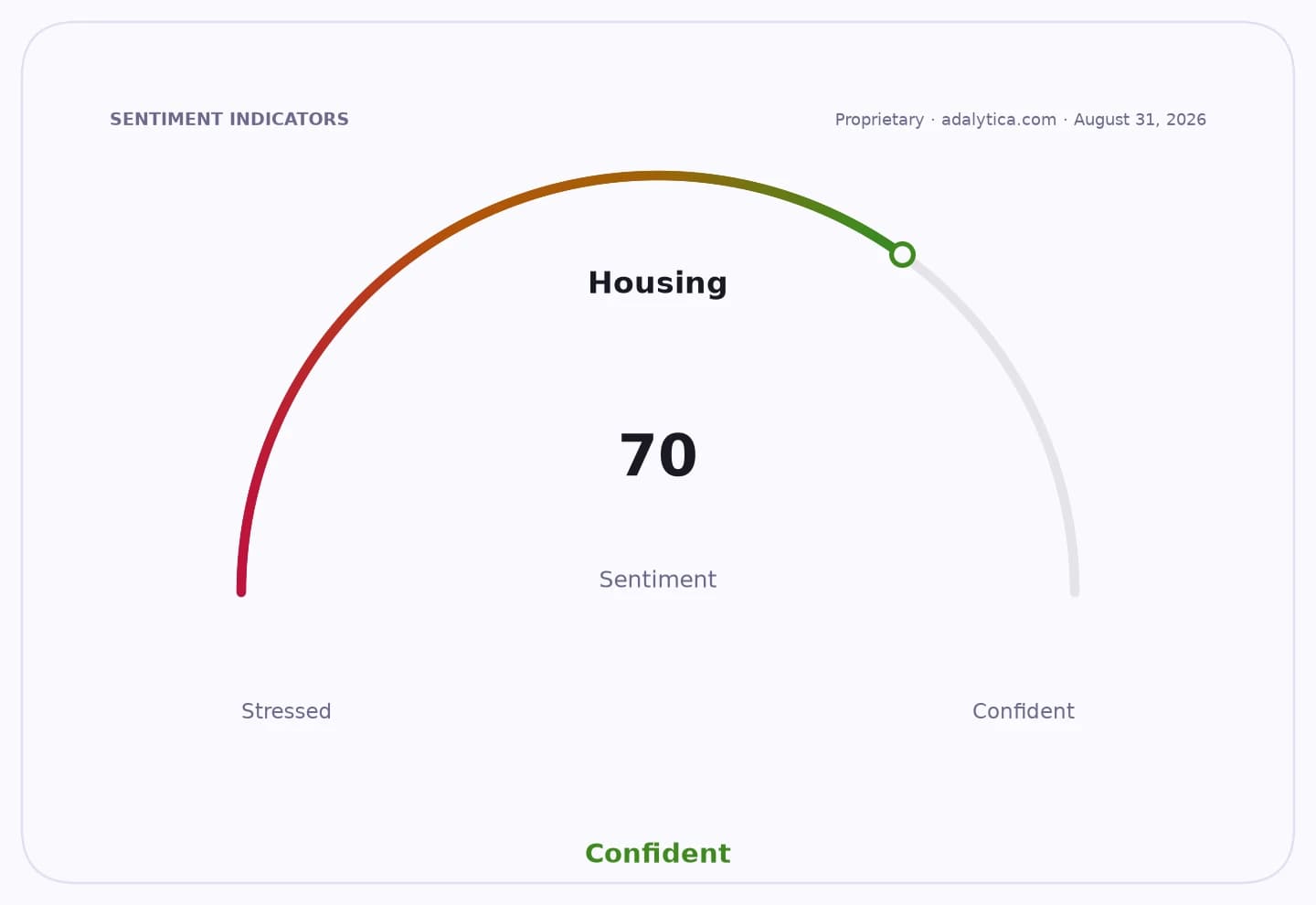
Mortgage lenders are entering a more uneven phase in which public support can widen access to credit even as higher rates, weaker affordability and rising arrears keep pressure on underwriting quality and equity valuations.
That tension is what matters most for investors: governments can make mortgages cheaper to obtain, but they cannot fully offset the impact of elevated funding costs and stretched household budgets. In practice, that leaves lenders caught between volume growth and credit risk, a trade-off that is already visible in the share performance of U.S. mortgage names and in the policy response being tested in Argentina.
Rocket Companies’ stock has fallen to $13.41, down sharply from $20.14 at the end of September, while United Wholesale Mortgage has slid to $1.45 from $5.55 over the same period. Both remain well below their 200-day moving averages, a sign that investors still discount the sector despite intermittent rebounds. Rocket’s latest reading shows the shares hovering below the 50-day moving average and near the lower end of their recent Bollinger Band range, while UWM’s price sits far under both its short- and long-term trend measures. The technical backdrop underscores a broader market message: lenders are not being rewarded simply for stabilizing origination volumes when the earnings outlook remains tied to rate volatility and credit performance.
The business risk is straightforward. Mortgage lenders live on thin spreads and high volumes, so any rise in delinquency, pullback in demand or increase in refinancing sensitivity can hit revenue quickly. Publicly listed lenders such as Rocket and UWM also depend heavily on broker networks and the securitization market, leaving them exposed to changes in borrower confidence and secondary-market pricing. Their latest filings highlight dependence on independent mortgage brokers, GSE rules and the availability of mortgage-backed securities, all of which can tighten just as borrowers struggle with affordability.
Argentina’s new mortgage loan plan, funded through the ANSES Guarantee Fund, points to the other side of the same problem. By using retirement-linked public resources to support bank lending, officials are trying to bridge the gap between household incomes and mortgage payments that have become too expensive for many families. The policy may help more borrowers qualify and could revive housing demand near term, but it also shifts risk onto the public balance sheet and raises questions about how much credit can be safely expanded without aggravating future arrears.
For investors, the key issue is that mortgage markets are becoming more policy-dependent just as credit conditions are deteriorating. In the U.S., that means lender stocks will likely remain hostage to rates, spreads and housing turnover. In Argentina, it means any housing rebound may be fragile if arrears continue to climb or if public funding proves politically or fiscally contentious.
The clearest read-through is that mortgage access is improving only where governments are willing to underwrite the gap, while private lenders still face a tougher environment for profitability and asset quality. That keeps the sector split between potential volume winners and balance-sheet losers, with the next catalyst likely coming from interest-rate trends and any further evidence of borrower stress.
| Entity | Gains | Losses |
|---|---|---|
| Argentine homebuyers | ▲Easier mortgage access | ▼Higher future debt burden |
| Banks | ▲More loan demand | ▼More exposure to credit risk |
| U.S. mortgage lenders | ▲Potential refi/loan volume rebounds | ▼Margin pressure and weak sentiment |
| Public funds/retiree-backed guarantees | ▲Support housing activity | ▼Greater contingent fiscal risk |