Mortgage rates hold near 6.5% as XHB, ITB stay range-bound
Mortgage rates were little changed this week, holding just below 6.5% and staying near a one-year high as inflation also remained stubborn, keeping affordability strained for homebuyers and limiting any meaningful pickup in housing demand.
The combination matters because mortgage costs are still high enough to choke off activity in one of the economy’s most rate-sensitive sectors. The latest benchmark yield on the 10-year Treasury edged to a forecast 4.668% on Wednesday from 4.63% a day earlier, underscoring why borrowing costs for households are not falling fast enough to reopen the housing market.
That pressure is showing up in the homebuilders and housing ETFs. The SPDR S&P Homebuilders ETF, XHB, closed at 110.88 on Aug. 5, above its 50-day moving average of 107.84 but still only slightly above its 200-day average of 106.6, while the iShares U.S. Home Construction ETF, ITB, ended at 100.88, also holding just over its 50-day average of 97.26. The moves suggest investors are betting on stabilization, not a sharp recovery, in mortgage-sensitive shares.
Housing data point to the same message. New housing starts were forecast at 1,333.3 for July after June’s 1,427 reading, down from 1,414 in April and 1,199 in May, signaling that builders are still dealing with weak affordability and cautious buyers. Lennar said last quarter that mortgage rates remained in the mid-to-upper 6% range and said it trimmed full-year delivery guidance to 82,000 to 83,000 homes because of interest-rate pressure and macro uncertainty.
For bond investors, the setup keeps Treasury yields and mortgage pricing tightly linked to inflation prints and Federal Reserve expectations. TLT, the long-dated Treasury ETF, closed at 83.0, below its 50-day moving average of 84.4 and 200-day average of 85.45, showing the market is still reluctant to price in a sustained rally in bonds.
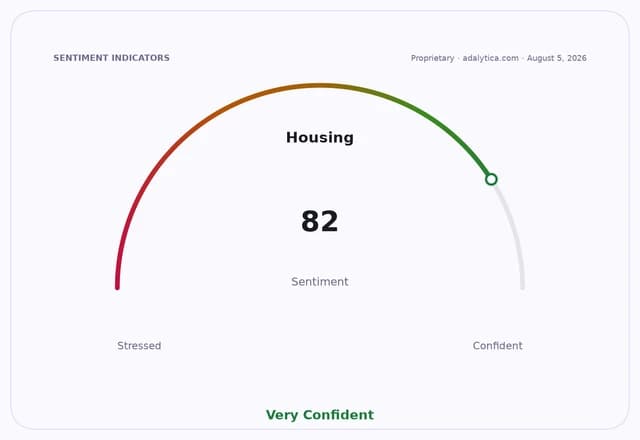
Adalytica’s housing and rent inflation gauge and CPI snapshot both sit at “Extreme Greed,” reflecting the market’s focus on whether inflation cools enough to push rates lower. Until that happens, mortgage borrowers are likely to see little relief, home sales should stay constrained, and homebuilder stocks may remain range-bound rather than breakout candidates.
The key catalyst now is the next inflation read and any shift in Treasury yields, which will determine whether mortgage rates finally break lower or keep housing stuck in a high-rate holding pattern.
| Entity | Gains | Losses |
|---|---|---|
| Treasury bond bulls | ▲Higher prices if yields fall | ▼If inflation keeps yields elevated |
| Homebuyers | ▲More bargaining power if rates ease | ▼Affordability at 6.5% mortgages |
| Homebuilders | ▲Stability if rates stay steady | ▼Demand if rates stay near highs |
| XHB and ITB holders | ▲Upside from eventual rate relief | ▼Range-bound returns in sticky-rate market |