Mortgage Rates Above 7% Shift U.S. Housing to Buyers

Mortgage rates pushing above 7% are tilting the U.S. housing market back toward buyers, even as the jump in borrowing costs deepens pressure on sales, prices and homebuilder margins.
The average rate on a high-quality 30-year fixed mortgage reached 7.24% after the latest Federal Reserve decision before easing to 7.19%, according to Juan Santos of The Santos Group at Keller Williams, underscoring how quickly bond-market moves can reset housing affordability. The key point for the economy is not just that financing costs are high, but that they are staying high enough to change behavior: buyers are becoming more selective, sellers are being forced to negotiate and builders are leaning harder on incentives to keep deals moving.
That matters because mortgage rates do not track the Fed’s policy rate mechanically. The central bank controls short-term rates, while mortgage pricing is driven more by long-dated Treasury yields, inflation expectations and the bond market’s view of future growth. Santos said inflation, employment, bonds and energy costs are the variables to watch, with oil especially important because higher energy prices feed transportation, agriculture, construction and distribution costs, then ripple back into inflation expectations and mortgage rates.
For investors, the message is that the housing slowdown is becoming broader and more visible. Higher mortgage rates make the monthly payment, not the sticker price, the binding constraint. That reduces affordability, lengthens decision-making and usually slows turnover. If borrowing costs stay elevated, inventory can rise while demand thins, creating the conditions for longer selling times and more downward pressure on prices. The near-term winner is the purchaser who can afford to wait and negotiate; the loser is the seller trying to preserve pricing power.
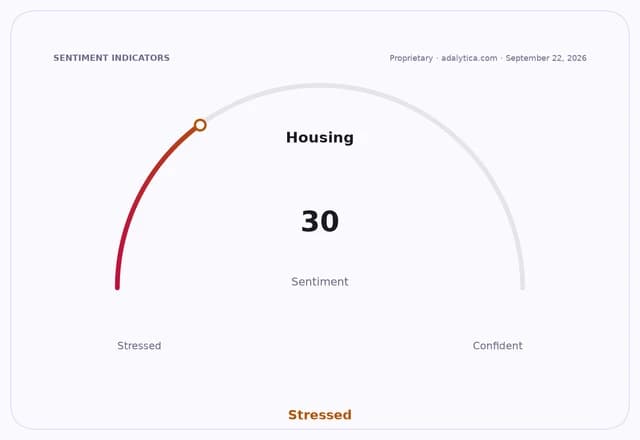
The new negotiating balance is already showing up in the new-home market. Santos said 66% of builders are offering incentives and 38% are cutting prices, with average discounts near 6%. That aligns with what major builders have signaled in filings, where affordability support through mortgage-rate buydowns and other incentives has become a routine tool to protect volumes. It also helps explain why housing-related exchange-traded funds and stocks have been volatile: lower transaction activity can weigh on brokers, mortgage originators and retail-adjacent real estate platforms, even if some builders retain volume by sacrificing margin.
There is a bull case for buyers and a bear case for the sector. Buyers gain negotiating room on price, closing costs and temporary rate buydowns, and can often structure deals more favorably than they could when demand was overheated. But the bearish view is that affordability remains stretched, and if rates remain near current levels the market could suffer from persistently weak turnover rather than a clean reset. In that scenario, builders may keep using incentives, existing-home sellers may cut prices more often, and transaction-linked companies will continue to feel the strain.
For investors, the next catalyst is whether Treasury yields and energy prices stabilize enough to ease mortgage pressure. Until then, 7%-plus mortgages are less about a single bad week for housing than about a slower re-pricing of the entire market around weaker demand and more buyer leverage.
| Entity | Gains | Losses |
|---|---|---|
| Home buyers | ▲More negotiating power | ▼Higher monthly payments |
| Home sellers | ▲Faster deal certainty if they concede | ▼Pricing power |
| Homebuilders | ▲Volume support via incentives | ▼Margins |
| Mortgage lenders / housing platforms | ▲Activity from refinancing tactics and deals | ▼Transaction volumes |