Mortgage rates stay high, housing demand weakens
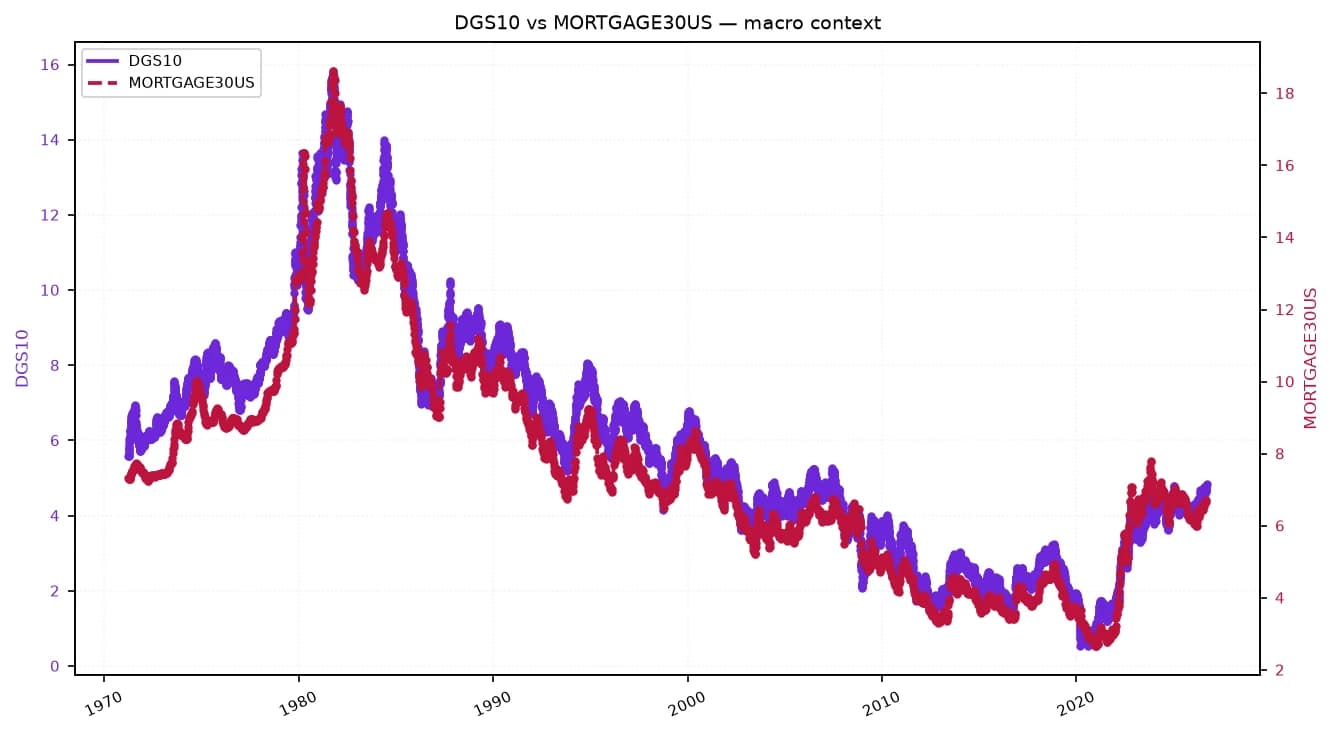
Mortgage rates above 7% are keeping buyers sidelined, driving home sales to their weakest level in more than a year and squeezing refinancing demand as long-term borrowing costs climb.
The average 30-year fixed mortgage rate rose to 6.76% in the latest reading, up from 6.71% a week earlier, while the 10-year Treasury yield, the benchmark that helps set mortgage pricing, stood at 4.83%. The spread between the two underscores how elevated funding costs remain for borrowers even after the recent pullback in bond yields.
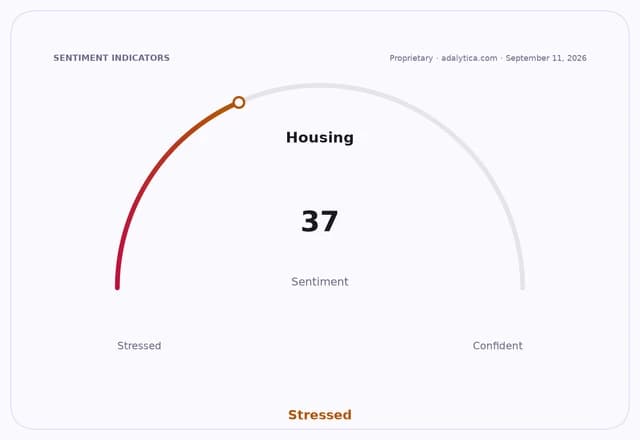
For the housing market, the effect is immediate: monthly payments stay high, affordability remains stretched and would-be buyers keep waiting on the sidelines. That hits the broader economy through lower transaction volume, weaker brokerage activity and less demand for housing-related goods and services.
Mortgage-backed securities have also come under pressure. MBB, the iShares Mortgage-Backed Securities ETF, fell to 91.48 from 92.22 a day earlier, with its relative strength index at 28.2, a conventional technical indicator that points to oversold conditions. REM, the iShares Mortgage Real Estate ETF, slid to 20.88 from 21.43, while ITB, the iShares U.S. Home Construction ETF, dropped to 88.22 from 90.31.
The data also show housing starts remain soft, with the latest forecast at 1,184,900 after a July reading of 1,239,000, suggesting builders are not seeing enough demand to offset the drag from expensive mortgages. That keeps pressure on homebuilders, mortgage lenders and housing-linked real estate investment trusts, while leaving borrowers with fewer attractive fixed-rate options.
Adalytica’s Treasury Bonds Trade Signals show extreme greed in TLT, reflecting heavy investor appetite for duration even as mortgage costs stay elevated. The setup leaves the housing market highly sensitive to any further moves in Treasury yields, Fed expectations or bank pricing in September.
| Entity | Gains | Losses |
|---|---|---|
| Homebuyers | ▲More time to wait | ▼Higher monthly payments |
| Homebuilders | ▲Limited pricing power | ▼Slower sales volume |
| Mortgage lenders | ▲Wider spreads on new loans | ▼Lower refinancing activity |
| MBB / REM / ITB investors | ▲Potential oversold rebound | ▼Near-term price pressure |