MSCI, Nasdaq, IonQ swing as Burry warns of crash
A fresh warning from Michael Burry about a possible market crash is landing in a market still being propelled by strong earnings, buybacks and elevated risk appetite, leaving investors split between caution and chasing gains.
For stock pickers, the biggest issue is not Burry’s warning itself but the tension it exposes: large-cap financial data and index businesses are still delivering steady cash generation, while more speculative names are swinging sharply as traders reassess valuation and momentum. That split is visible in recent trading in MSCI, Nasdaq and IonQ, three names tied to very different parts of the equity market.
MSCI closed at $564.34 on Aug. 6, down from $571.47 two sessions earlier, after briefly trading as high as $643.83 in June. The stock remains above its 200-day moving average of $570.65, but the 14-day RSI at 28.9 and a negative MACD show weakening near-term momentum. Nasdaq, by contrast, finished at $94.22, little changed from the prior two sessions and still above its 50-day and 200-day averages, even as its RSI eased to 60.6.
IonQ has been more volatile. The quantum-computing name closed at $40.36 on Aug. 6, after sliding from $41.72 the day before and far below its 50-day average of $49.11. The stock has been heavily traded during recent swings, with volume topping 25 million shares on Aug. 4, underscoring how quickly sentiment can reverse in a market exposed to both macro anxiety and speculative positioning.
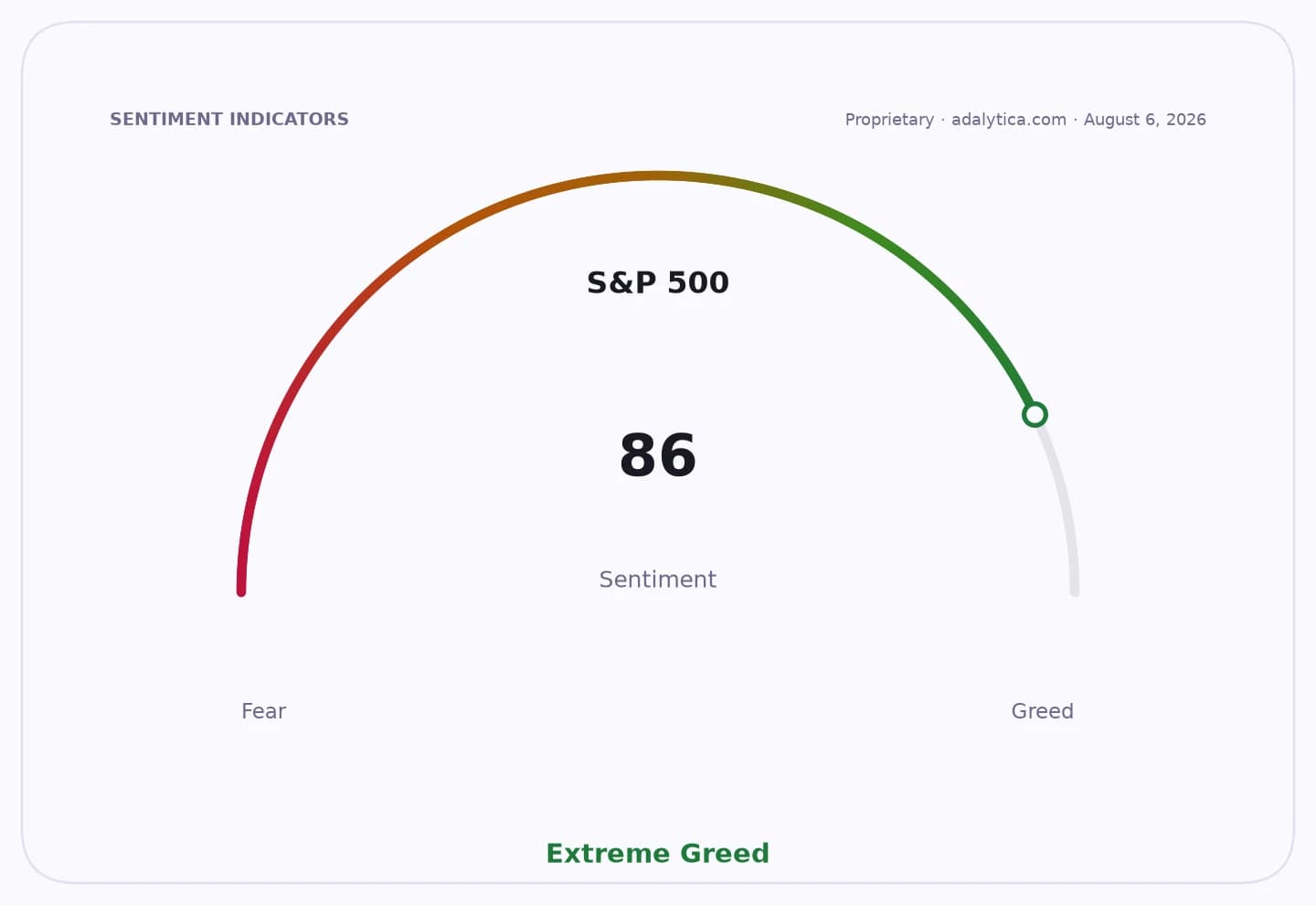
The broader backdrop is a market that still looks risk-seeking. Adalytica’s S&P 500 Trade Signals show “Extreme Greed” sentiment and “Extreme Greed” awareness, even after a recent pullback in the snapshot. That helps explain why bearish calls can produce sharp intraday volatility without yet derailing the broader rally.
The corporate backdrop is more constructive than the headlines suggest. AMP’s stronger-than-expected earnings and a $150 million buyback show that some companies are still using robust cash flow to reward shareholders, even as their management teams push back on takeover or breakup speculation.
Investors will now be watching whether Burry’s warning gains traction through weaker economic data, softer earnings guidance or a broader unwind in high-valuation names. Until then, the market looks set to keep rewarding balance-sheet strength and buybacks while punishing names that depend more on optimism than profits.
| Entity | Gains | Losses |
|---|---|---|
| Cash-rich companies | ▲Shareholder returns and support | ▼Less urgency on deal-driven upside |
| Speculative growth stocks | ▲Short-term trading volume | ▼Valuation compression |
| Bearish traders | ▲Volatility and downside hedges | ▼Risk of being early |
| Buyback-backed shareholders | ▲Capital returns | ▼Missed takeover premium |