National Grid Shares Fall as UK Security Fears Grow
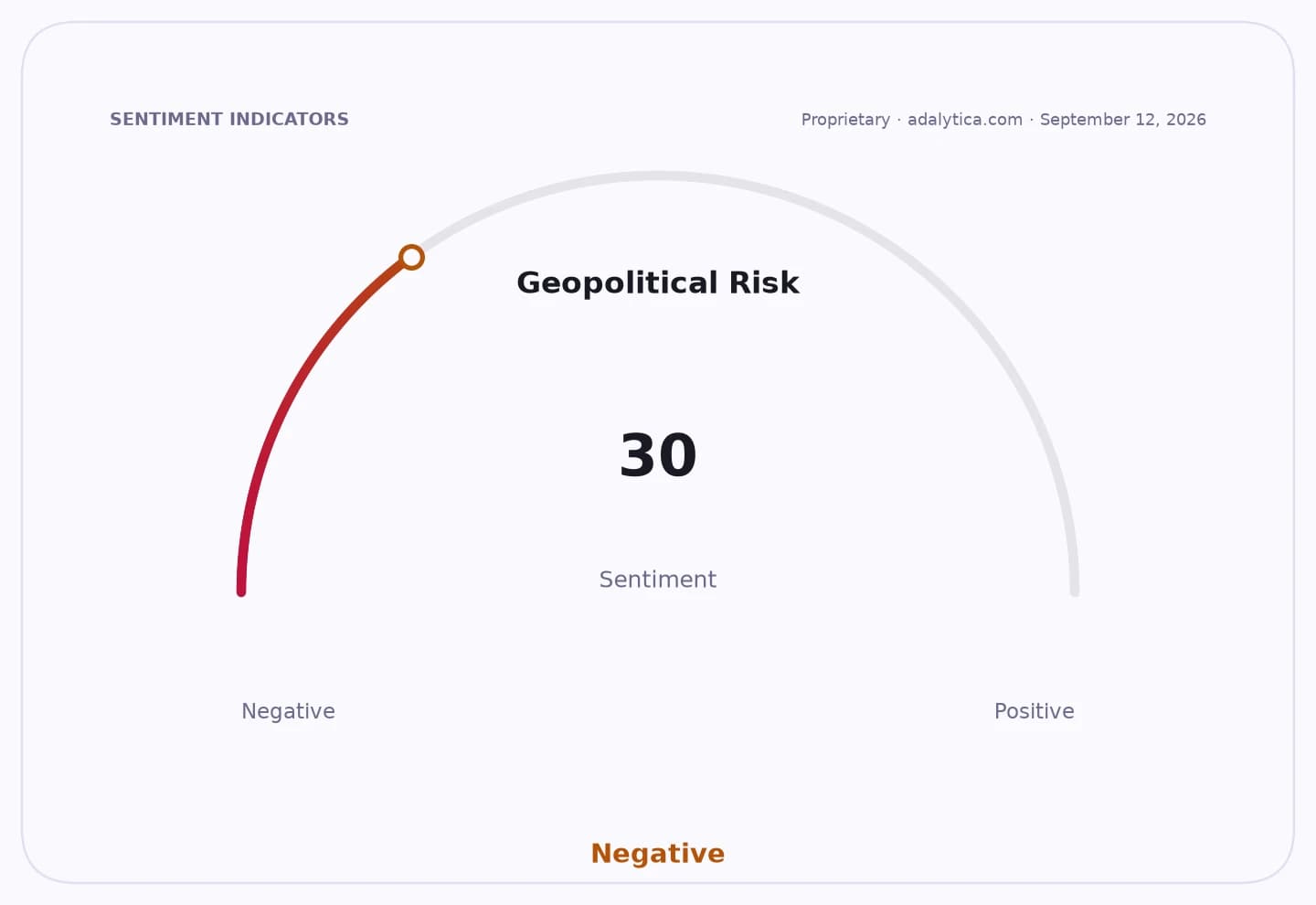
Britain’s power network is becoming a national-security trade rather than a pure utility story, and that shift is what matters most for investors. A former MI6 chief has warned that China could bring the UK to a “complete standstill” by disrupting the National Grid, underscoring how dependence on Chinese manufacturing and technology has turned critical infrastructure into a potential geopolitical choke point.
Sir Richard Dearlove’s comments land at a moment when Western governments are already reassessing foreign ownership, supply-chain exposure and cyber risk in energy systems. His warning is not about an abstract security debate. It is about the hard economics of who makes the materials, components and software that keep the grid running. Britain still may be able to design and assemble key apparatus, he said, but the industrial base needed to supply the materials has been hollowed out and concentrated in China, which now accounts for close to 30% of global manufacturing value added, up from 6% in 2000.
That matters because power infrastructure is one of the few sectors where operational disruption quickly becomes macro disruption. If grid hardware, control systems or upstream materials are constrained by geopolitical conflict, the impact spreads from utilities to factories, transport, telecoms and food supply. Britain’s recent move to nationalise British Steel and the sale of UK Power Networks by a Hong Kong-linked conglomerate show how quickly infrastructure ownership and control have become politically sensitive. The market is being forced to price not only earnings and regulation, but resilience, sovereignty and security premiums.
For National Grid, the long-term investment case is increasingly tied to reinforcement, redundancy and domestically secure supply chains, not just regulated returns. That tends to support capex-heavy utility models, but it also raises costs and can slow execution as governments demand more scrutiny over vendors and contractors. Investors should expect more political interference, more localization requirements and more pressure on procurement across the entire UK grid ecosystem. In this environment, the biggest winners are the companies and funds exposed to grid hardening, domestic energy infrastructure and cyber-secure industrial hardware, while the losers are foreign suppliers and any utility shareholder assuming regulation will remain narrowly financial.
The stock tape reflects a different tension: National Grid’s U.S.-listed shares have been under pressure, with the stock recently trading around $76.86 after falling below both its 50-day and 200-day moving averages. Momentum has weakened, with the RSI sliding to 29, a level that typically signals oversold conditions, even as the broader thesis around critical infrastructure security strengthens. That disconnect is exactly where opportunity can emerge. The market may still be treating National Grid as a slow utility, but geopolitics is turning it into a strategic asset class.
The real takeaway is that grid security is moving from an esoteric policy issue to a core investing theme. If governments conclude that critical infrastructure cannot depend on strategic rivals, the next phase of spending will favor domestic transmission, substations, transformers, cybersecurity and industrial re-shoring. I believe investors who position early in the picks-and-shovels of infrastructure resilience will be ahead of the consensus before the next crisis forces the repricing.
| Entity | Gains | Losses |
|---|---|---|
| Domestic grid and cyber suppliers | ▲More security spending | ▼Slower procurement cycles |
| National Grid and peers | ▲Strategic relevance | ▼Higher compliance costs |
| Chinese manufacturers | ▲Existing leverage | ▼Scrutiny and exclusion risk |
| UK infrastructure investors | ▲Resilience premium | ▼Policy uncertainty |