Nexus Industrial REIT Prices C$300M Debentures

Nexus Industrial REIT has priced a $300 million unsecured debenture offering, giving the Canadian industrial landlord a fresh source of funding to repay existing debt and shore up liquidity as borrowing costs remain elevated.
The four-year notes, due March 29, 2030, carry a fixed coupon of 4.563% and were sold at par through a syndicate led by BMO Capital Markets, Desjardins Capital Markets and RBC Capital Markets. The REIT said closing is expected around Sept. 29, subject to receiving at least a BBB (low) rating with a Stable trend from Morningstar DBRS.
For investors, the deal matters because unsecured capital gives Nexus more financial flexibility than asset-backed financing and reduces near-term refinancing risk. The proceeds are earmarked for debt repayment and general trust purposes, suggesting management is trying to improve the maturity profile and preserve room for future acquisitions or balance-sheet repair.
The offering lands as industrial real estate capital markets stay selective and income-focused buyers continue to favor credits with visible cash flows. Nexus owns 87 properties totaling about 12.3 million square feet, but its units have been under pressure, with the stock trading around C$1.16 on Sept. 18 versus C$2.30 on its 50-day moving average and C$11.36 on its 200-day average, underscoring investor caution around the REIT’s balance sheet and sector outlook.
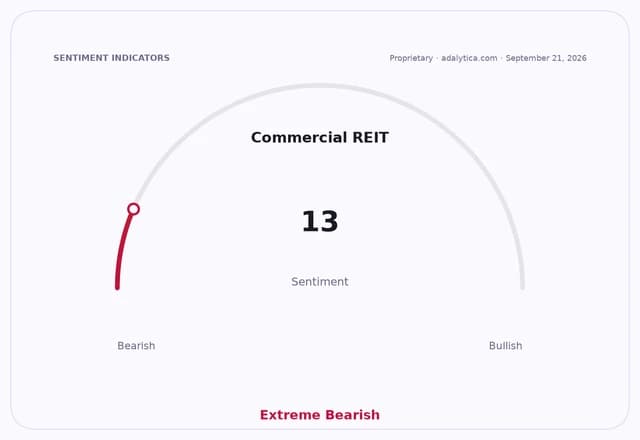
The financing also comes amid a broader pullback in commercial REIT sentiment, which Adalytica data shows at “Extreme Fear,” even as U.S. Treasury bonds draw strong interest. That backdrop can help issuers like Nexus lock in capital, but it also raises the bar for execution and rating support.
If the debentures close as planned, the key next watchpoint will be whether Nexus uses the issue to meaningfully lower leverage and stabilize trading sentiment, or whether the REIT needs further capital-market steps to support growth.
| Entity | Gains | Losses |
|---|---|---|
| Nexus Industrial REIT | ▲Longer-dated funding | ▼Near-term refinancing pressure |
| Bond investors | ▲4.563% yield | ▼Credit risk exposure |
| Existing lenders | ▲Partial repayment | ▼Outstanding loan balance |
| Common unitholders | ▲Balance-sheet flexibility | ▼Ongoing dilution/leverage concerns |