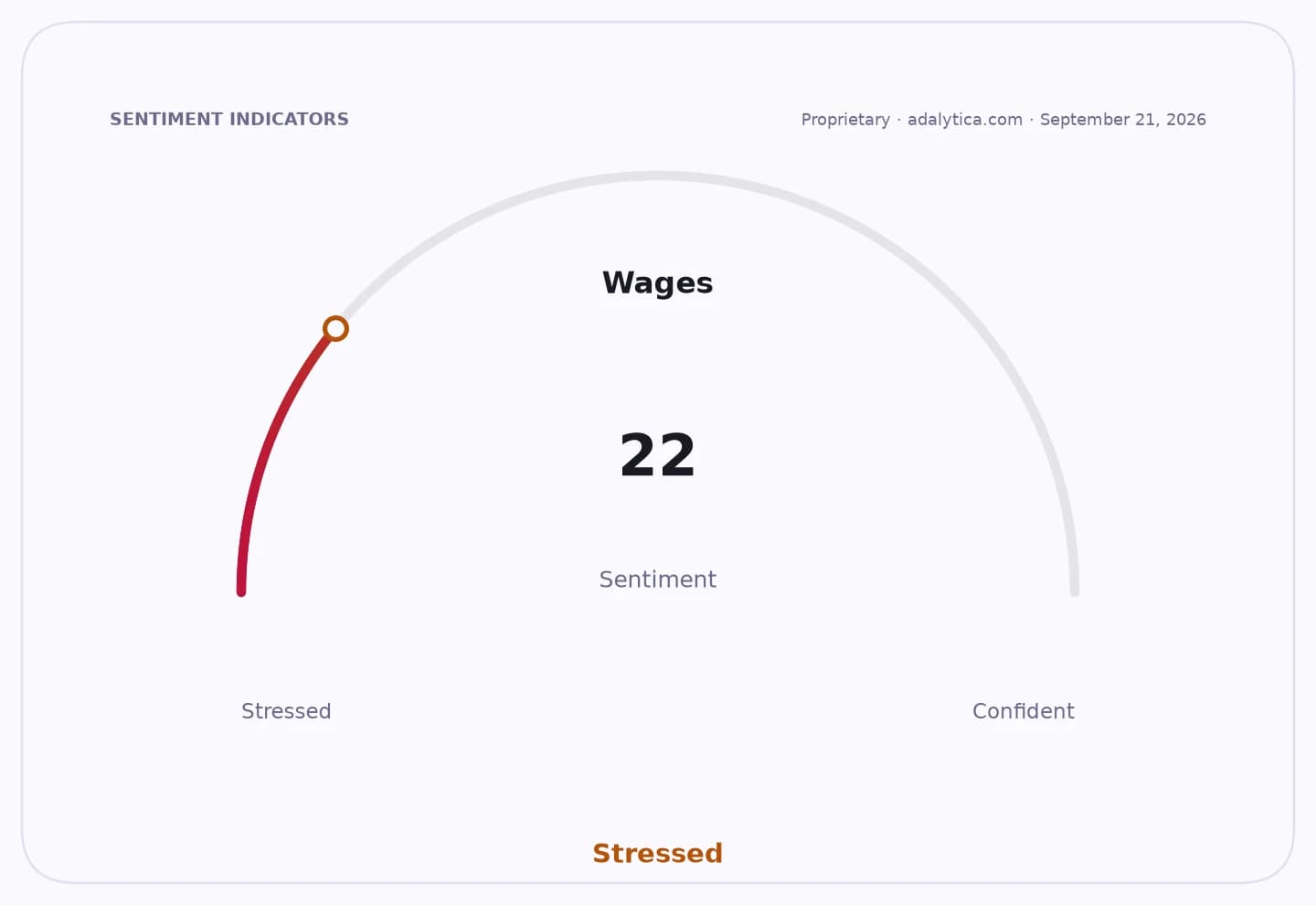
The real test of any new Nigerian minimum wage will not be the headline number, but whether it can still cover food, transport, rent and other essentials in an economy where prices have risen faster than pay.
Nigeria minimum wage debate turns to living costs
The Gani Fawehinmi Memorial Organisation’s call for a public “Living-Wage Test” shifts the minimum wage debate away from politics and toward purchasing power, a distinction that matters for households, employers and policymakers alike. A nominal pay increase can look meaningful on paper while leaving workers no better off if inflation continues to erode buying power.
That is why GAFAMORG’s challenge lands at a sensitive moment. Nigeria’s current minimum wage of N70,000 was set in 2024, but subsequent cost-of-living pressures have kept pressure on the government to revisit pay. The organisation said the national conversation should not be reduced to whether the figure is N100,000, N150,000 or even N300,000, but to what those amounts can actually purchase after basic expenses. Its message is straightforward: show the calculation, not just the conclusion.
The economic backdrop helps explain the urgency. In inflation-adjusted terms, wage policy becomes less about generosity and more about maintaining living standards. When food, housing, energy and transport costs keep climbing, a wage increase without an indexation mechanism can be quickly absorbed by price rises. GAFAMORG is effectively asking whether any new minimum wage would be a one-off adjustment or part of a durable framework tied to cost-of-living data.
That question matters to investors and businesses as much as to workers. A larger wage bill can squeeze margins for labour-intensive companies, raise operating costs across consumer-facing sectors and feed through to pricing decisions if firms try to preserve profitability. For the broader economy, a poorly calibrated wage settlement risks either failing to protect consumption — if it is too low — or adding to inflationary pressure — if it is too abrupt and not matched by productivity gains.
The group’s demand for transparency also reflects a deeper policy issue: credibility. If the government publishes the assumptions behind any new wage — including the economic data, consultation process and review timetable — it could strengthen confidence that wage-setting is being handled as a rules-based exercise rather than a political announcement. That would matter for unions, which want workers involved in negotiations, and for employers, which need visibility on future labour costs.
There is also a political risk in the government framing the outcome as a headline victory. GAFAMORG warned against letting “the announcement become the argument,” a pointed reminder that wage policy is only useful if it improves living conditions. In a country where inflation expectations and household pressures remain elevated, the public is likely to judge any new minimum wage less by size than by how long it lasts in real terms.
For investors, the next steps to watch are whether the federal government discloses the methodology behind any new figure, whether labour pushes for automatic reviews or inflation indexation, and how quickly the wage debate spills into price-setting across retail, transport, utilities and other labour-heavy sectors. The outcome will shape not just incomes, but the cost structure of the economy.
| Entity | Gains | Losses |
|---|---|---|
| Nigerian workers | ▲Higher real pay if indexed | ▼Nominal-only wage hikes |
| Federal Government | ▲Credibility from transparency | ▼Political pressure over weak wage value |
| Employers | ▲Clear wage framework | ▼Higher labour costs |
| Consumers/households | ▲Better living standards | ▼Inflation eroding pay |