Nikkei 225 Falls 1.9% on Oil, Yen, Middle East
Japan’s Nikkei 225 slumped more than 3,600 yen at one point as surging crude prices, a firmer yen and rising Middle East tensions drove investors out of risk assets and into havens.
The selloff matters because Japan’s market has been one of Asia’s most interest-rate- and export-sensitive gauges, and a sharp swing lower can quickly spill into broader global sentiment. It also hits a market that had recently been powered by large-cap buying and enthusiasm for AI-related shares, showing how quickly macro fears can overwhelm stock-specific optimism.

By the close, the Nikkei had given back much of its earlier losses, finishing at 64,011.34, down 1,260.67 points, or 1.9%, after trading as low as 63,208.63. The index had opened at 64,276.82 and moved as much as 1,103.39 points intraday, underscoring the volatility.
The move came as investors fretted that crude above $100 a barrel could keep inflation sticky, complicating the Bank of Japan’s policy path and pressuring profit margins for energy-intensive companies. A stronger yen also tends to weigh on Japan’s exporters, while higher global uncertainty typically favors defensive positioning over cyclical exposure.
The weakness was not confined to the domestic benchmark. The iShares MSCI Japan ETF, EWJ, slipped to $97.58 from $98.56 a day earlier, while the WisdomTree Japan Hedged Equity Fund, DXJ, held steadier at $177.19, highlighting how currency exposure is shaping relative performance for Japan-focused funds.
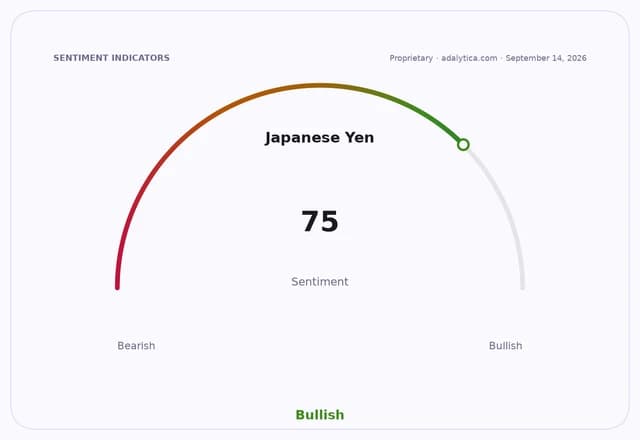
Adalytica’s Japanese yen trade signals showed sentiment at 75, labeled greed, while its S&P 500 gauge sat at 1, or extreme fear, reflecting a broader flight to safety in global markets. In technical terms, the Nikkei’s latest close sat below its 50-day moving average of 66,121.50, with RSI readings at 40.7, suggesting the index has lost near-term momentum after a strong run.
Investors will now watch oil, yen moves and any fresh headlines from the Middle East, along with Bank of Japan policy signals, to see whether the Nikkei stabilizes or faces another leg lower.
| Entity | Gains | Losses |
|---|---|---|
| Oil producers | ▲Higher prices | ▼Risk-sensitive equities |
| Japanese exporters | ▲— | ▼Stronger yen |
| Safe-haven assets | ▲Flight-to-quality flows | ▼Cyclical stocks |
| EWJ unhedged holders | ▲— | ▼Japan equity exposure |