NNN REIT Holds Near $45 as Treasury Yields Stay High

NNN REIT is holding near $45 a share as the 10-year Treasury yield sits around 4.8%, underscoring why high-yield triple-net landlords remain one of the market’s preferred defensive income trades: they can still offer an equity payout premium to government bonds, but only if investors believe rent growth and balance-sheet discipline can offset a higher cost of capital.
That spread is the whole story for net-lease REITs right now. With the benchmark 10-year yield forecast at 4.802% for Sept. 4, income investors are weighing whether REIT cash flows can justify valuations that have already re-rated lower as bond yields stayed elevated. For NNN, the stock’s latest close of $44.63 leaves it below its 50-day average of $46.68 but above its 200-day average of $43.11, a sign the shares have corrected from a mid-summer run without breaking the longer-term uptrend.

The macro backdrop is mixed for the sector. Core inflation, as measured by the Fed’s preferred core CPI gauge, is still running above 336 on the index, while unemployment remains low at 4.1%, a combination that supports consumer spending but does not yet force the Federal Reserve to move aggressively toward easier policy. In practice, that means borrowing costs are still high enough to cap REIT valuation multiples, even as the labor market avoids recessionary stress that would hurt tenant credit quality.
That tension matters more for triple-net owners than for many other property types. NNN REIT’s model depends on long leases, contractual rent escalators and tenants that can absorb higher financing costs and slower growth. The company’s latest filing showed a portfolio of 3,774 properties across all 50 states and noted that less than 1% of annualized base rent was tied to a tenant in Chapter 11, a reminder that credit exposure is contained but not absent.
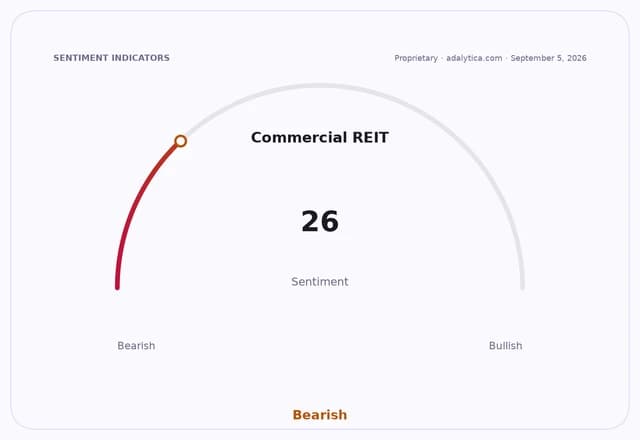
Investors have also been leaning toward the broad “quality income” trade rather than pure duration. Adalytica’s Commercial REIT sentiment gauge sits in fear territory at 26, while the S&P 500 remains neutral, suggesting real estate still trades with a discount for rate sensitivity even as broader equities stabilize. That backdrop has helped more established net-lease names such as Realty Income and W.P. Carey stay on screens for defensive capital, but it also means relative valuation depends heavily on execution and financing costs.
NNN’s recent use of an equity distribution agreement, disclosed in August, points to another central issue: external growth is available, but the economics must clear a tougher hurdle when debt and equity capital are more expensive. The bull case is that the company’s diversified retail rent stream, modest credit stress and long lease duration support durable dividends. The bear case is that persistent Treasury yields near 5% keep pressure on REIT valuations and reduce the attraction of equity income versus bonds.
For investors, the next catalyst is simple: whether falling rates, if they come, are enough to widen the equity yield premium and bring capital back into triple-net REITs. Until then, NNN remains a classic income-stock test case — defensive, cash-generative and still hostage to the level of long-term yields.
| Entity | Gains | Losses |
|---|---|---|
| NNN REIT | ▲Income-focused buyers | ▼Rate-sensitive valuation |
| Treasury bonds | ▲Yield seekers | ▼REIT yield premium |
| Retail tenants | ▲Long-term lease access | ▼Higher financing costs |
| Competing REITs | ▲Sector repricing support | ▼Same capital-cost pressure |