North Macedonia inflation rises on higher fuel prices

North Macedonia’s inflation accelerated to 2.6% in August, but the bigger market story is that the September print is likely to be hotter as state-set fuel prices jumped again just after the month ended.
That matters because the economy is now facing a second wave of cost pressure: food prices are climbing again, transport costs only temporarily eased, and gasoline and diesel became more expensive on September 8, adding a fresh burden for households, businesses and logistics firms. The pass-through to consumer prices is especially important in a small, import-dependent economy where fuel and food move quickly through the broader cost base.
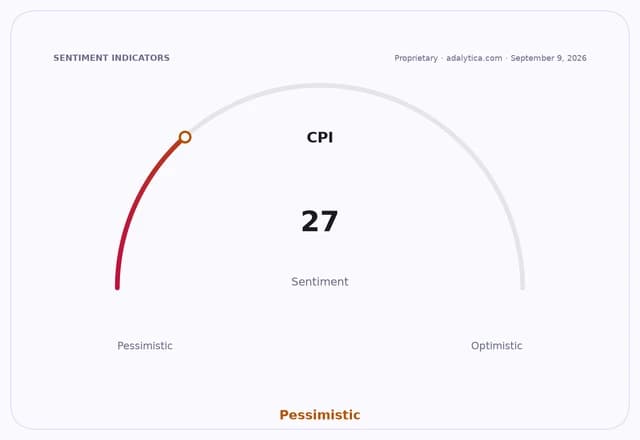
The State Statistical Office said consumer prices rose 0.4% month on month in August and 2.6% from a year earlier, up from 2.3% annual inflation in July. Food and non-alcoholic beverages increased 0.5% in August after falling 1.1% in July, while transport costs declined 0.8% after a 4.4% jump in the prior month. Recreation, sports and culture led monthly gains with a 3.1% rise, followed by restaurants and accommodation at 2.5%.
The fuel move is the key forward catalyst. The energy regulator raised maximum gasoline prices by 3 denars a liter and diesel by 6 denars, taking EUROSUPER BS-95 to 97 denars, EUROSUPER BS-98 to 99 denars and EURODIZEL to 101 denars. For a household buying 50 liters, that implies an extra 150 denars for gasoline or 300 denars for diesel versus the previous caps. The broader inflation impact will show up first in September data, but the more important issue is the indirect effect: higher transport and distribution costs feeding back into food, retail and services.
For consumers, the squeeze is still manageable in headline terms, but it is becoming visible in the monthly budget. An editorial model based on common household spending suggests a typical 32,000-denar basket would rise by about 147 denars, while a four-person household spending 85,000 denars could face an increase of roughly 406 denars. That may look modest in isolation, but repeated fuel-led shocks are exactly how low-to-mid inflation regimes re-accelerate.
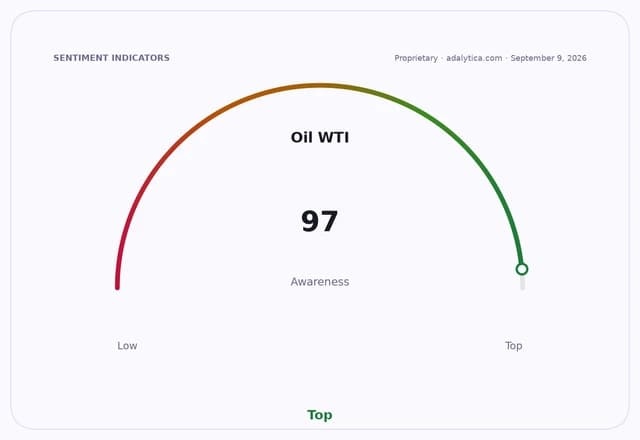
For investors, the message is that energy remains the marginal driver of inflation and sentiment, and that makes the next data release more important than the August print. Oil’s rebound has already pushed U.S. energy funds higher, with XLE trading well above its 50-day and 200-day moving averages and crude-linked USO extending its rally. Conventional technical indicators show both funds in strong uptrends, while Adalytica’s oil trade snapshot flags extreme awareness, underscoring how quickly the market is pricing in tighter fuel conditions.
The investment implication is straightforward: inflation in North Macedonia is not rolling over cleanly, and fuel is now the swing factor. That supports a constructive view on energy-linked assets, logistics inflation beneficiaries and commodity exposure, while keeping pressure on domestic consumers, transport-heavy businesses and rate-sensitive sectors if September confirms the new upside pulse. The market should treat this as an early warning, not a one-month aberration.
| Entity | Gains | Losses |
|---|---|---|
| Energy producers | ▲Higher fuel pricing power | ▼Demand hit if costs keep rising |
| Fuel retailers | ▲Wider nominal revenue | ▼Margin pressure if caps tighten |
| Consumers | ▲None | ▼Higher household budgets |
| Transport and logistics firms | ▲None | ▼Higher operating costs |